2-Day Workout Plan: Full-Body Training That Fits a Busy Week
A 2-day workout plan built on two full-body sessions: where to place them, how many sets you need, what to do on the other five days and when to add a third.
Example week
2-Day Dumbbell Workout Plan for General Fitness
A complete week you can start today: exercises, sets, reps and rest for every session, with swaps for each exercise. Open this plan on its own page (PDF) →
Split
Full Body
Sessions / week
2
Avg. session
29 min
Schedule
Mon · Thu (or any two non-consecutive days)
Warm-up (every session, ~6 min)
- 3–5 min easy cardio: brisk walk, bike, jump rope or marching in place.
- Dynamic mobility: 10 leg swings each way, 10 hip circles, 10 arm circles, 8 cat-cows.
- Ramp-up sets on the first exercise: 1–2 light sets of 8 before your working sets.
Day 1
Full Body A
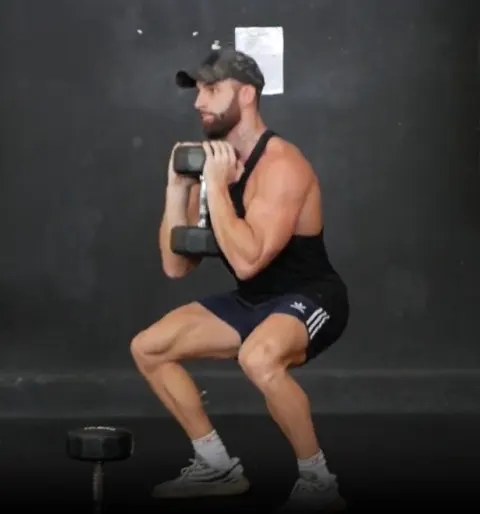
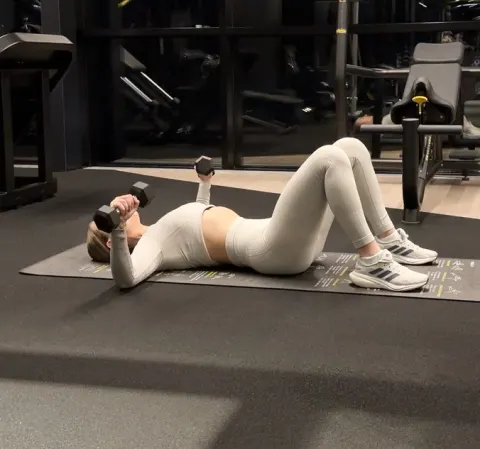
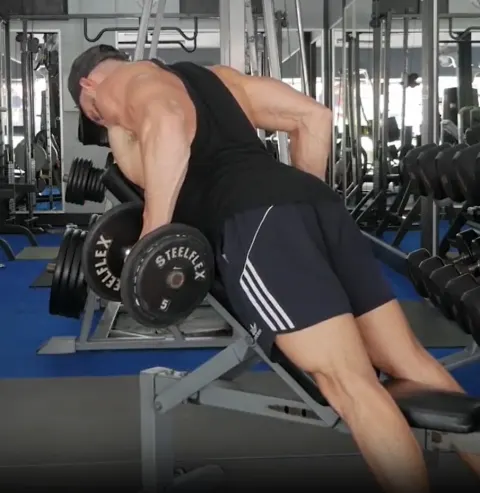
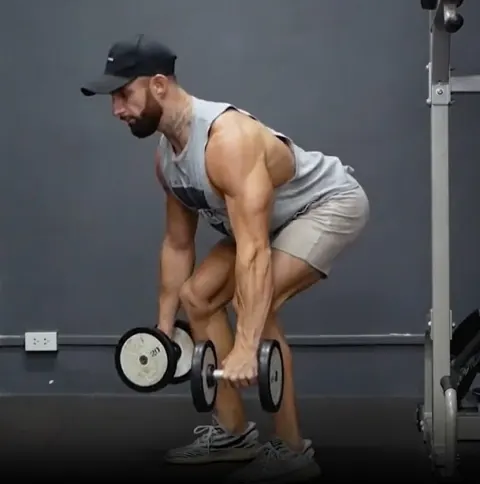
Squat + push + pull
-
Quads, Glutes · Dumbbell
- Sets
- 2
- Reps
- 8–10
- Rest
- 90s
- Effort
- RPE 7
swap: Bodyweight Squat, Dumbbell Squat, Sumo Squat
-
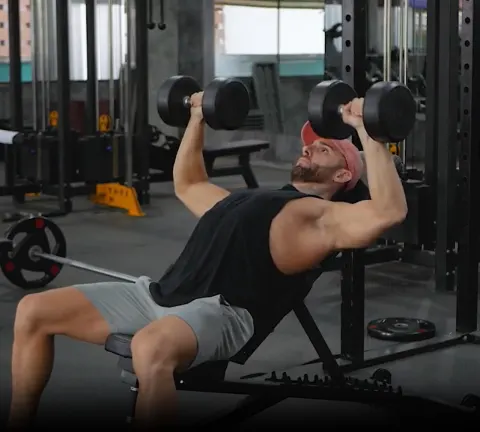
Chest, Triceps · Dumbbell
- Sets
- 2
- Reps
- 8–10
- Rest
- 90s
- Effort
- RPE 7
-
Upper Back, Lats · Dumbbell
- Sets
- 2
- Reps
- 8–10
- Rest
- 90s
- Effort
- RPE 7
swap: Dumbbell Row, Inverted Row, Rear Delt Fly
-
Hamstrings, Glutes · Dumbbell
- Sets
- 2
- Reps
- 8–12
- Rest
- 75s
- Effort
- RPE 7
-
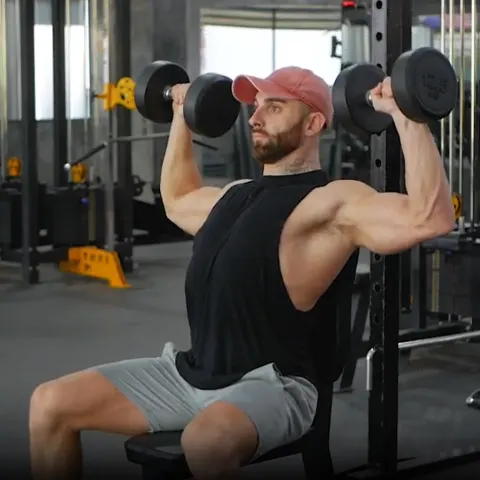
Front Delts, Side Delts · Dumbbell
- Sets
- 2
- Reps
- 12–15
- Rest
- 60s
- Effort
- RPE 7
-
Core, Lower Back · Bodyweight
- Sets
- 2
- Reps
- 30–60 sec
- Rest
- 45s
- Effort
- controlled
swap: Dead Bug, Plank, Donkey Kick
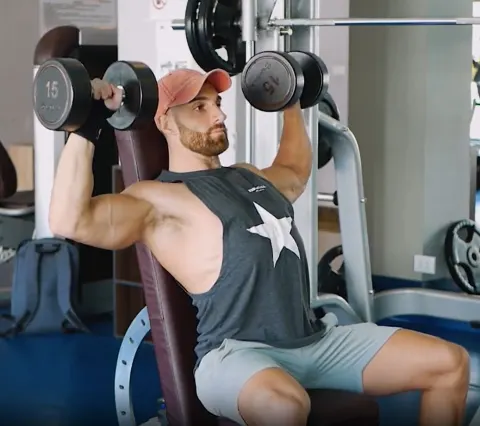
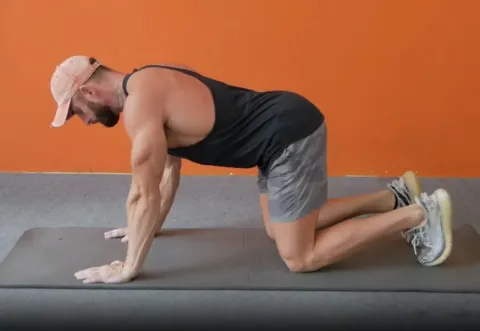
Day 2
Full Body B
Hinge + vertical push/pull
-
Hamstrings, Glutes · Dumbbell
- Sets
- 2
- Reps
- 8–10
- Rest
- 90s
- Effort
- RPE 7
swap: Bodyweight Hip Hinge, Dumbbell Deadlift, Bodyweight Good Morning
-
Lats, Upper Back · Dumbbell
- Sets
- 2
- Reps
- 8–10 / side
- Rest
- 90s
- Effort
- RPE 7
-
Front Delts, Side Delts · Dumbbell
- Sets
- 2
- Reps
- 8–10
- Rest
- 90s
- Effort
- RPE 7
-
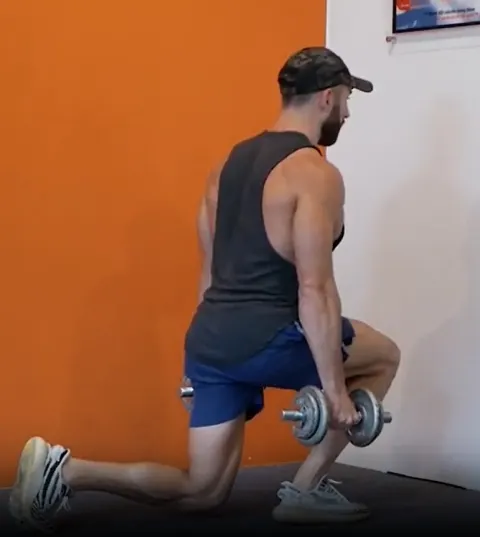
Quads, Glutes · Dumbbell
- Sets
- 2
- Reps
- 8–12 / side
- Rest
- 75s
- Effort
- RPE 7
swap: Reverse Lunge, Split Squat, Step-Up
-
Chest, Front Delts · Dumbbell
- Sets
- 2
- Reps
- 12–15
- Rest
- 60s
- Effort
- RPE 7
-
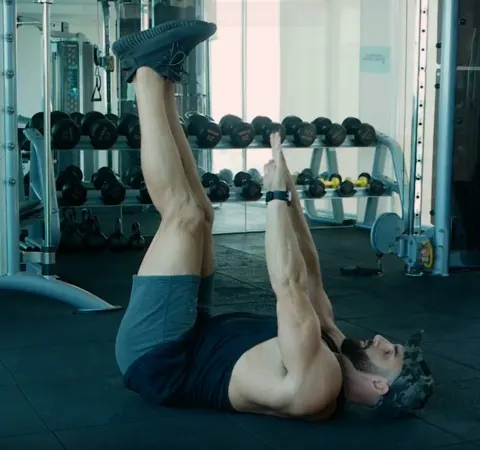
Core · Bodyweight
- Sets
- 2
- Reps
- 12–15
- Rest
- 45s
- Effort
- controlled
swap: Crunch, Reverse Crunch, Lying Leg Raise
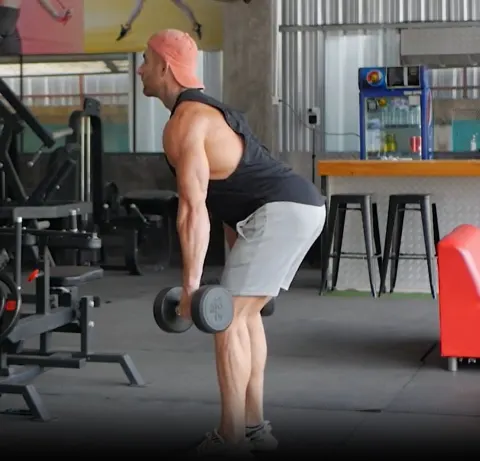
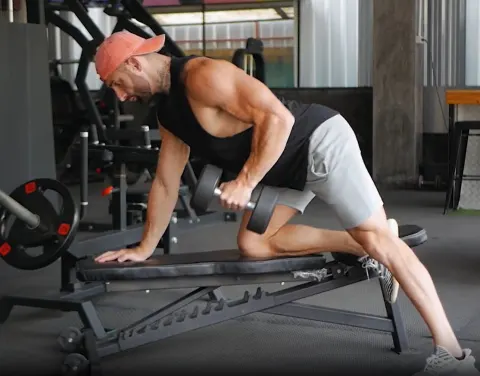
8-week progression: what to change each week
Same exercises for the whole block. Weeks move the reps, then the load; the last week is a deload.
| Week | Load | Reps | Effort | What to watch |
|---|---|---|---|---|
| 1 | Light: learn the movements | bottom of range (8) | RPE 6–7 | Stop every set 3 reps before failure; film one set per exercise to check form. |
| 2 | Same weight | +1 rep per set (9) | RPE 8 | Same exercises, same order; only the reps move. |
| 3 | Same weight | top of range (10) | RPE 8 | All sets at the top of the range → add load next week. Missed a set? Repeat the week. |
| 4 | next dumbbell / harder variation | bottom of range (8) | RPE 8 | New weight feels hard at low reps; that is the plan working. |
| 5 | Same weight | +1 rep per set (9) | RPE 8 | Keep rest periods the same. |
| 6 | Same weight | top of range (10) | RPE 8–9 | Second time at the top: take the last set of each main lift to 1 rep in reserve. |
| 7 | next dumbbell / harder variation | bottom of range (8) | RPE 8 | Bodyweight moves: slow the lowering phase to 3 s or move to the harder variation. |
| 8 | Deload: 60 % | bottom of range | RPE 5–6 | Half the sets, then regenerate a variation or change the split for the next block. |
How to progress
- First 2 weeks: focus on form with light weights, stop each set 3 reps before failure.
- Double progression: hit the top of the rep range on every set, then add weight (2.5–5 %) and start from the bottom of the range.
- Bodyweight moves: add reps, then slow the tempo (3 sec down), then move to a harder variation.
- Deload every 6–8 weeks: same exercises, half the sets.
Notes for this plan
- Home setup: if a weight gets too light, slow the lowering phase to 3–4 seconds or add a pause at the hardest point.
- Sessions can move between days; keep at least one rest day between hard sessions for the same muscles.
Two full-body sessions a week is the smallest dose of lifting that still moves you forward. Every major muscle gets trained on both days, nothing waits a full week for its next stimulus, and the total cost is little more than an hour out of the 168 in a week. Progress is slower than on three or four days and far faster than on a bigger plan you keep skipping.
Who a two-day week suits
- People with two reliable slots. Parents of small children, shift workers, frequent travellers, anyone whose calendar changes weekly.
- Beginners. In the first months almost any sensible stimulus works, so two sessions are enough to add reps or weight most weeks.
- Runners, cyclists and team-sport players who lift to support their sport, not to replace it.
- Lifters in a hectic season who want to keep what they have built.
A beginner on the 2-day dumbbell plan for general fitness can expect to improve nearly every week for the first two to three months and to see a visible difference in 8–12 weeks. With several years of training behind you, twice a week mostly maintains muscle and strength, which is a legitimate goal.
How the example week is put together
The example week above uses two different sessions, A on Monday and B on Thursday. Day A opens with a squat, a horizontal press and a row, then adds a hinge, an optional overhead press and core work. Day B opens with a hinge, a pull and an overhead press, then a lunge, a second, lighter chest press and core. With dumbbells only, that pull is a second row variation, because a true vertical pull needs a bar or a cable.
Legs, pushing muscles and pulling muscles are loaded on both days, but never with the same lead exercise. This is the standard full-body 2-day split.
Each session holds six exercises at 2 sets each, with 8–10 reps on the main lifts, 12–15 on the accessories and 45–90 seconds of rest. Effort sits around RPE 7, roughly three reps left in the tank. With a short warm-up you are done in about 30 minutes.
Tuesday and Friday, or Wednesday and Saturday, work just as well as Monday and Thursday. The only layout to avoid is two days in a row, because the second session then trains muscles that are still recovering from the first.
What to do on the other five days
Two sessions build strength. What you do between them decides most of your general fitness and nearly all of your fat loss.
| Day | Plan | Purpose |
|---|---|---|
| Monday | Full Body A | Strength session 1 |
| Tuesday | 30–45 minute walk | Easy movement eases soreness |
| Wednesday | Optional 20–30 minutes of cardio you enjoy | Heart and lungs |
| Thursday | Full Body B | Strength session 2 |
| Friday | Walk, 8,000–10,000 steps | Daily activity base |
| Saturday | Hike, swim, bike ride or a sport | A longer effort that is fun |
| Sunday | Rest and book next week’s two slots | Recovery |
Aim for 8,000–10,000 steps on every non-lifting day. The walking calorie calculator shows what that adds up to over a week, and it is usually more than both strength sessions combined. If you like hard intervals, schedule them the day after lifting, not the day before, so your squats do not pay for them.
The set maths on two days
Muscle grows best on 10–20 hard sets per muscle per week. A two-day plan does not reach that, and it does not pretend to. With 2 sets per exercise at beginner level, 3 on the main lifts later on, and about two exercises a week that load each muscle directly, you land at roughly 4–8 hard sets per muscle. Chest, for example, gets a main press on day A and a lighter, higher-rep press on day B, plus some overlap from overhead pressing.
That is at or under the bottom of the growth range, and it is fine for this plan’s purpose. Beginners respond to low training volume, and experienced lifters can hold their muscle on a fraction of the work it took to build, provided the weights stay challenging. When sets are scarce, the quality of each one is the lever.
Making two sessions count
- Spend the sets on big movements. A goblet squat, a Romanian deadlift, a press and a row train more muscle per set than any curl.
- Work close enough to failure. After two lighter introductory weeks, finish working sets with 1–3 reps in reserve.
- Use double progression. Goblet squat 14 kg for 2 × 8 this week, 2 × 9 next, 2 × 10 after that. Once both sets reach 10, pick up the 16 kg dumbbell and start again at 8. If the next pair is too big a jump, lower each rep for three seconds first.
- Write it down. With three or four days between sessions you will not remember last Monday’s numbers.
- Reschedule, never skip. One missed workout is half your training week. Push it to the next free day.
The plan runs as an eight-week wave, and week 8 is a deload at about 60 % of your usual load with half the sets. Fatigue builds slowly on two days, but the easy week still lets joints and motivation catch up before the next block.
Full body or a 2-day upper/lower?
A 2-day upper/lower split puts the whole upper body in one session and the legs in the other. It looks tidy, but every muscle is trained once every seven days, and a missed session means half your body goes two weeks without work.
Two full-body days train everything twice, give you a second weekly practice of each lift, and survive a missed session far better. That is why the generator builds every 2-day plan as full body A/B. Upper/lower on two days only makes sense if your sport already hammers your legs and you want a single leg session far from match day. The full body vs split guide walks through the trade-offs.
Mistakes that waste a two-day plan
- Cramming a five-day programme into two visits. Ten exercises and two hours produce tired, sloppy sets. Six exercises is the ceiling.
- Dropping leg work because you walk or run. Endurance work does not replace a loaded squat or hinge.
- Improvising every session. Random workouts cannot be progressed. Keep A and B fixed for at least eight weeks.
- Sitting still for the other five days. Two workouts cannot offset 160 sedentary hours.
When to add a third day
Stay on two days as long as the weights or reps keep creeping up. Consider moving on when:
- you have not missed a session in eight weeks and a third slot has opened up,
- your numbers have been flat for three to four weeks despite decent sleep and food,
- building muscle has become the main goal and you are past the beginner stage.
The 3-day workout plan adds a C session and lifts weekly volume to the edge of the growth range. Dropping back to two days during a busy month costs you nothing.
Other two-day builds follow the same A/B logic. The 2-day gym plan for muscle gain puts barbells in the main slots, the 2-day kettlebell plan for weight loss ends each day with a short conditioning finisher, and the workout plan for seniors is a gentler two-day week with fewer sets and longer rests. Still unsure whether two is your number? Read how many days a week to work out, or let the plan generator build the week around your days and equipment.
2-Day Workout Plan: all 94 plans
- 2-Day Bodyweight Workout Plan for Muscle Gain (Over 50)
- 2-Day Bodyweight Workout Plan for General Fitness
- 2-Day Bodyweight Workout Plan for General Fitness (Beginners)
- 2-Day Bodyweight Workout Plan for General Fitness (Women)
- 2-Day Bodyweight Workout Plan for General Fitness (Men)
- 2-Day Bodyweight Workout Plan for General Fitness (Over 50)
- 2-Day Dumbbell Workout Plan for Weight Loss
- 2-Day Dumbbell Workout Plan for Weight Loss (Beginners)
- 2-Day Dumbbell Workout Plan for Weight Loss (Women)
- 2-Day Dumbbell Workout Plan for Weight Loss (Men)
- 2-Day Dumbbell Workout Plan for Weight Loss (Over 50)
- 2-Day Dumbbell Workout Plan for Muscle Gain
- 2-Day Dumbbell Workout Plan for Muscle Gain (Beginners)
- 2-Day Dumbbell Workout Plan for Muscle Gain (Women)
- 2-Day Dumbbell Workout Plan for Muscle Gain (Men)
- 2-Day Dumbbell Workout Plan for Muscle Gain (Over 50)
- 2-Day Dumbbell Workout Plan for Strength
- 2-Day Dumbbell Workout Plan for Strength (Beginners)
- 2-Day Dumbbell Workout Plan for Strength (Women)
- 2-Day Dumbbell Workout Plan for Strength (Men)
- 2-Day Dumbbell Workout Plan for Strength (Over 50)
- 2-Day Dumbbell Workout Plan for General Fitness
- 2-Day Dumbbell Workout Plan for General Fitness (Beginners)
- 2-Day Dumbbell Workout Plan for General Fitness (Women)
- 2-Day Dumbbell Workout Plan for General Fitness (Men)
- 2-Day Dumbbell Workout Plan for General Fitness (Over 50)
- 2-Day Gym Workout Plan for Weight Loss
- 2-Day Gym Workout Plan for Weight Loss (Beginners)
- 2-Day Gym Workout Plan for Weight Loss (Women)
- 2-Day Gym Workout Plan for Weight Loss (Men)
- 2-Day Gym Workout Plan for Weight Loss (Over 50)
- 2-Day Gym Workout Plan for Muscle Gain
- 2-Day Gym Workout Plan for Muscle Gain (Beginners)
- 2-Day Gym Workout Plan for Muscle Gain (Women)
- 2-Day Gym Workout Plan for Muscle Gain (Men)
- 2-Day Gym Workout Plan for Muscle Gain (Over 50)
- 2-Day Gym Workout Plan for Strength
- 2-Day Gym Workout Plan for Strength (Beginners)
- 2-Day Gym Workout Plan for Strength (Women)
- 2-Day Gym Workout Plan for Strength (Men)
- 2-Day Gym Workout Plan for Strength (Over 50)
- 2-Day Gym Workout Plan for General Fitness
- 2-Day Gym Workout Plan for General Fitness (Beginners)
- 2-Day Gym Workout Plan for General Fitness (Women)
- 2-Day Gym Workout Plan for General Fitness (Men)
- 2-Day Gym Workout Plan for General Fitness (Over 50)
- 2-Day Kettlebell Workout Plan for Weight Loss
- 2-Day Kettlebell Workout Plan for Weight Loss (Beginners)
- 2-Day Kettlebell Workout Plan for Weight Loss (Women)
- 2-Day Kettlebell Workout Plan for Weight Loss (Men)
- 2-Day Kettlebell Workout Plan for Weight Loss (Over 50)
- 2-Day Kettlebell Workout Plan for Muscle Gain
- 2-Day Kettlebell Workout Plan for Muscle Gain (Beginners)
- 2-Day Kettlebell Workout Plan for Muscle Gain (Women)
- 2-Day Kettlebell Workout Plan for Muscle Gain (Men)
- 2-Day Kettlebell Workout Plan for Muscle Gain (Over 50)
- 2-Day Kettlebell Workout Plan for General Fitness
- 2-Day Kettlebell Workout Plan for General Fitness (Beginners)
- 2-Day Kettlebell Workout Plan for General Fitness (Women)
- 2-Day Kettlebell Workout Plan for General Fitness (Men)
- 2-Day Kettlebell Workout Plan for General Fitness (Over 50)
- 2-Day Resistance Band Workout Plan for Weight Loss
- 2-Day Resistance Band Workout Plan for Weight Loss (Beginners)
- 2-Day Resistance Band Workout Plan for Weight Loss (Women)
- 2-Day Resistance Band Workout Plan for Weight Loss (Men)
- 2-Day Resistance Band Workout Plan for Weight Loss (Over 50)
- 2-Day Resistance Band Workout Plan for Muscle Gain
- 2-Day Resistance Band Workout Plan for Muscle Gain (Beginners)
- 2-Day Resistance Band Workout Plan for Muscle Gain (Women)
- 2-Day Resistance Band Workout Plan for Muscle Gain (Men)
- 2-Day Resistance Band Workout Plan for Muscle Gain (Over 50)
- 2-Day Resistance Band Workout Plan for General Fitness
- 2-Day Resistance Band Workout Plan for General Fitness (Beginners)
- 2-Day Resistance Band Workout Plan for General Fitness (Women)
- 2-Day Resistance Band Workout Plan for General Fitness (Men)
- 2-Day Resistance Band Workout Plan for General Fitness (Over 50)
- 2-Day Calisthenics Workout Plan for Weight Loss
- 2-Day Calisthenics Workout Plan for Weight Loss (Beginners)
- 2-Day Calisthenics Workout Plan for Weight Loss (Men)
- 2-Day Calisthenics Workout Plan for Muscle Gain
- 2-Day Calisthenics Workout Plan for Muscle Gain (Beginners)
- 2-Day Calisthenics Workout Plan for Muscle Gain (Men)
- 2-Day Calisthenics Workout Plan for General Fitness
- 2-Day Calisthenics Workout Plan for General Fitness (Beginners)
- 2-Day Calisthenics Workout Plan for General Fitness (Men)
Related programs
Frequently asked questions
Is working out 2 days a week enough?
Yes, for most goals short of maximum muscle gain. Two full-body sessions train every major muscle twice a week, which builds strength in beginners and maintains muscle in experienced lifters. Keep each session to about six exercises, work within 1 to 3 reps of failure, and stay active on the other five days.
Can you build muscle with a 2-day workout plan?
Beginners can. Two sessions provide roughly 4 to 8 hard sets per muscle per week, below the 10 to 20 sets that maximise growth but enough for someone new to lifting to gain for several months. After that, twice a week mostly holds muscle, and a third day is the simplest way to grow again.
Which two days of the week are best for working out?
Any two days with at least 48 hours between them. Monday and Thursday is the usual choice because it leaves two rest days after the first session and three after the second. Tuesday and Friday or Wednesday and Saturday work equally well. Avoid consecutive days, since both sessions use the same muscles.
How long should a workout be if I only train twice a week?
About 30 to 45 minutes including the warm-up, and no more than an hour. That fits six exercises at 2 to 3 sets with 45 to 90 seconds of rest. Stretching a session to two hours does not make up for missing days, because the sets done after the first hour are low quality.
Can I lose weight with 2 workouts a week?
Yes, because fat loss comes from a calorie deficit of about 300 to 500 kcal a day, not from workout count. A 45-minute strength session burns only 200 to 350 kcal. Two sessions protect your muscle while you diet, and 8,000 to 10,000 daily steps on the other days do most of the calorie burning.