Workout Plan for Over 40: Build Muscle, Protect Your Joints
A workout plan for over 40 that still builds muscle: three low-impact full-body days, joint-friendly lifts, a longer warm-up and recovery that fits real life.
Example week
3-day example plan
A complete week you can start today: exercises, sets, reps and rest for every session, with swaps for each exercise.
Split
Full Body
Sessions / week
3
Avg. session
29 min
Schedule
Mon · Wed · Fri
Warm-up (every session, ~6 min)
- 3–5 min easy cardio: brisk walk, bike, jump rope or marching in place.
- Dynamic mobility: 10 leg swings each way, 10 hip circles, 10 arm circles, 8 cat-cows.
- Ramp-up sets on the first exercise: 1–2 light sets of 8 before your working sets.
Day 1
Full Body A
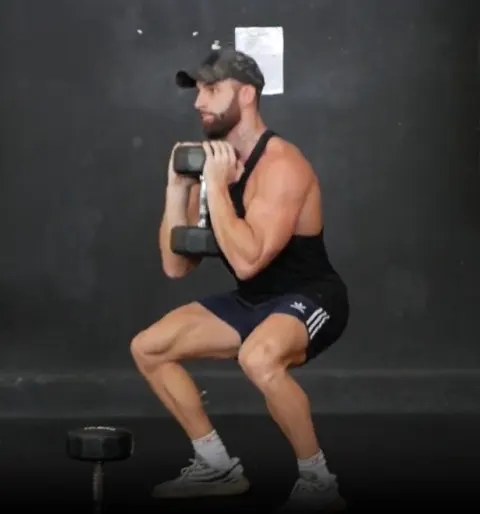
Squat + push + pull
-
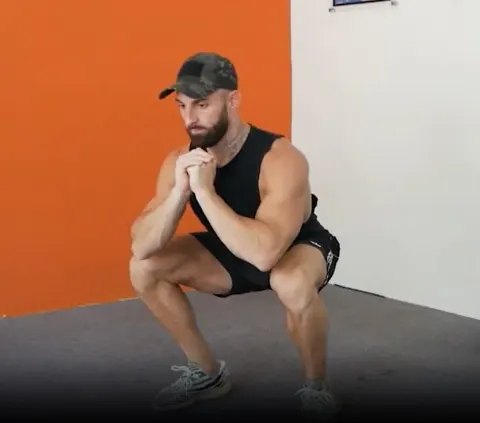
Quads, Glutes · Dumbbell
- Sets
- 2
- Reps
- 8–10
- Rest
- 90s
- Effort
- RPE 7
swap: Bodyweight Squat, Dumbbell Squat, Sumo Squat
-
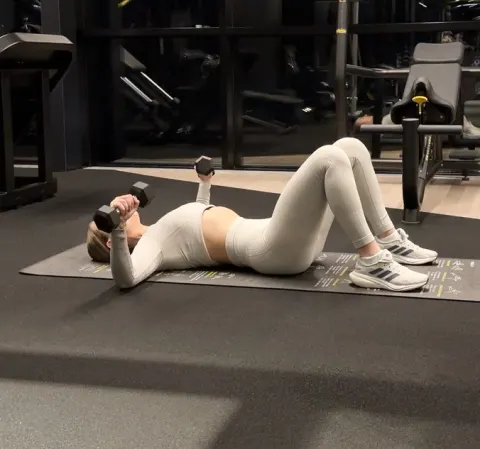
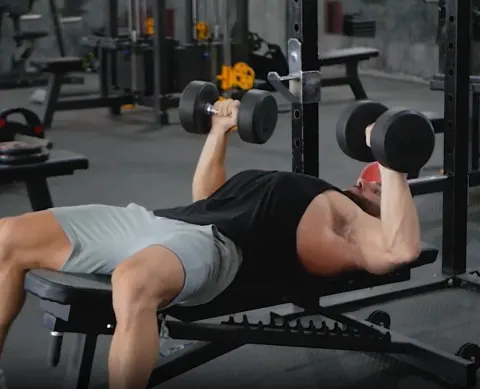
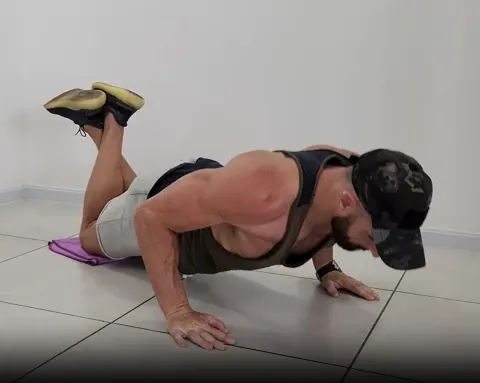
Chest, Triceps · Dumbbell
- Sets
- 2
- Reps
- 8–10
- Rest
- 90s
- Effort
- RPE 7
-
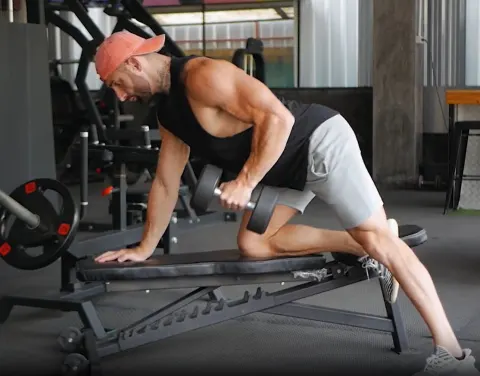
Lats, Upper Back · Dumbbell
- Sets
- 2
- Reps
- 8–10 / side
- Rest
- 90s
- Effort
- RPE 7
-
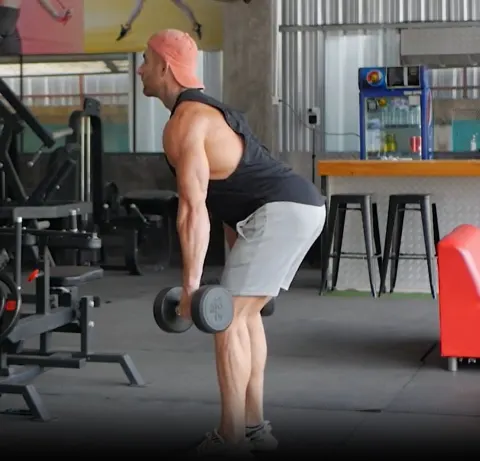
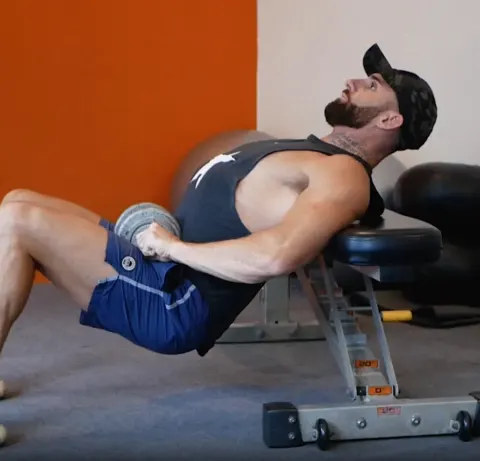
Hamstrings, Glutes · Dumbbell
- Sets
- 2
- Reps
- 8–12
- Rest
- 75s
- Effort
- RPE 7
swap: Bodyweight Hip Hinge, Dumbbell Deadlift, Bodyweight Good Morning
-
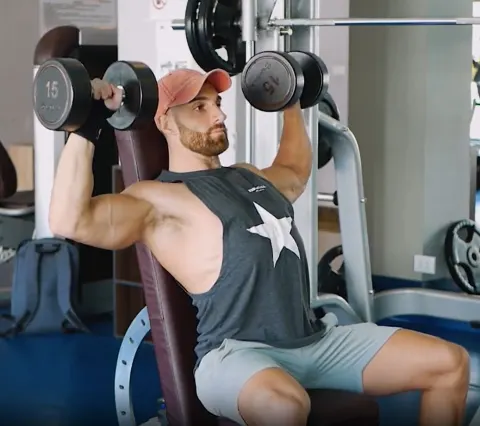
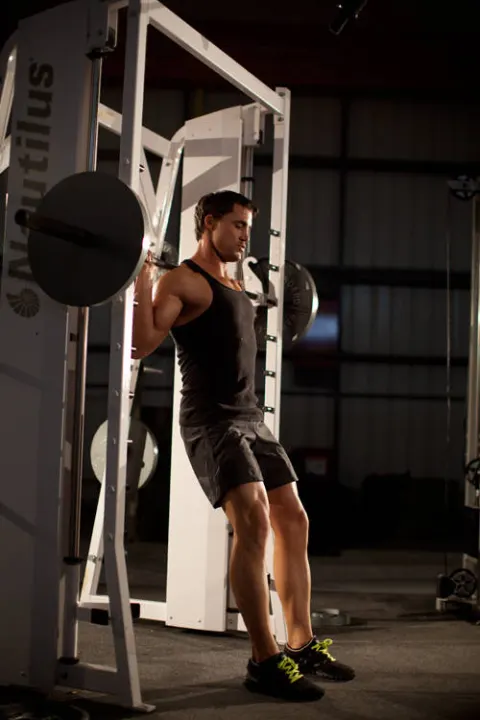
Front Delts, Side Delts · Dumbbell
- Sets
- 2
- Reps
- 12–15
- Rest
- 60s
- Effort
- RPE 7
-
Lower Back, Glutes · Bodyweight
- Sets
- 2
- Reps
- 12–15
- Rest
- 45s
- Effort
- controlled
swap: Bird Dog, Glute Bridge, Plank
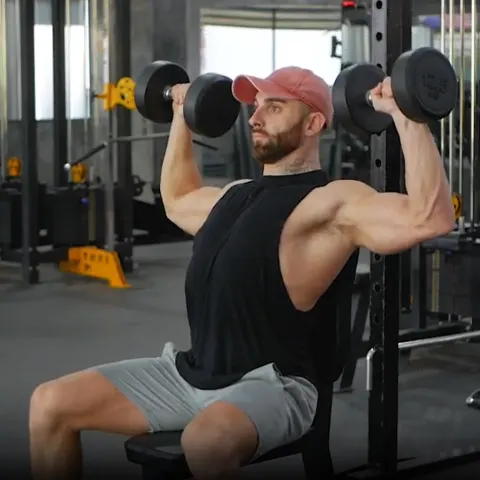
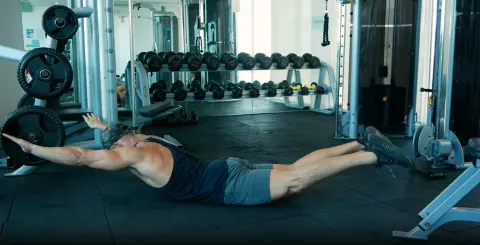
Day 2
Full Body B
Hinge + vertical push/pull
-
Hamstrings, Glutes · Dumbbell
- Sets
- 2
- Reps
- 8–10
- Rest
- 90s
- Effort
- RPE 7
-
Upper Back, Lats · Dumbbell
- Sets
- 2
- Reps
- 8–10
- Rest
- 90s
- Effort
- RPE 7
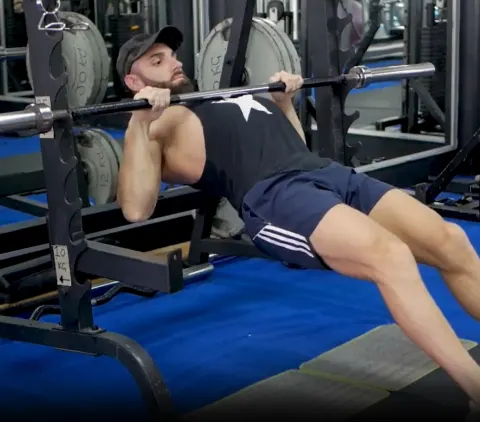
swap: Dumbbell Row, Inverted Row, Rear Delt Fly
-
Front Delts, Side Delts · Dumbbell
- Sets
- 2
- Reps
- 8–10
- Rest
- 90s
- Effort
- RPE 7
-
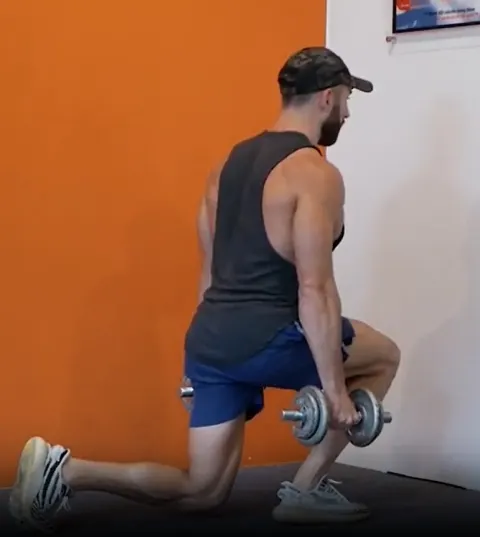
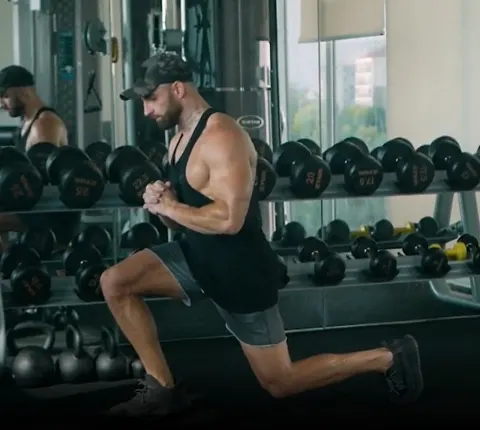
Quads, Glutes · Dumbbell
- Sets
- 2
- Reps
- 8–12 / side
- Rest
- 75s
- Effort
- RPE 7
swap: Reverse Lunge, Split Squat, Step-Up
-
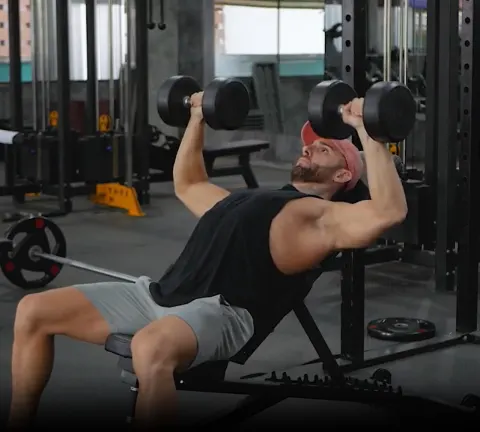
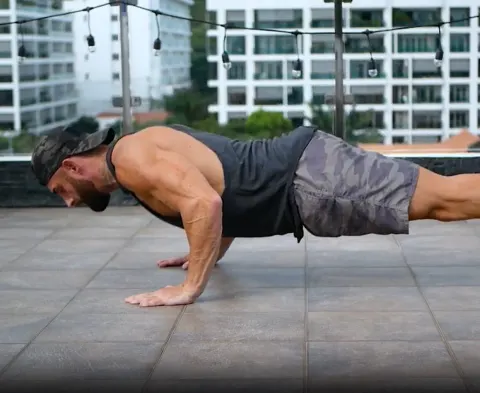
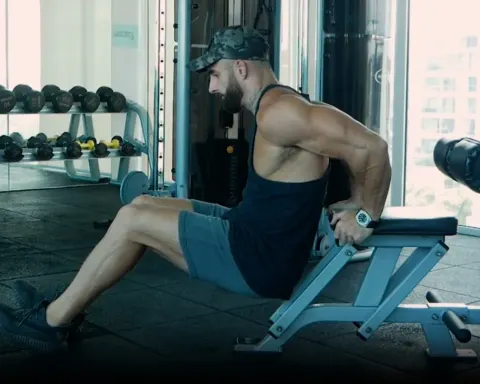
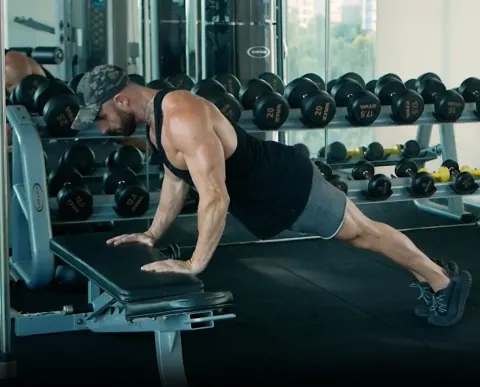
Chest, Front Delts · Dumbbell
- Sets
- 2
- Reps
- 12–15
- Rest
- 60s
- Effort
- RPE 7
-
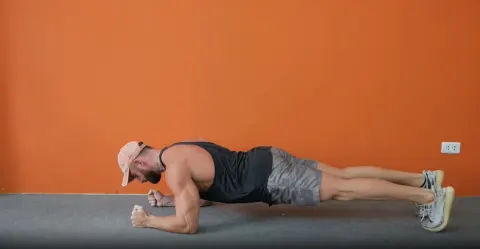
Core · Bodyweight
- Sets
- 2
- Reps
- 30–60 sec
- Rest
- 45s
- Effort
- controlled
swap: Dead Bug, Plank Shoulder Tap, Bird Dog
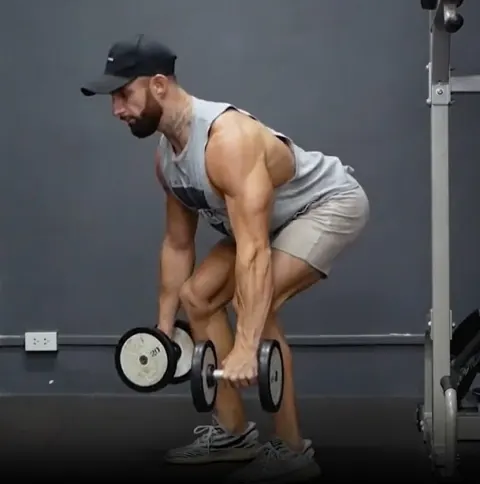
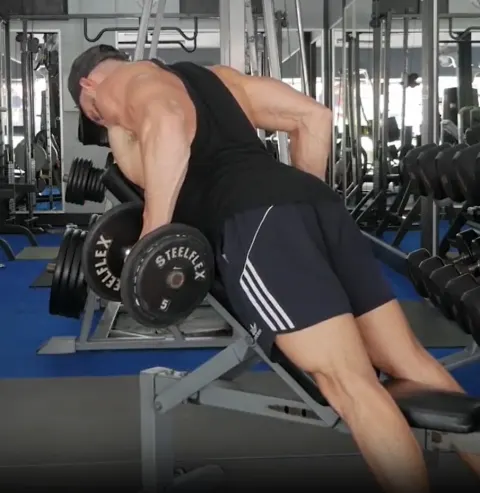
Day 3
Full Body C
Single-leg + chest + back
-
Quads, Glutes · Bodyweight
- Sets
- 2
- Reps
- 8–10 / side
- Rest
- 90s
- Effort
- RPE 7
swap: Reverse Lunge, Walking Lunge, Split Squat
-
Chest, Triceps · Dumbbell
- Sets
- 2
- Reps
- 8–10
- Rest
- 90s
- Effort
- RPE 7
-
Upper Back, Lats · Bodyweight
- Sets
- 2
- Reps
- 8–10
- Rest
- 90s
- Effort
- RPE 7
-
Traps · Dumbbell
- Sets
- 2
- Reps
- 12–15
- Rest
- 60s
- Effort
- RPE 7
-
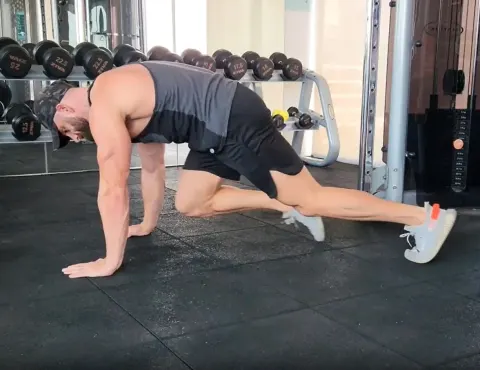
Core, Hip Flexors · Bodyweight
- Sets
- 2
- Reps
- 30–60 sec
- Rest
- 45s
- Effort
- controlled
swap: Plank Shoulder Tap, High Knees, Bear Crawl

8-week progression: what to change each week
Same exercises for the whole block. Weeks move the reps, then the load; the last week is a deload.
| Week | Load | Reps | Effort | What to watch |
|---|---|---|---|---|
| 1 | Light: learn the movements | bottom of range (8) | RPE 6–7 | Stop every set 3 reps before failure; film one set per exercise to check form. |
| 2 | Same weight | +1 rep per set (9) | RPE 8 | Same exercises, same order; only the reps move. |
| 3 | Same weight | top of range (10) | RPE 8 | All sets at the top of the range → add load next week. Missed a set? Repeat the week. |
| 4 | next dumbbell / harder variation | bottom of range (8) | RPE 8 | New weight feels hard at low reps; that is the plan working. |
| 5 | Same weight | +1 rep per set (9) | RPE 8 | Keep rest periods the same. |
| 6 | Same weight | top of range (10) | RPE 8–9 | Second time at the top: take the last set of each main lift to 1 rep in reserve. |
| 7 | next dumbbell / harder variation | bottom of range (8) | RPE 8 | Bodyweight moves: slow the lowering phase to 3 s or move to the harder variation. |
| 8 | Deload: 60 % | bottom of range | RPE 5–6 | Half the sets, then regenerate a variation or change the split for the next block. |
How to progress
- First 2 weeks: focus on form with light weights, stop each set 3 reps before failure.
- Double progression: hit the top of the rep range on every set, then add weight (2.5–5 %) and start from the bottom of the range.
- Bodyweight moves: add reps, then slow the tempo (3 sec down), then move to a harder variation.
- Deload every 6–8 weeks: same exercises, half the sets.
Notes for this plan
- Low-impact selection: no jumping, no high knee-stress movements. Swap anything that hurts for one of the listed alternatives.
- Home setup: if a weight gets too light, slow the lowering phase to 3–4 seconds or add a pause at the hardest point.
- Sessions can move between days; keep at least one rest day between hard sessions for the same muscles.
In your 40s you can still gain muscle and strength, only slightly more slowly than a decade or two earlier. What has changed is how much hard training you recover from and how your joints react to careless loading. The example week above is built around those two limits: three short full-body sessions, low-impact exercise choices, and standard sets and rests.
What changes in your 40s, and what does not
Unchanged: muscle grows from hard sets and gradual increases in load. Reps of 6–12, taken near the limit, work exactly as before.
Changed:
- Recovery between sessions takes longer, mostly because sleep is shorter and work and family stress are higher.
- Tendons and joint surfaces adapt more slowly than muscle, so sudden jumps in weight or volume cause trouble.
- Years at a desk leave many people with tight hip flexors, a stiff upper back and shoulders that sit forward.
- Without training you lose roughly 3–5 % of your muscle per decade from your mid-30s. Lifting brings that close to zero.
So the plan keeps the training stimulus and manages everything around it. Our guide to strength training after 40 covers the background in more depth.
How the example week is built
Three sessions on Monday, Wednesday and Friday, each covering the whole body in about 30 minutes. The goal is general fitness, so every exercise gets 2 sets: 8–10 reps on the first three lifts, 8–15 on the rest, at around RPE 7 with 45–90 seconds of rest.
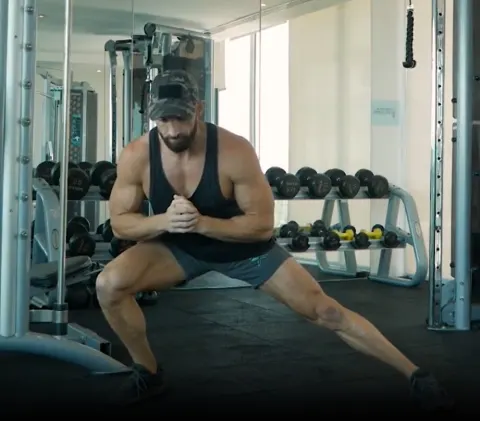
The over-40 setting changes one thing: exercise selection. Jumping and other high-impact moves are filtered out, and that is all. Set counts and rest times stay standard, because a healthy 45-year-old does not need a reduced program. The week can still contain a forward lunge and mountain climbers; if your knees or wrists dislike them, pick a reverse lunge or a plank from the listed alternatives.
A rest day after every session is the other built-in feature. With 48 hours between workouts, the legs you trained on Monday are ready for Wednesday.
Which plan to use: over 40, over 50 or standard
The ready-made plans listed under this article are the site’s over-50 builds. They go a step further than the example: 30 seconds more rest after every set, a longer warm-up, no heavy spinal loading, and one set fewer on any exercise that would otherwise get three (never below 2). Here is how to choose.
| Option | What it changes | Use it when |
|---|---|---|
| Standard plan | Nothing | You have trained consistently for a year or more and nothing hurts |
| Over-40 option in the plan generator | Low-impact exercise choices, normal sets and rests | You are healthy, in your 40s, and want the standard workload without jumping |
| Over-50 plans below | Low-impact, longer rests and warm-up, a set removed wherever there were three | You are returning after years off, sleeping under 7 hours, or managing a cranky back or knee |
A sound route for someone coming back: run the 3-day dumbbell plan for general fitness over 50 for 8 weeks, then generate the over-40 version with its shorter rests. If you were never away, the standard 3-day dumbbell plan for general fitness is fine.
Joint-friendly lifts for desk-job shoulders and hips
You do not need to avoid any movement pattern. You need the version of it your joints accept.
- Pressing: dumbbells let your wrists and elbows rotate freely. Turn your palms to face each other if the front of the shoulder complains, and favour a slight incline over a flat bench.
- Rowing: the chest-supported row takes the lower back out of the picture. If you have nowhere to set up the inverted row in the plan, use a second dumbbell row.
- Squatting: a goblet squat to a comfortable depth keeps the torso upright. Split squats load the legs hard with little weight on the spine.
- Hinging: Romanian deadlifts with dumbbells, stopping just below the knee, train hamstrings and glutes without pulling from the floor.
If one shoulder keeps hurting, our guide on training around shoulder pain lists swaps for each press.
A warm-up worth eight minutes
At 25 you could skip it. Now it decides how the first working set feels, and it is worth stretching the half hour shown above by a few minutes.
- 3–5 minutes of brisk walking or easy cycling.
- A kneeling hip flexor stretch, 30 seconds per side, to undo the chair.
- 8–10 wall angels for the upper back and shoulders.
- Two ramp-up sets of the first lift: one at about half your working weight, one at three quarters.
Effort and progression
The example is set at RPE 7, about 3 reps in reserve. Once the movements feel familiar, finish most sets with 1–2 in reserve and go no further. Sets ground out to failure add very little growth and a lot of joint stress and fatigue.
Progress in small steps. If you press 16 kg dumbbells for 8 and 8, add a rep per set over the following weeks until you reach 10 and 10, then move to 18 kg and return to 8s. On main lifts expect a weight increase every two or three weeks, not every session. Every 6–8 weeks take a deload: about 60 % of your usual weights and half the sets for one week.
Coming back after years off
Strength you once had returns faster than it was first built, but your tendons have not kept pace with your memory.
- Weeks 1–2: start at half of what you think you can lift and finish every set with 3 reps left.
- Weeks 3–6: raise loads by no more than 5–10 % a week.
- From week 7: train as the plan is written.
Ignore your old numbers until month three.
Recovery: the real limiter
- Sleep: 7–9 hours. One extra hour does more than any supplement.
- Protein: 1.6–2.2 g per kg of body weight, spread over 3–4 meals.
- Steps: a daily walk helps recovery and costs nothing.
- Stress: in a brutal week at work, keep the sessions but repeat last week’s weights and reps.
Common mistakes in your 40s
- Training like you did at 22: six days, everything to failure, no warm-up.
- Going only light. Easy sets of 20 do not hold on to strength.
- Pushing through joint pain. Muscles burning is fine. A sharp pain in a joint means swap the exercise.
- Adding weight after a bad night. Hold the load and repeat last week’s reps.
- Saving it all for the weekend. Two long sessions on Saturday and Sunday leave five days with nothing.
Where to go from here
If muscle is the main goal and you want a cautious start with machines, cables and dumbbells, try the 3-day gym plan for muscle gain over 50. The muscle building workout plan page explains volume and food. When three days feels easy, look at a 4-day workout plan. A decade on, or if your joints already ask for more care, the workout plan for over 50 page explains the gentler build with longer rests.
Workout Plan for Over 40: all 51 plans
- 2-Day Dumbbell Workout Plan for Weight Loss (Over 50)
- 2-Day Dumbbell Workout Plan for Muscle Gain (Over 50)
- 2-Day Dumbbell Workout Plan for Strength (Over 50)
- 2-Day Dumbbell Workout Plan for General Fitness (Over 50)
- 2-Day Gym Workout Plan for Weight Loss (Over 50)
- 2-Day Gym Workout Plan for Muscle Gain (Over 50)
- 2-Day Gym Workout Plan for Strength (Over 50)
- 2-Day Gym Workout Plan for General Fitness (Over 50)
- 2-Day Kettlebell Workout Plan for Weight Loss (Over 50)
- 2-Day Kettlebell Workout Plan for Muscle Gain (Over 50)
- 2-Day Kettlebell Workout Plan for General Fitness (Over 50)
- 2-Day Resistance Band Workout Plan for Weight Loss (Over 50)
- 2-Day Resistance Band Workout Plan for Muscle Gain (Over 50)
- 2-Day Resistance Band Workout Plan for General Fitness (Over 50)
- 3-Day Dumbbell Workout Plan for Weight Loss (Over 50)
- 3-Day Dumbbell Workout Plan for Muscle Gain (Over 50)
- 3-Day Dumbbell Workout Plan for Strength (Over 50)
- 3-Day Dumbbell Workout Plan for General Fitness (Over 50)
- 3-Day Gym Workout Plan for Weight Loss (Over 50)
- 3-Day Gym Workout Plan for Muscle Gain (Over 50)
- 3-Day Gym Workout Plan for Strength (Over 50)
- 3-Day Gym Workout Plan for General Fitness (Over 50)
- 3-Day Kettlebell Workout Plan for Weight Loss (Over 50)
- 3-Day Kettlebell Workout Plan for Muscle Gain (Over 50)
- 3-Day Kettlebell Workout Plan for General Fitness (Over 50)
- 3-Day Resistance Band Workout Plan for Weight Loss (Over 50)
- 3-Day Resistance Band Workout Plan for Muscle Gain (Over 50)
- 3-Day Resistance Band Workout Plan for General Fitness (Over 50)
- 4-Day Dumbbell Workout Plan for Weight Loss (Over 50)
- 4-Day Dumbbell Workout Plan for Muscle Gain (Over 50)
- 4-Day Dumbbell Workout Plan for Strength (Over 50)
- 4-Day Dumbbell Workout Plan for General Fitness (Over 50)
- 4-Day Gym Workout Plan for Weight Loss (Over 50)
- 4-Day Gym Workout Plan for Muscle Gain (Over 50)
- 4-Day Gym Workout Plan for Strength (Over 50)
- 4-Day Gym Workout Plan for General Fitness (Over 50)
- 4-Day Kettlebell Workout Plan for Weight Loss (Over 50)
- 4-Day Kettlebell Workout Plan for Muscle Gain (Over 50)
- 4-Day Kettlebell Workout Plan for General Fitness (Over 50)
- 4-Day Resistance Band Workout Plan for Weight Loss (Over 50)
- 4-Day Resistance Band Workout Plan for Muscle Gain (Over 50)
- 4-Day Resistance Band Workout Plan for General Fitness (Over 50)
Related programs
Frequently asked questions
Can you build muscle after 40?
Yes. Muscle responds to progressive training in your 40s much as it did earlier, only a little more slowly. Train each muscle about twice a week, keep most sets one or two reps short of failure, eat 1.6 to 2.2 g of protein per kg and sleep at least seven hours.
How many days a week should a 40 year old work out?
Three strength sessions a week is the best starting point, with a rest day after each. Move to four days only if your sleep and joints are coping well after two or three months. Add walking on the other days rather than more lifting.
What is the best workout for over 40?
A full-body routine built on squats, hinges, presses and rows, done three times a week with joint-friendly variations and steady progression. Low-impact choices such as dumbbell presses, supported rows and goblet squats give the same muscle stimulus with less wear on shoulders, knees and lower back.
Should I lift heavy or light after 40?
Mostly moderate, with some heavier work. Sets of 6 to 12 reps that end with one or two reps in reserve build muscle and strength without grinding your joints. Very light weights for 20 or more reps are not enough, and all-out singles add risk for little benefit.
How long does it take to get in shape after 40?
Expect to feel stronger within three or four weeks and to see visible changes after 8 to 12 weeks of three sessions a week. If you trained years ago, old strength returns faster than it was first built, usually within two to three months.