6-Day Workout Plan: Push/Pull/Legs Twice a Week and How to Recover
A 6-day workout plan runs push/pull/legs twice from Monday to Saturday. Learn the volume maths, what recovery it demands and the signs you should train less.
Example week
6-Day Gym Workout Plan for Muscle Gain
A complete week you can start today: exercises, sets, reps and rest for every session, with swaps for each exercise. Open this plan on its own page (PDF) →
Split
Push / Pull / Legs
Sessions / week
6
Avg. session
43 min
Schedule
Mon–Sat, Sunday off
Warm-up (every session, ~6 min)
- 3–5 min easy cardio: brisk walk, bike, jump rope or marching in place.
- Dynamic mobility: 10 leg swings each way, 10 hip circles, 10 arm circles, 8 cat-cows.
- Ramp-up sets on the first exercise: 1–2 light sets of 8 before your working sets.
Day 1
Push
Chest, shoulders, triceps
-
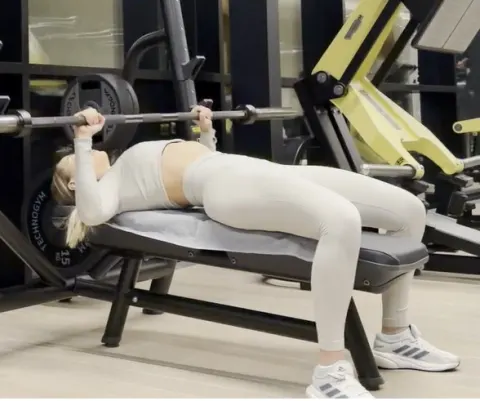
Chest, Triceps · Barbell
- Sets
- 4
- Reps
- 6–10
- Rest
- 120s
- Effort
- RPE 8
-
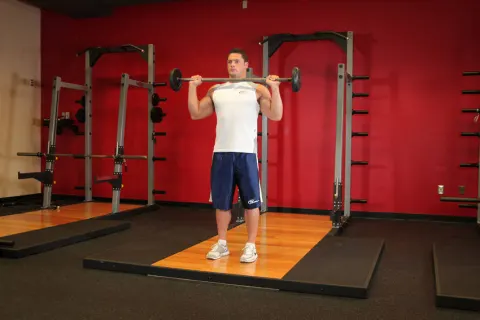
Front Delts, Triceps · Barbell
- Sets
- 3
- Reps
- 8–12
- Rest
- 90s
- Effort
- RPE 8
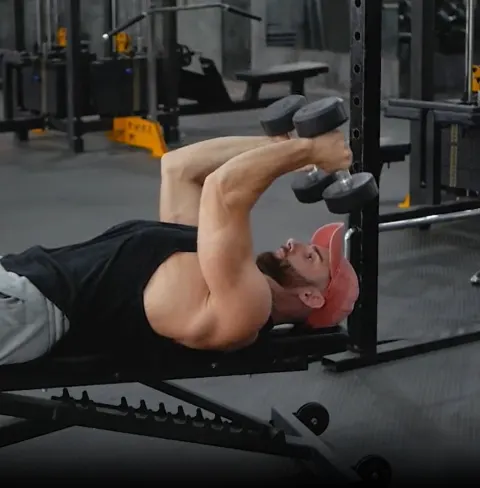
swap: Dumbbell Shoulder Press, Machine Shoulder Press, Pike Push-Up
-
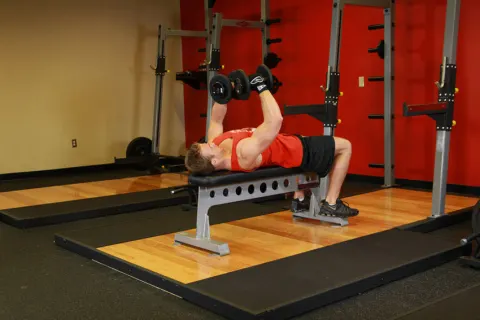
Triceps · Barbell
- Sets
- 3
- Reps
- 10–15
- Rest
- 60s
- Effort
- RPE 8–9
swap: Overhead Triceps Extension, Triceps Pushdown, Close-Grip Bench Press
Day 2
Pull
Back, rear delts, biceps
-
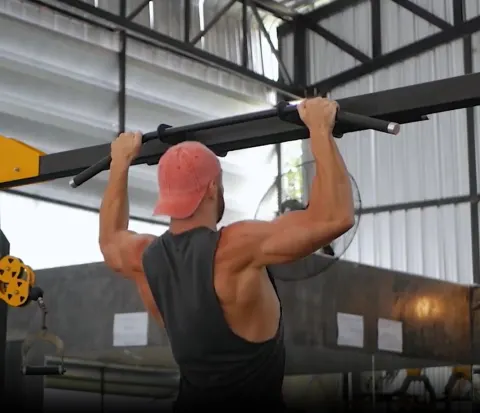
Lats, Upper Back · Pull-Up Bar
- Sets
- 4
- Reps
- 6–10
- Rest
- 120s
- Effort
- RPE 8
swap: Assisted Pull-Up, Lat Pulldown, Inverted Row
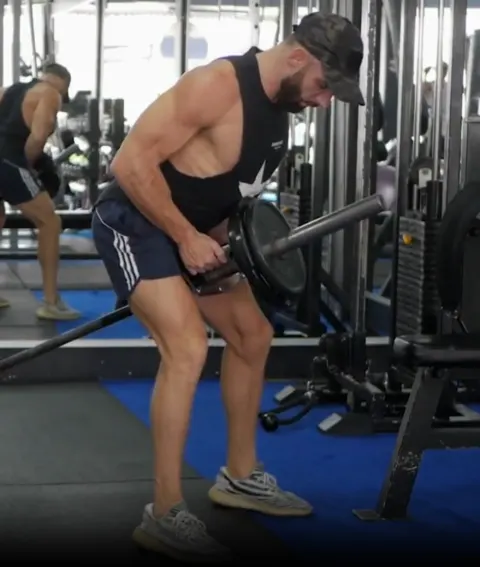
-
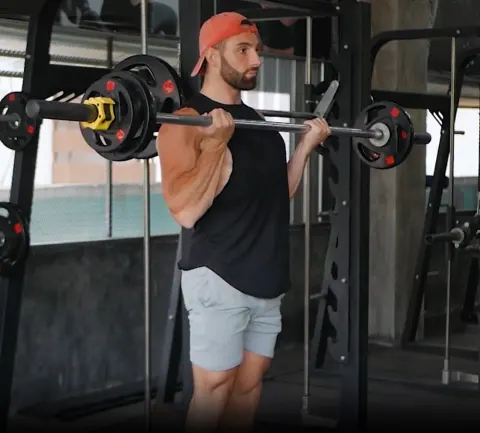
Upper Back, Lats · Barbell
- Sets
- 4
- Reps
- 6–10
- Rest
- 120s
- Effort
- RPE 8
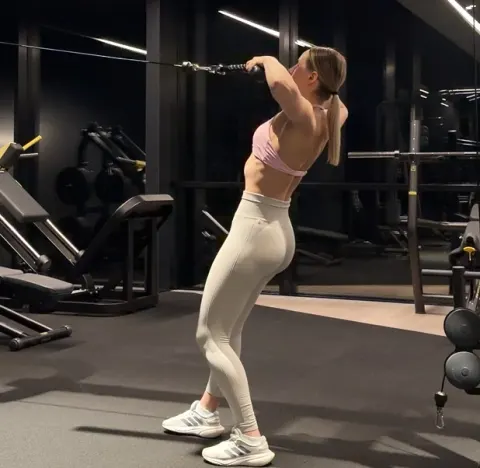
-
Rear Delts, Upper Back · Cable
- Sets
- 3
- Reps
- 10–15
- Rest
- 60s
- Effort
- RPE 8–9
-
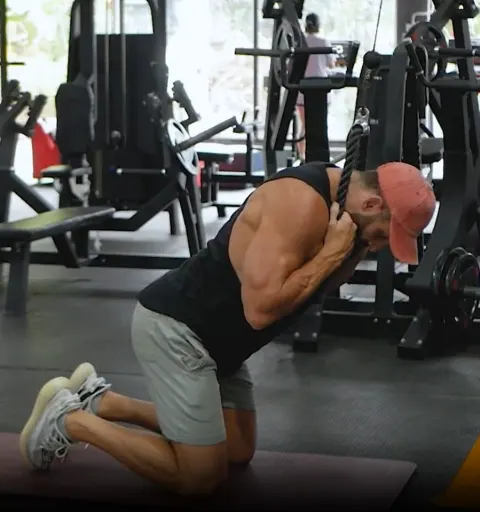
Core · Cable
- Sets
- 3
- Reps
- 12–15
- Rest
- 60s
- Effort
- controlled
swap: Crunch, Reverse Crunch, Hanging Knee Raise
Day 3
Legs
Quads, hamstrings, glutes, calves
-
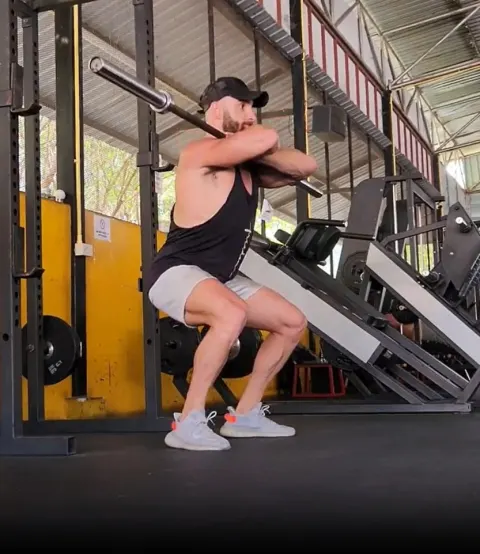
Quads, Glutes · Barbell
- Sets
- 4
- Reps
- 6–10
- Rest
- 120s
- Effort
- RPE 8
-
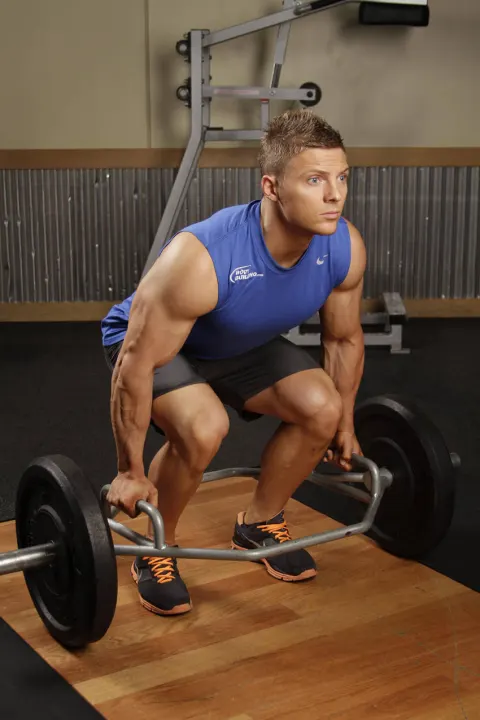
Glutes, Quads, Hamstrings · Barbell
- Sets
- 4
- Reps
- 6–10
- Rest
- 120s
- Effort
- RPE 8
swap: Conventional Deadlift, Kettlebell Deadlift, Sumo Deadlift
-
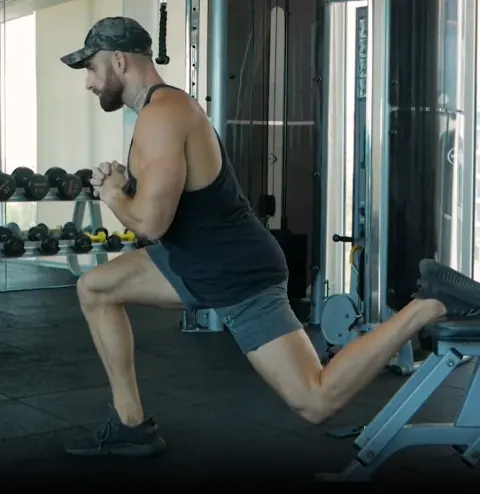
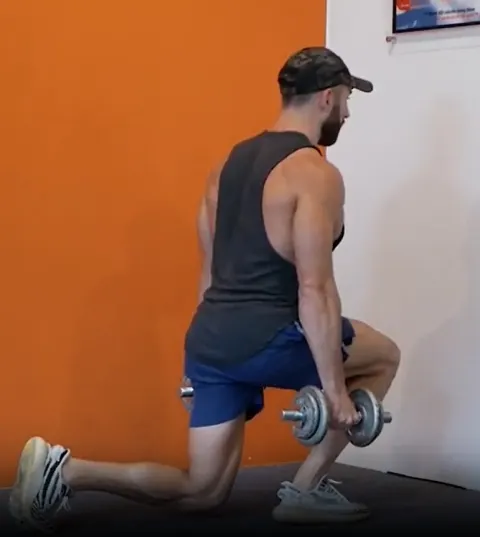
Quads, Glutes · Dumbbell
- Sets
- 3
- Reps
- 8–12 / side
- Rest
- 90s
- Effort
- RPE 8
swap: Split Squat, Reverse Lunge, Step-Up
-
Glutes · Barbell
- Sets
- 3
- Reps
- 8–12
- Rest
- 90s
- Effort
- RPE 8
-
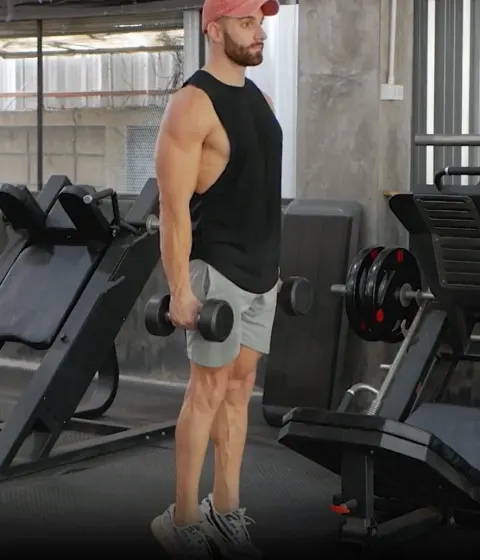
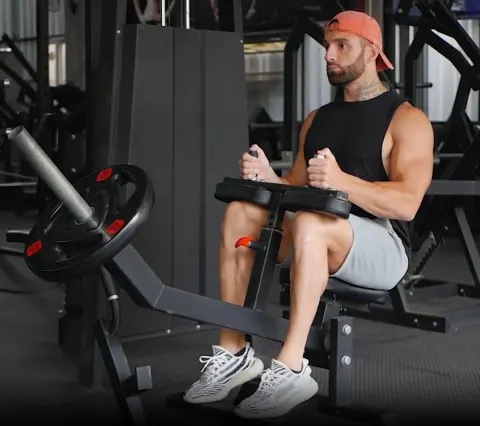
Calves · Dumbbell
- Sets
- 3
- Reps
- 10–15
- Rest
- 60s
- Effort
- RPE 8–9
swap: Standing Calf Raise, Single-Leg Calf Raise, Seated Calf Raise

Day 4
Push
Chest, shoulders, triceps
-
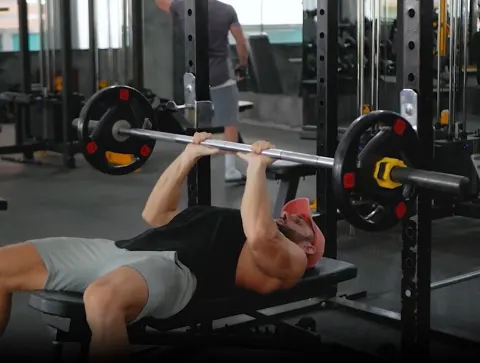
Triceps, Chest · Barbell
- Sets
- 4
- Reps
- 6–10
- Rest
- 120s
- Effort
- RPE 8
-
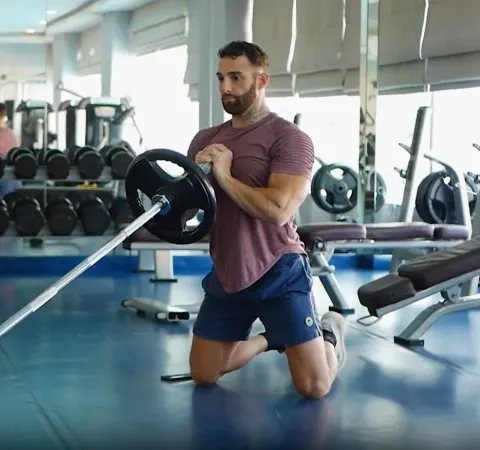
Front Delts, Chest · Barbell
- Sets
- 3
- Reps
- 8–12 / side
- Rest
- 90s
- Effort
- RPE 8
swap: Dumbbell Shoulder Press, Kettlebell Press, Overhead Press
-
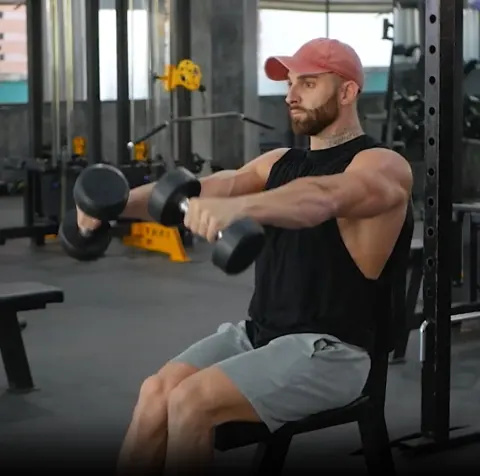
Front Delts · Dumbbell
- Sets
- 3
- Reps
- 10–15
- Rest
- 60s
- Effort
- RPE 8–9
swap: Dumbbell Shoulder Press, Dumbbell Lateral Raise, Band Shoulder Press
-
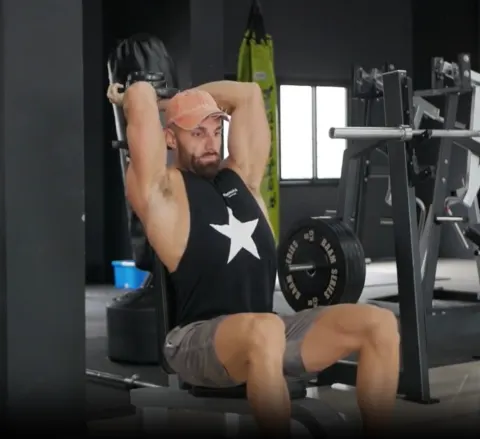
Triceps · Dumbbell
- Sets
- 3
- Reps
- 10–15
- Rest
- 60s
- Effort
- RPE 8–9

Day 5
Pull
Back, rear delts, biceps
-
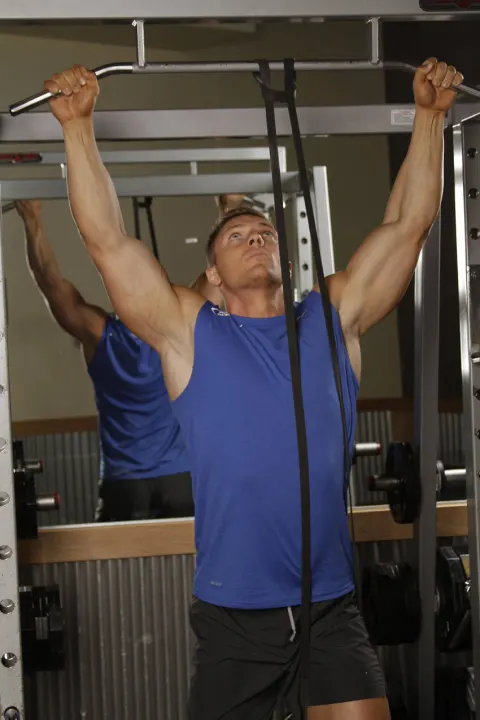
Lats, Upper Back · Pull-Up Bar
- Sets
- 4
- Reps
- 6–10
- Rest
- 120s
- Effort
- RPE 8
-
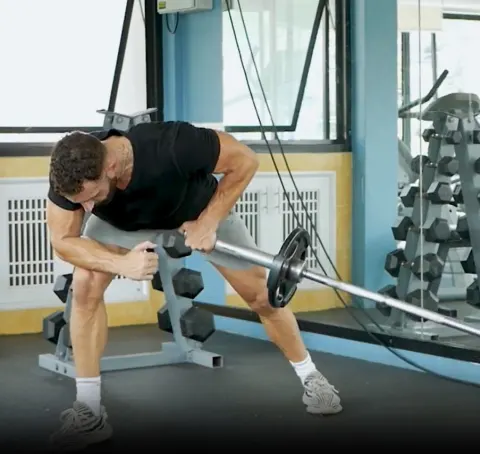
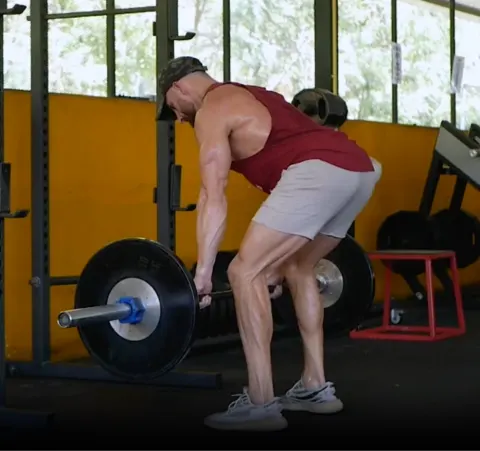
Lats, Upper Back · Barbell
- Sets
- 4
- Reps
- 6–10 / side
- Rest
- 120s
- Effort
- RPE 8
swap: Dumbbell Row, Kettlebell Row, T-Bar Row
-
Upper Back, Lats · Barbell
- Sets
- 3
- Reps
- 10–15
- Rest
- 60s
- Effort
- RPE 8–9
-
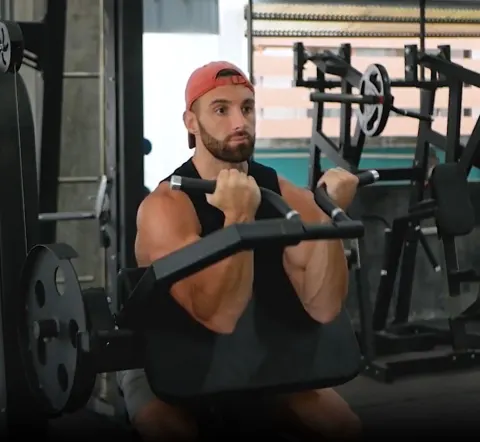
Biceps · Machine
- Sets
- 3
- Reps
- 10–15
- Rest
- 60s
- Effort
- RPE 8–9
-
Obliques, Core · Cable
- Sets
- 3
- Reps
- 12–15 / side
- Rest
- 60s
- Effort
- controlled
swap: Side Plank, Suitcase Carry, Russian Twist

Day 6
Legs
Quads, hamstrings, glutes, calves
-
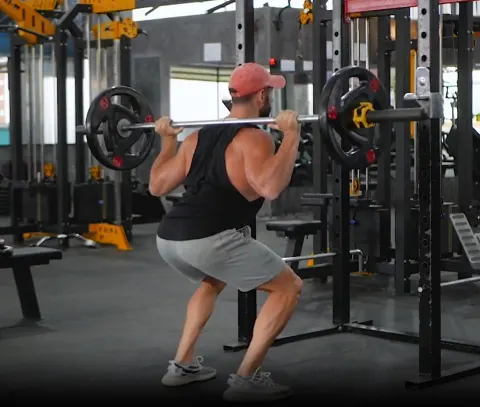
Quads, Glutes · Barbell
- Sets
- 4
- Reps
- 6–10
- Rest
- 120s
- Effort
- RPE 8
swap: Goblet Squat, Leg Press, Barbell Front Squat
-
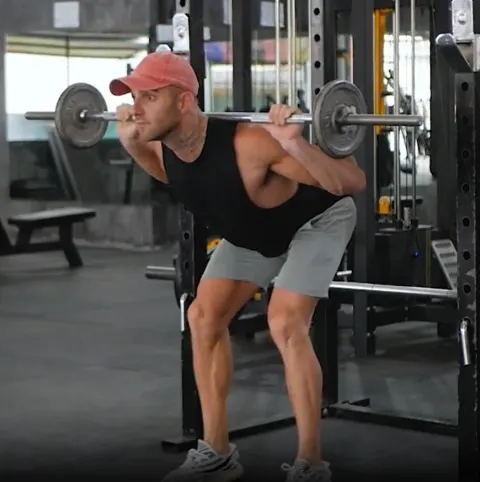
Hamstrings, Glutes, Lower Back · Barbell
- Sets
- 4
- Reps
- 6–10
- Rest
- 120s
- Effort
- RPE 8
swap: Banded Good Morning, Barbell Romanian Deadlift, Bodyweight Hip Hinge
-
Quads, Glutes · Dumbbell
- Sets
- 3
- Reps
- 8–12 / side
- Rest
- 90s
- Effort
- RPE 8
-
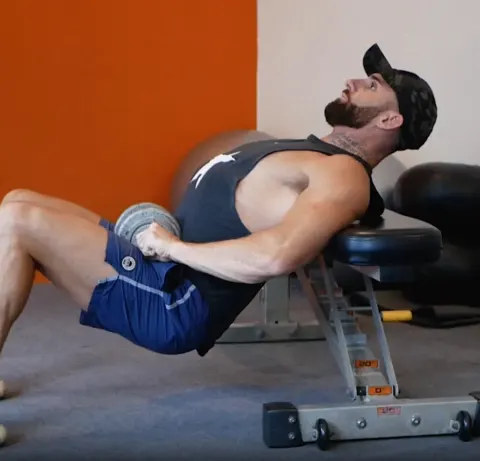
Glutes · Dumbbell
- Sets
- 3
- Reps
- 8–12
- Rest
- 90s
- Effort
- RPE 8
swap: Hip Thrust, Barbell Hip Thrust, Glute Bridge
-
Calves · Machine
- Sets
- 3
- Reps
- 10–15
- Rest
- 60s
- Effort
- RPE 8–9
swap: Standing Calf Raise, Dumbbell Calf Raise, Single-Leg Calf Raise
8-week progression: what to change each week
Same exercises for the whole block. Weeks move the reps, then the load; the last week is a deload.
| Week | Load | Reps | Effort | What to watch |
|---|---|---|---|---|
| 1 | Starting weight | bottom of range (6–8) | RPE 7 | Pick a weight you could do 3 more reps with. |
| 2 | Same weight | +1 rep per set (8–9) | RPE 8 | Same exercises, same order; only the reps move. |
| 3 | Same weight | top of range (9–10) | RPE 8 | All sets at the top of the range → add load next week. Missed a set? Repeat the week. |
| 4 | +2.5 kg (5 lb) | bottom of range (6–8) | RPE 8 | New weight feels hard at low reps; that is the plan working. |
| 5 | Same weight | +1 rep per set (8–9) | RPE 8 | Keep rest periods the same. |
| 6 | Same weight | top of range (9–10) | RPE 8–9 | Second time at the top: take the last set of each main lift to 1 rep in reserve. |
| 7 | +2.5 kg (5 lb) | bottom of range (6–8) | RPE 8 | Bodyweight moves: slow the lowering phase to 3 s or move to the harder variation. |
| 8 | Deload: 60 % | bottom of range | RPE 5–6 | Half the sets, then regenerate a variation or change the split for the next block. |
How to progress
- Double progression: hit the top of the rep range on every set, then add weight (2.5–5 %) and start from the bottom of the range.
- Bodyweight moves: add reps, then slow the tempo (3 sec down), then move to a harder variation.
- Deload every 6–8 weeks: same exercises, half the sets.
Notes for this plan
- Sessions can move between days; keep at least one rest day between hard sessions for the same muscles.
Six training days means push/pull/legs run twice, Monday to Saturday, with Sunday off. Every muscle is trained twice a week at 12–16 hard sets, the upper half of the range that builds muscle. It is the highest-volume schedule on the site, and it only works when sleep, food and deloads keep pace with the training.
The volume maths of push/pull/legs twice
One round covers the body in three sessions. Push day puts a horizontal press and an overhead press first, then a fly, a shoulder isolation and triceps. Pull day uses a vertical pull and a row as main lifts, then a face pull or a lighter row, biceps and core. Leg day uses a squat and a hinge as main lifts, then a lunge, glute work and calves.
Run that round twice at intermediate set counts, 4 sets on main lifts and 3 on the others, and the week adds up roughly like this:
- Back: two main pulls per session, about 16 sets, plus 6 lighter sets for the upper back and rear delts.
- Chest: 8 sets of main pressing plus 6 sets of flyes.
- Shoulders: 6 sets of overhead pressing plus 6 of isolation work. The week above uses shrugs and front raises there, so swap one for a lateral raise if side delts are a priority.
- Quads: about 14 sets from squats and lunges.
- Hamstrings and glutes: about 14 sets from hinges and glute work.
- Biceps, triceps, calves: about 6 direct sets each, on top of what the compound lifts add.
Because six days add up quickly, the generator trims the optional accessory slots. Sessions hold five exercises and last about 40–45 minutes. The temptation is to fill the spare time with more exercises. Do not: 20 sets is a ceiling, not a target.
How the Monday-to-Saturday week is laid out
The example week above is a push/pull/legs 6-day split at intermediate set counts, the same layout the ready-made 6-day gym plan for muscle gain uses. Push falls on Monday and Thursday, pull on Tuesday and Friday, legs on Wednesday and Saturday. The second round keeps the movement patterns but swaps in different exercises where the equipment allows.
You train six days in a row, yet each muscle still gets 72 hours before its next session. That works because the three sessions barely overlap: your pressing muscles rest while you pull and squat.
The lower back is the exception. It works during rows on Tuesday and again under squats and hinges on Wednesday. If it feels tired by midweek, use chest-supported or machine rows on pull day.
Running a heavier and a lighter round
The plan lists the same 6–10 range for the main lifts in both rounds. How you use that range is your call, and two rounds at full effort is the fastest route to stalled lifts. Give the two halves of the week different jobs instead.
- Round one, Monday to Wednesday: the heavier round. Main lifts stay in the lower half of the range, 6–8 reps, with the most load you can handle at RPE 8.
- Round two, Thursday to Saturday: the lighter round. Choose loads about 10 % easier and work in the upper half, 8–10 reps, still stopping two reps short of failure.
Take the hinge slot as an example. Wednesday’s deadlift variation, such as the trap bar deadlift, runs at 120 kg for 4 × 6–8 and moves to 122.5 kg (5 lb more) once every set reaches 8. Saturday’s hinge is a different variation, runs at 4 × 8–10 and moves up when every set reaches 10. Each round progresses by its own numbers, so keep two logs and never compare them.
The block lasts eight weeks and closes with a lighter week at about 60 % of your loads and half the sets. On six days that week is where the gains of the previous seven are collected, as the deload guide explains. The 6-day gym plan for strength works in 4–6 reps with 2.5-minute rests and deloads every fourth week.
What six days demands outside the gym
| Factor | Target | Red flag |
|---|---|---|
| Sleep | 7–9 hours a night | Under 6 hours on three or more nights a week |
| Calories | Maintenance, or a 250–300 kcal surplus when gaining | Body weight sliding down while you try to gain |
| Protein | 1.6–2.2 g per kg of body weight daily | Most days below the bottom of that range |
| Rest day | Sunday, walking only | A seventh session for abs or arms |
| Deload | Every 6–8 weeks | Ten weeks without a lighter one |
| Effort | RPE 8 on main lifts, 8–9 on accessories | Failure on every set |
The TDEE calculator gives you a maintenance figure to build the surplus on. A gain of roughly 0.25–0.5 kg a month is realistic for a non-beginner. Fat-loss versions of the six-day week exist, but in a deficit of 300–500 kcal you hold your volume and never add to it.
Signs you should drop to five or four days
- Reps fall at the same load for two weeks running. One bad session is noise. Two weeks is a trend.
- An elbow, shoulder or knee still aches when that session comes round again.
- You miss one of the six sessions most weeks. A six-day plan with a hole in it trains some muscles once and others twice.
- Sleep has been under 7 hours for a month, or work and family stress has jumped.
The 5-day workout plan keeps twice-a-week frequency with two rest days. The 4-day workout plan gives you three. Weekly sets per muscle barely change, so stepping down costs far less muscle than grinding on tired.
Which equipment has 6-day plans
Six-day plans exist for three setups:
- Gym: muscle gain, strength, weight loss and general fitness.
- Dumbbells: the 6-day dumbbell plan for muscle gain needs adjustable dumbbells and ideally a bench, with single-leg work keeping leg days hard.
- No equipment: the 6-day no-equipment plan for general fitness progresses by reps first, then a 3-second lowering phase, then a harder variation.
There are no six-day kettlebell or resistance band plans. One bell or one set of bands repeats the same few movements too often to fill six useful sessions. There are also no beginner or over-50 versions. A first-year lifter grows just as fast on three days, and the muscle building workout plan page compares the three- to six-day options side by side.
Mistakes specific to six days
- Adding exercises because sessions feel short. Short is the design. Volume comes from frequency.
- Dropping Saturday legs. Do it twice a month and you are running a four-day upper-body plan with extra steps.
- Pressing more than you pull. Match pull sets to push sets at minimum.
- Maxing both rounds. Keep the heavier and lighter jobs separate.
- Lifting on Sunday. The rotation rests muscles, but joints and tendons only rest when nothing is loaded.
Six days is a tool for people who like training often and have their life arranged around it. The push/pull/legs guide covers exercise choices for each session, and the plan generator builds the full week for your equipment and goal.
6-Day Workout Plan: all 33 plans
- 6-Day Dumbbell Workout Plan for Weight Loss
- 6-Day Dumbbell Workout Plan for Weight Loss (Women)
- 6-Day Dumbbell Workout Plan for Weight Loss (Men)
- 6-Day Dumbbell Workout Plan for Muscle Gain
- 6-Day Dumbbell Workout Plan for Muscle Gain (Women)
- 6-Day Dumbbell Workout Plan for Muscle Gain (Men)
- 6-Day Dumbbell Workout Plan for Strength
- 6-Day Dumbbell Workout Plan for Strength (Women)
- 6-Day Dumbbell Workout Plan for Strength (Men)
- 6-Day Dumbbell Workout Plan for General Fitness
- 6-Day Dumbbell Workout Plan for General Fitness (Women)
- 6-Day Dumbbell Workout Plan for General Fitness (Men)
- 6-Day Gym Workout Plan for Weight Loss
- 6-Day Gym Workout Plan for Weight Loss (Women)
- 6-Day Gym Workout Plan for Weight Loss (Men)
- 6-Day Gym Workout Plan for Muscle Gain
- 6-Day Gym Workout Plan for Muscle Gain (Women)
- 6-Day Gym Workout Plan for Muscle Gain (Men)
- 6-Day Gym Workout Plan for Strength
- 6-Day Gym Workout Plan for Strength (Women)
- 6-Day Gym Workout Plan for Strength (Men)
- 6-Day Gym Workout Plan for General Fitness
- 6-Day Gym Workout Plan for General Fitness (Women)
- 6-Day Gym Workout Plan for General Fitness (Men)
Related programs
Frequently asked questions
Is working out 6 days a week too much?
It depends on recovery, not willpower. Six sessions are sustainable when push, pull and leg days rotate so each muscle rests about 72 hours, you sleep 7 to 9 hours and you take a lighter week every 6 to 8 weeks. If reps drop for two weeks running, it is too much for now.
What is the best 6-day workout split?
Push/pull/legs done twice: push Monday and Thursday, pull Tuesday and Friday, legs Wednesday and Saturday, Sunday off. Each muscle is trained twice a week with roughly 12 to 16 hard sets, and sessions stay around 40 to 45 minutes because each covers only a third of the body.
Do I need a rest day on a 6-day split?
Yes, one full day, usually Sunday. Muscles are protected by the rotation, but joints, connective tissue and your nervous system also need a break from loading. Walk on that day and skip any bonus session. Without it, fatigue accumulates until the lifts stall, usually within three or four weeks.
Will I build muscle faster on 6 days than on 4?
Only slightly, if at all. Growth follows weekly hard sets per muscle, and a 4-day upper/lower plan already provides 10 to 16 against 12 to 16 on six days. Six days mainly gives shorter sessions and more practice. Choose it because you enjoy training often and recover well, not for speed.
Can I do a 6-day workout plan at home?
Yes, with dumbbells or with no equipment at all, since both have 6-day plans. Dumbbell versions need adjustable weights and ideally a bench so leg days stay hard. There are no 6-day kettlebell or resistance band plans, because those tools do not offer enough exercise and load variety for six sessions.