5-Day Workout Plan: Push/Pull/Legs Plus Upper/Lower Explained
A 5-day workout plan pairs push/pull/legs with an upper and a lower day so each muscle is trained twice. See the layout, recovery rules and who should skip it.
Example week
5-Day Gym Workout Plan for Muscle Gain
A complete week you can start today: exercises, sets, reps and rest for every session, with swaps for each exercise. Open this plan on its own page (PDF) →
Split
PPL + Upper / Lower
Sessions / week
5
Avg. session
43 min
Schedule
Mon · Tue · Wed · Fri · Sat
Warm-up (every session, ~6 min)
- 3–5 min easy cardio: brisk walk, bike, jump rope or marching in place.
- Dynamic mobility: 10 leg swings each way, 10 hip circles, 10 arm circles, 8 cat-cows.
- Ramp-up sets on the first exercise: 1–2 light sets of 8 before your working sets.
Day 1
Push
Chest, shoulders, triceps
-
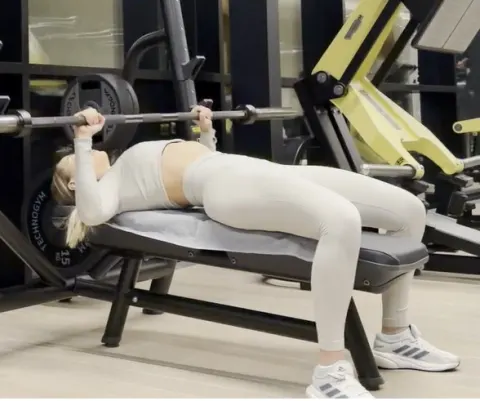
Chest, Triceps · Barbell
- Sets
- 4
- Reps
- 6–10
- Rest
- 120s
- Effort
- RPE 8
-
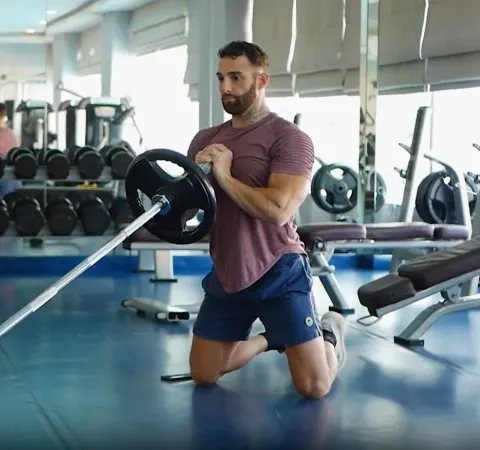
Front Delts, Chest · Barbell
- Sets
- 3
- Reps
- 8–12 / side
- Rest
- 90s
- Effort
- RPE 8
swap: Dumbbell Shoulder Press, Kettlebell Press, Overhead Press
-
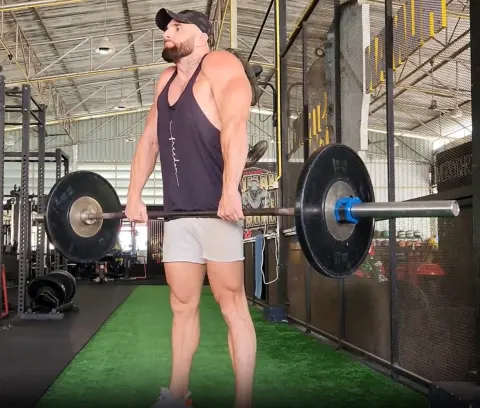
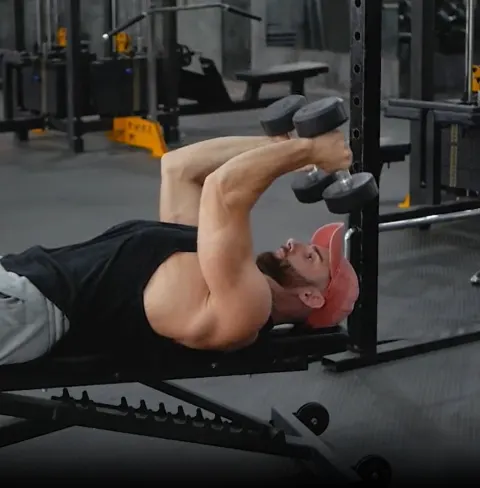
Triceps · Barbell
- Sets
- 3
- Reps
- 10–15
- Rest
- 60s
- Effort
- RPE 8–9
swap: Overhead Triceps Extension, Triceps Pushdown, Close-Grip Bench Press

Day 2
Pull
Back, rear delts, biceps
-
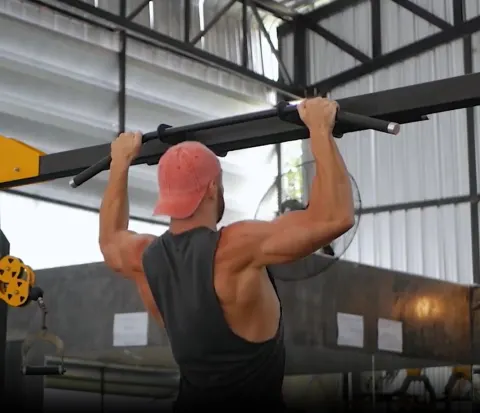
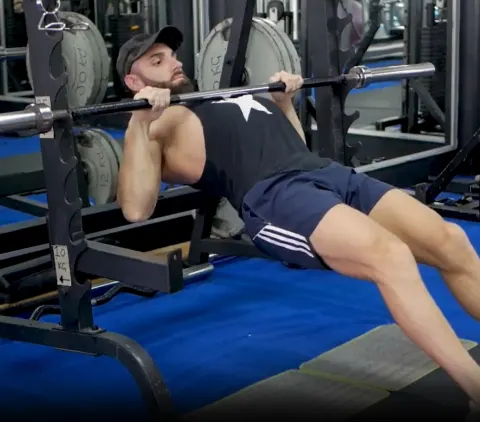
Lats, Upper Back · Pull-Up Bar
- Sets
- 4
- Reps
- 6–10
- Rest
- 120s
- Effort
- RPE 8
swap: Assisted Pull-Up, Lat Pulldown, Inverted Row
-
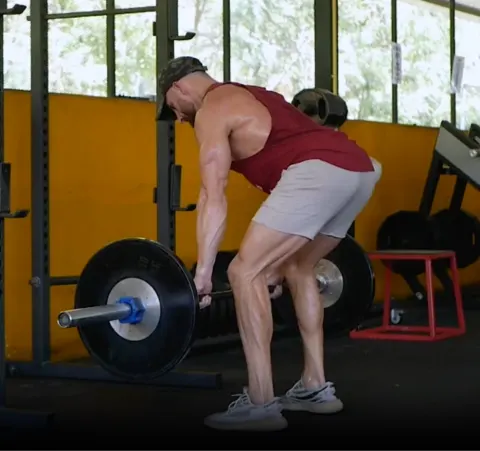
Upper Back, Lats · Barbell
- Sets
- 4
- Reps
- 6–10
- Rest
- 120s
- Effort
- RPE 8
-
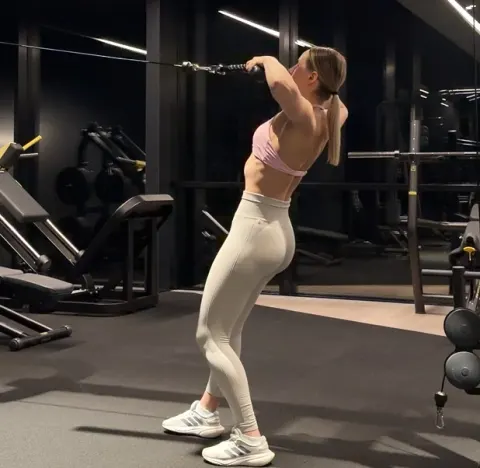
Rear Delts, Upper Back · Cable
- Sets
- 3
- Reps
- 10–15
- Rest
- 60s
- Effort
- RPE 8–9
-
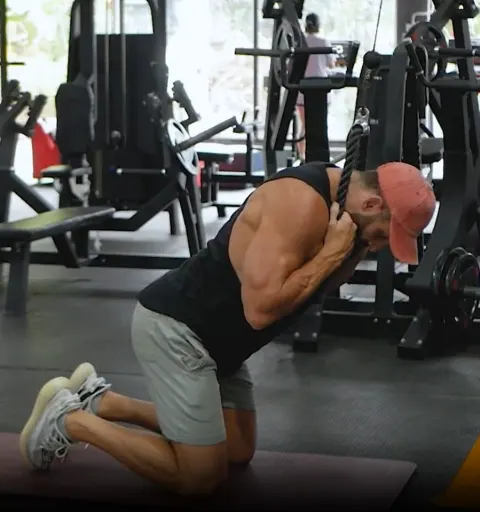
Core · Cable
- Sets
- 3
- Reps
- 12–15
- Rest
- 60s
- Effort
- controlled
swap: Crunch, Reverse Crunch, Hanging Knee Raise
Day 3
Legs
Quads, hamstrings, glutes, calves
-
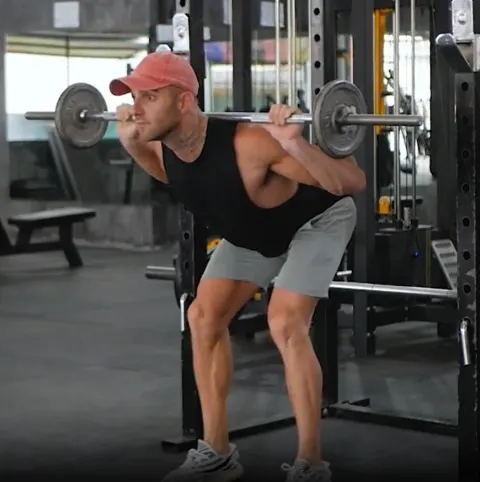
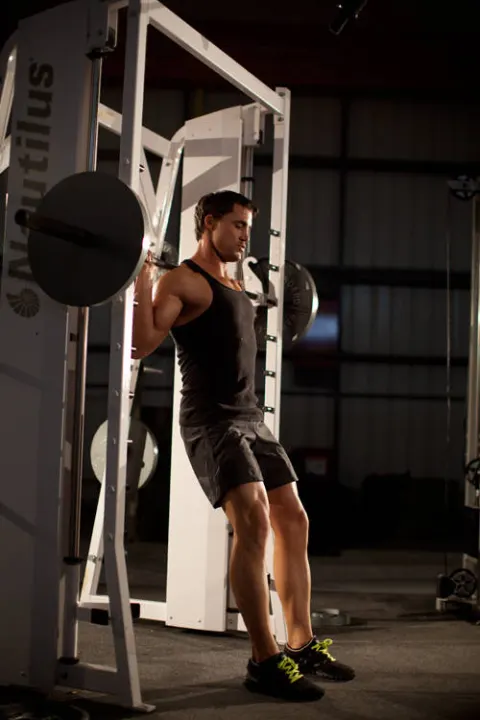
Glutes, Quads · Barbell
- Sets
- 4
- Reps
- 6–10
- Rest
- 120s
- Effort
- RPE 8
-
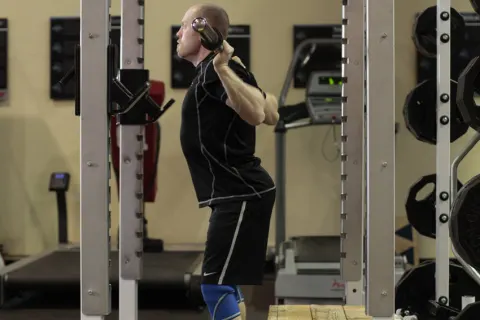
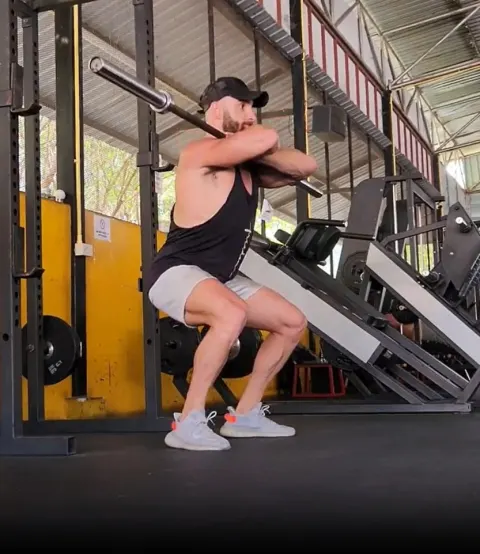
Hamstrings, Glutes, Lower Back · Barbell
- Sets
- 4
- Reps
- 6–10
- Rest
- 120s
- Effort
- RPE 8
swap: Banded Good Morning, Barbell Romanian Deadlift, Bodyweight Hip Hinge
-
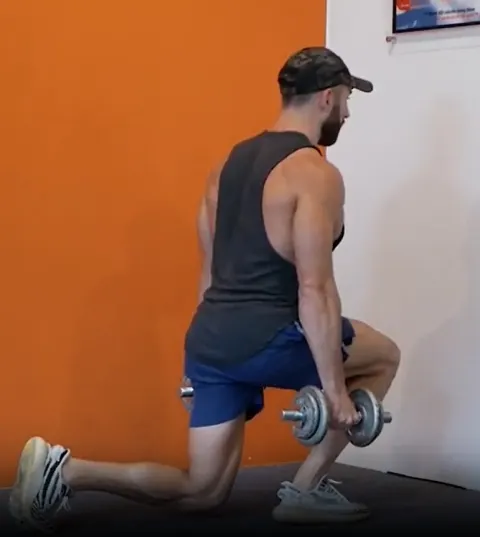
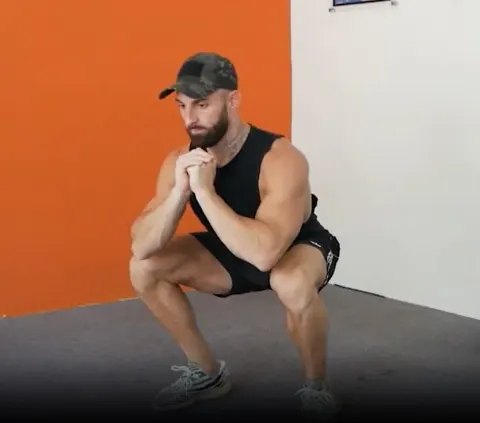
Quads, Glutes · Dumbbell
- Sets
- 3
- Reps
- 8–12 / side
- Rest
- 90s
- Effort
- RPE 8
-
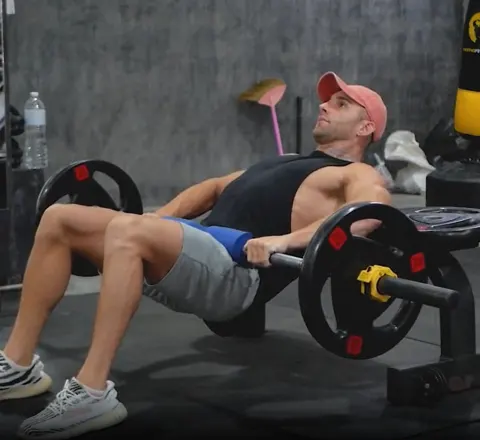
Glutes · Barbell
- Sets
- 3
- Reps
- 8–12
- Rest
- 90s
- Effort
- RPE 8
-
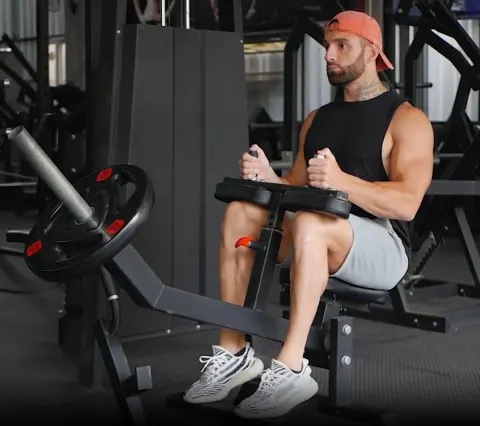
Calves · Machine
- Sets
- 3
- Reps
- 10–15
- Rest
- 60s
- Effort
- RPE 8–9
swap: Standing Calf Raise, Dumbbell Calf Raise, Single-Leg Calf Raise
Day 4
Upper A
Chest + back, strength bias
-
Chest, Front Delts · Barbell
- Sets
- 4
- Reps
- 6–10
- Rest
- 120s
- Effort
- RPE 8
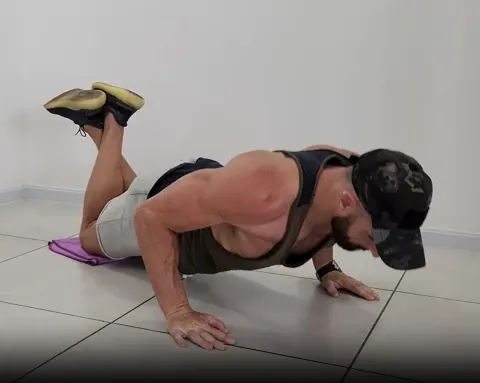
swap: Incline Dumbbell Press, Decline Push-Up, Machine Chest Press
-
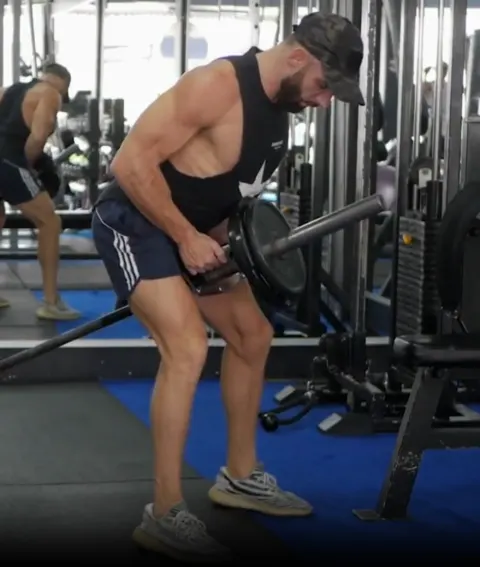
Upper Back, Lats · Barbell
- Sets
- 4
- Reps
- 6–10
- Rest
- 120s
- Effort
- RPE 8
-
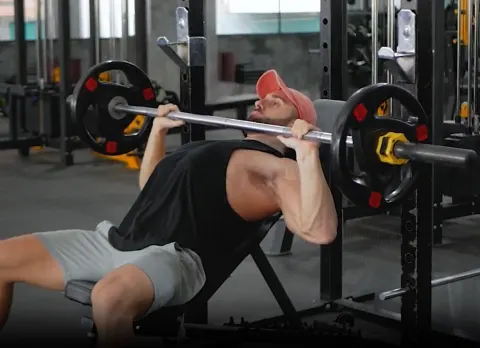
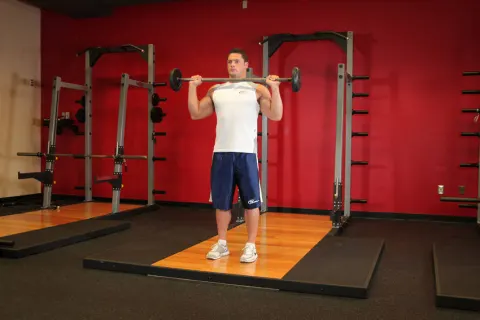
Front Delts, Triceps · Barbell
- Sets
- 3
- Reps
- 8–12
- Rest
- 90s
- Effort
- RPE 8
swap: Dumbbell Shoulder Press, Machine Shoulder Press, Pike Push-Up
-
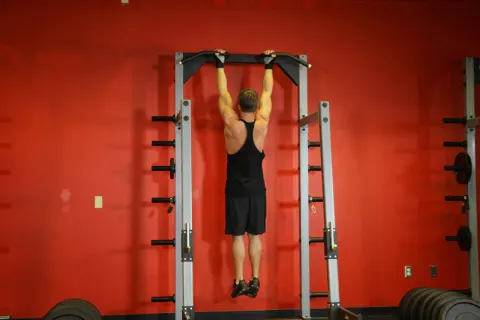
Lats, Biceps · Pull-Up Bar
- Sets
- 3
- Reps
- 8–12
- Rest
- 90s
- Effort
- RPE 8
swap: Pull-Up, Lat Pulldown, Assisted Pull-Up
-
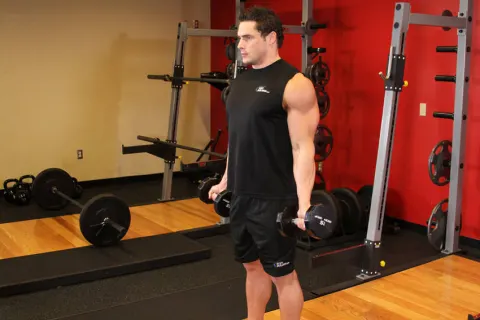
Biceps, Forearms · Dumbbell
- Sets
- 3
- Reps
- 10–15
- Rest
- 60s
- Effort
- RPE 8–9
swap: Hammer Curl, Reverse Curl, Dumbbell Curl
Day 5
Lower B
Hinge focus
-
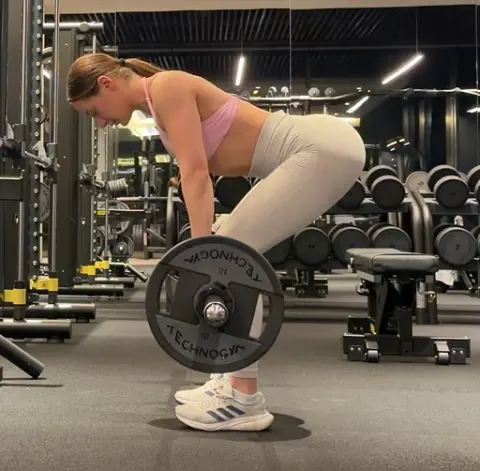
Hamstrings, Glutes · Barbell
- Sets
- 4
- Reps
- 6–10
- Rest
- 120s
- Effort
- RPE 8
swap: Dumbbell Romanian Deadlift, Kettlebell Deadlift, Cable Pull-Through
-
Quads, Glutes · Barbell
- Sets
- 3
- Reps
- 8–12
- Rest
- 90s
- Effort
- RPE 8
-
Glutes · Machine
- Sets
- 3
- Reps
- 8–12
- Rest
- 90s
- Effort
- RPE 8
-
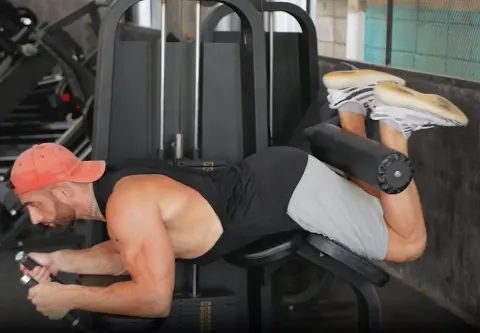
Hamstrings · Machine
- Sets
- 3
- Reps
- 10–15
- Rest
- 60s
- Effort
- RPE 8–9
swap: Seated Leg Curl, Banded Hamstring Curl, Dumbbell Romanian Deadlift
-
Obliques, Core · Cable
- Sets
- 3
- Reps
- 12–15 / side
- Rest
- 60s
- Effort
- controlled
swap: Side Plank, Suitcase Carry, Russian Twist

8-week progression: what to change each week
Same exercises for the whole block. Weeks move the reps, then the load; the last week is a deload.
| Week | Load | Reps | Effort | What to watch |
|---|---|---|---|---|
| 1 | Starting weight | bottom of range (6–8) | RPE 7 | Pick a weight you could do 3 more reps with. |
| 2 | Same weight | +1 rep per set (8–9) | RPE 8 | Same exercises, same order; only the reps move. |
| 3 | Same weight | top of range (9–10) | RPE 8 | All sets at the top of the range → add load next week. Missed a set? Repeat the week. |
| 4 | +2.5 kg (5 lb) | bottom of range (6–8) | RPE 8 | New weight feels hard at low reps; that is the plan working. |
| 5 | Same weight | +1 rep per set (8–9) | RPE 8 | Keep rest periods the same. |
| 6 | Same weight | top of range (9–10) | RPE 8–9 | Second time at the top: take the last set of each main lift to 1 rep in reserve. |
| 7 | +2.5 kg (5 lb) | bottom of range (6–8) | RPE 8 | Bodyweight moves: slow the lowering phase to 3 s or move to the harder variation. |
| 8 | Deload: 60 % | bottom of range | RPE 5–6 | Half the sets, then regenerate a variation or change the split for the next block. |
How to progress
- Double progression: hit the top of the rep range on every set, then add weight (2.5–5 %) and start from the bottom of the range.
- Bodyweight moves: add reps, then slow the tempo (3 sec down), then move to a harder variation.
- Deload every 6–8 weeks: same exercises, half the sets.
Notes for this plan
- Sessions can move between days; keep at least one rest day between hard sessions for the same muscles.
A five-day week done well is a hybrid: push, pull and legs in the first half, then one upper day and one lower day that train everything a second time. Each muscle gets two sessions, workouts stay around 40–45 minutes, and two full rest days remain. It is built for lifters with at least a year of steady training, not as a place to start.
How the hybrid week fits together
The example week above trains on Monday, Tuesday, Wednesday, Friday and Saturday. It is the PPL + upper/lower 5-day split, and the easiest way to understand it is to follow each muscle group through the week.
| Muscle group | First session | Second session | Days between |
|---|---|---|---|
| Chest, shoulders, triceps | Monday, Push | Friday, Upper | 4 |
| Back, biceps | Tuesday, Pull | Friday, Upper | 3 |
| Quads, hamstrings, glutes, calves | Wednesday, Legs | Saturday, Lower | 3 |
The first three days concentrate. Push day gives a main press, an overhead-type press and accessories for chest, shoulders or traps, and triceps. Pull day leads with a vertical pull and a row, then adds a face pull type movement and biceps. Leg day leads with a squat and a hinge.
Friday and Saturday spread the work. The upper session is the chest-and-back day of an upper/lower split: a bench-type press and a row lead, an overhead press and a vertical pull follow, biceps finish. The lower session is hinge-led, with a squat as the secondary lift and glute and hamstring work behind it. A gap of three to four days is close to ideal: long enough to recover, short enough that the muscle is ready for more.
Thursday’s rest arrives after three sessions in a row, exactly when you need it. Sunday resets the week.
Why not a bro split?
The other famous five-day layout is the bro split: chest, back, shoulders, legs and arms, one per day. It trains each muscle once a week with 12–20 sets packed into a single visit.
Three problems follow from that. Sets 10 to 16 for the same muscle are done with less weight than the first few. Seven days pass before the next stimulus. And one missed Thursday means shoulders wait two weeks.
The hybrid delivers a similar weekly total in two doses of 4–8 sets, each done fresher. The generator reserves the 5-day bro split for advanced lifters, who need a very large single dose to keep progressing and have the work capacity to use it. If you enjoy the single-focus feel of a bro split, the first three days of the hybrid give you most of it.
Shorter sessions, denser week
With five training days the generator drops the optional accessory slots, so each session holds five exercises instead of six. Main lifts run 4 × 6–10 with 2 minutes of rest, secondary lifts 8–12 reps with 90 seconds, accessories 10–15 reps with 60 seconds. Warm-up included, that is 40–45 minutes.
Weekly volume for an intermediate comes out at roughly:
- Back: about 15 hard sets, plus face pulls.
- Chest: about 11 sets of presses and flyes, plus overlap from overhead work.
- Quads: about 10 sets.
- Hamstrings and glutes: 14–17 sets.
- Shoulders: about 6 sets of overhead pressing and 3 of shrugs, on top of the chest presses.
Most muscles land between 10 and 17 sets, the middle of the 10–20 range linked to hypertrophy. Total weekly sets are only about 15 % higher than on four days. What really changes is the distribution: fewer sets per visit, and more of them done before fatigue sets in. The sets and reps guide explains why that matters.
Who should not run five days
- Beginners. In the first year you grow as fast on three or four days. The catalog has no beginner 5-day plans for that reason.
- Lifters over 50 following the site’s over-50 builds. Those stop at four days to protect recovery.
- Anyone still at novice level. Check your main lifts against the strength standards. If they sit below intermediate, more days are not what is holding you back.
- People sleeping under 7 hours, or with a heavy physical job.
- Band-only trainees. Five-day plans exist for gym, dumbbells, kettlebell, calisthenics and no equipment, but not for resistance bands.
If none of that applies, the 5-day gym plan for muscle gain is the ready-made version of this layout, and the 5-day dumbbell plan for muscle gain runs the same week at home.
Recovery rules for a five-day week
- Sleep 7–9 hours. This is the first thing to fix before adding a training day.
- Eat at maintenance or in a small surplus of 250–300 kcal if muscle is the goal. In a deficit, hold your volume, do not add to it.
- Get 1.6–2.2 g of protein per kg of body weight each day.
- Keep Thursday and Sunday for walking only. No bonus sessions.
- Avoid hard running on Tuesday and Friday evenings, the nights before your two leg sessions.
Adding load when you train five times
Every exercise is progressed on its own line of the log. Take Friday’s overhead press at 3 × 8–12 with 40 kg: 10, 9, 8 this week, 11, 10, 9 next. When all three sets reach 12, move to 42.5 kg and return to 8.
Monday’s main press and Friday’s main press are different lifts with separate entries. Do not expect the numbers of one to predict the other.
The block lasts eight weeks, with the last one at about 60 % of your loads and half the sets. On a dense week this lighter stretch is not optional. The 5-day gym plan for strength shortens the cycle to four weeks and keeps main lifts at 4–6 reps with 1–2 reps in reserve.
Common five-day errors
- Using Thursday for a weak-point session. That is a six-day week without the planning that makes six days survivable.
- Treating Friday as a second push day. The upper session needs its rows and pulls as much as its presses.
- Failure on every set. At this weekly set count it buries you by week three. Stay at RPE 8 on main lifts and save RPE 9 for the last set of an accessory.
- Skipping Saturday. The lower day falls on the weekend and is the session most often dropped. Without it, legs are trained once a week. If Saturdays are unreliable, start the week on Sunday.
- Adding bro-split volume to push day. Five chest exercises on Monday leaves nothing for Friday.
Dropping to four or going to six
Step down to the 4-day workout plan if your reps fall two weeks running, your sleep gets worse, or the fifth session keeps slipping. Upper/lower keeps the twice-a-week frequency with one more rest day.
Step up to the 6-day workout plan only when five days feel comfortable for a full eight-week block and you want a second complete push/pull/legs round. For a version of this week with extra chest and lat work, see the muscle building workout plan for men. The plan generator builds any of them for your equipment.
5-Day Workout Plan: all 48 plans
- 5-Day Dumbbell Workout Plan for Weight Loss
- 5-Day Dumbbell Workout Plan for Weight Loss (Women)
- 5-Day Dumbbell Workout Plan for Weight Loss (Men)
- 5-Day Dumbbell Workout Plan for Muscle Gain
- 5-Day Dumbbell Workout Plan for Muscle Gain (Women)
- 5-Day Dumbbell Workout Plan for Muscle Gain (Men)
- 5-Day Dumbbell Workout Plan for Strength
- 5-Day Dumbbell Workout Plan for Strength (Women)
- 5-Day Dumbbell Workout Plan for Strength (Men)
- 5-Day Dumbbell Workout Plan for General Fitness
- 5-Day Dumbbell Workout Plan for General Fitness (Women)
- 5-Day Dumbbell Workout Plan for General Fitness (Men)
- 5-Day Gym Workout Plan for Weight Loss
- 5-Day Gym Workout Plan for Weight Loss (Women)
- 5-Day Gym Workout Plan for Weight Loss (Men)
- 5-Day Gym Workout Plan for Muscle Gain
- 5-Day Gym Workout Plan for Muscle Gain (Women)
- 5-Day Gym Workout Plan for Muscle Gain (Men)
- 5-Day Gym Workout Plan for Strength
- 5-Day Gym Workout Plan for Strength (Women)
- 5-Day Gym Workout Plan for Strength (Men)
- 5-Day Gym Workout Plan for General Fitness
- 5-Day Gym Workout Plan for General Fitness (Women)
- 5-Day Gym Workout Plan for General Fitness (Men)
- 5-Day Kettlebell Workout Plan for Weight Loss
- 5-Day Kettlebell Workout Plan for Weight Loss (Women)
- 5-Day Kettlebell Workout Plan for Weight Loss (Men)
- 5-Day Kettlebell Workout Plan for Muscle Gain
- 5-Day Kettlebell Workout Plan for Muscle Gain (Women)
- 5-Day Kettlebell Workout Plan for Muscle Gain (Men)
- 5-Day Kettlebell Workout Plan for General Fitness
- 5-Day Kettlebell Workout Plan for General Fitness (Women)
- 5-Day Kettlebell Workout Plan for General Fitness (Men)
- 5-Day Calisthenics Workout Plan for Weight Loss
- 5-Day Calisthenics Workout Plan for Weight Loss (Men)
- 5-Day Calisthenics Workout Plan for Muscle Gain
- 5-Day Calisthenics Workout Plan for Muscle Gain (Men)
- 5-Day Calisthenics Workout Plan for General Fitness
- 5-Day Calisthenics Workout Plan for General Fitness (Men)
Related programs
Frequently asked questions
What is the best 5-day workout split?
Push/pull/legs followed by an upper day and a lower day. It trains every muscle twice a week with about 10 to 17 hard sets, keeps sessions near 40 to 45 minutes and leaves two rest days. The usual schedule is Monday, Tuesday, Wednesday, Friday and Saturday.
Is working out 5 days a week too much?
Not for an intermediate lifter who sleeps 7 to 9 hours and eats enough, provided the plan spreads the work so no muscle is trained hard on consecutive days. It is too much for beginners, who grow just as fast on 3 days, and for anyone whose reps start falling from week to week.
Is a bro split or push/pull/legs better for 5 days?
For most lifters, the push/pull/legs plus upper/lower hybrid. A bro split trains each muscle once a week with 12 to 20 sets in a single session, so the later sets are done tired. The hybrid delivers similar weekly volume in two fresher doses. A bro split suits advanced lifters who need that large single dose.
Which days should I rest on a 5-day workout plan?
Take one rest day after the third session and one after the fifth, for example Thursday and Sunday. That breaks the week into a block of three and a block of two, so you never lift more than three days in a row and each muscle gets three or four days before it is trained again.
Can beginners do a 5-day workout plan?
It is not recommended, and there are no beginner 5-day plans in the catalog for that reason. In the first year you gain as fast on 3 or 4 days, with more recovery and less risk of quitting. Move to five days after about 12 months of consistent training if you recover well.