Home Workout Plan for Women: Dumbbells, Glutes and 40 Minutes
A home workout plan for women that needs two pairs of dumbbells and 40 minutes: three full-body days with extra glute work and a short finisher.
Example week
3-Day Dumbbell Workout Plan for Weight Loss (Women)
A complete week you can start today: exercises, sets, reps and rest for every session, with swaps for each exercise. Open this plan on its own page (PDF) →
Split
Full Body
Sessions / week
3
Avg. session
39 min
Schedule
Mon · Wed · Fri
Warm-up (every session, ~6 min)
- 3–5 min easy cardio: brisk walk, bike, jump rope or marching in place.
- Dynamic mobility: 10 leg swings each way, 10 hip circles, 10 arm circles, 8 cat-cows.
- Ramp-up sets on the first exercise: 1–2 light sets of 8 before your working sets.
Day 1
Full Body A
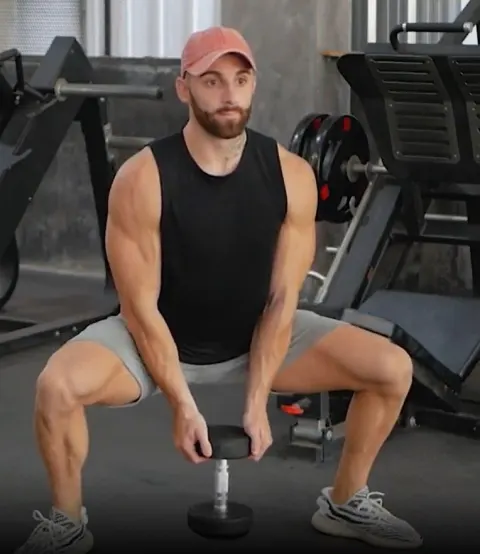
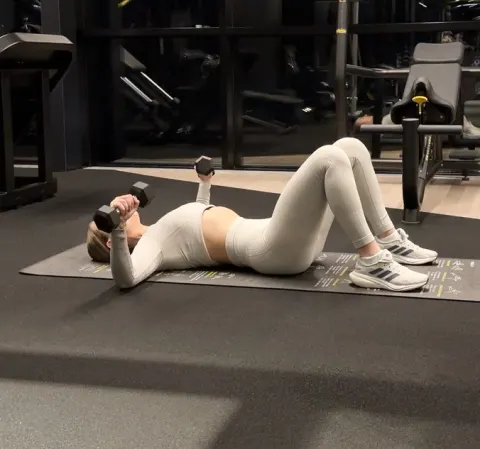
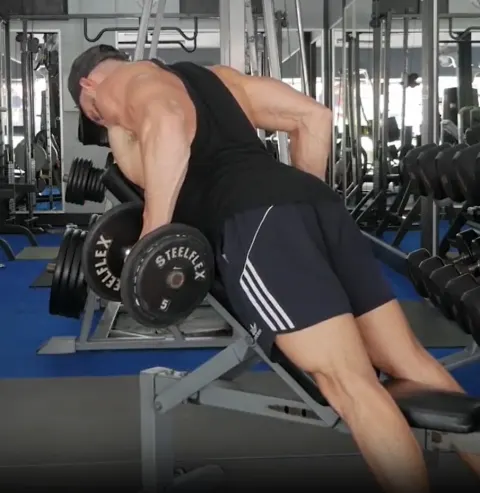
Squat + push + pull
-
Glutes, Adductors, Quads · Dumbbell
- Sets
- 2
- Reps
- 8–12
- Rest
- 75s
- Effort
- RPE 7–8
-
Chest, Triceps · Dumbbell
- Sets
- 2
- Reps
- 8–12
- Rest
- 75s
- Effort
- RPE 7–8
-
Upper Back, Lats · Dumbbell
- Sets
- 2
- Reps
- 8–12
- Rest
- 75s
- Effort
- RPE 7–8
swap: Dumbbell Row, Inverted Row, Rear Delt Fly
-
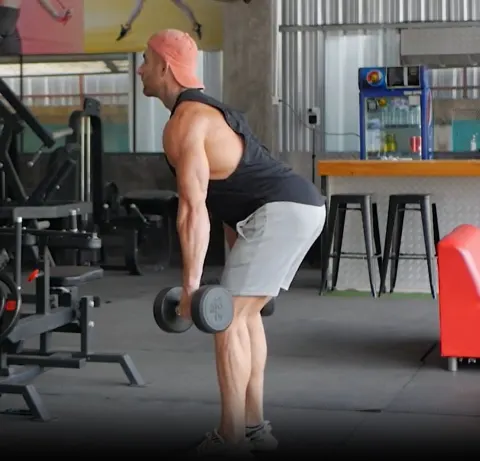
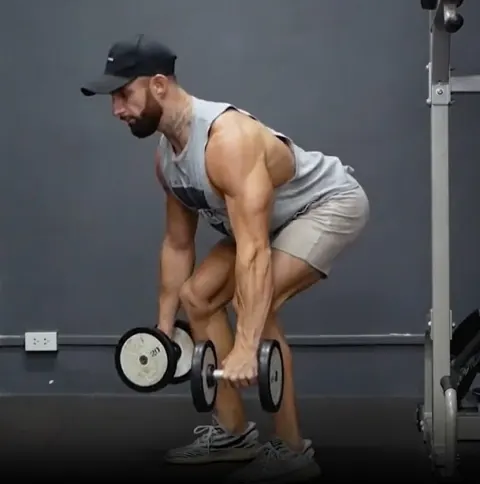
Hamstrings, Glutes · Dumbbell
- Sets
- 2
- Reps
- 10–15
- Rest
- 60s
- Effort
- RPE 7–8
swap: Bodyweight Hip Hinge, Dumbbell Deadlift, Bodyweight Good Morning
-
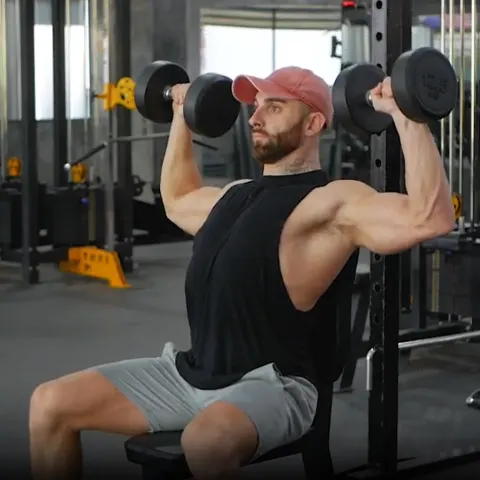
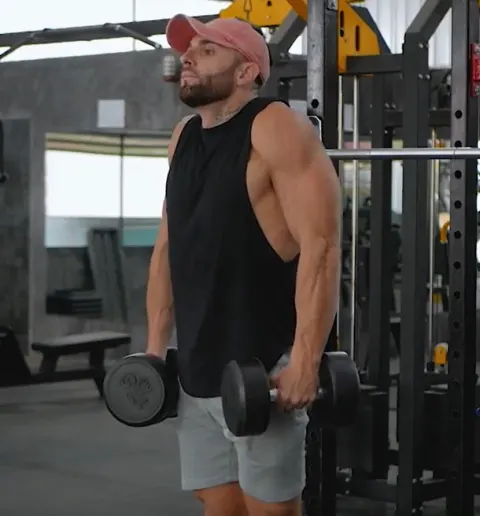
Front Delts, Side Delts · Dumbbell
- Sets
- 3
- Reps
- 12–15
- Rest
- 45s
- Effort
- RPE 8
-
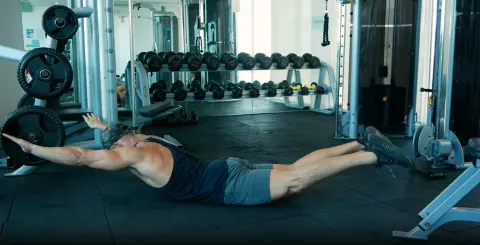
Lower Back, Glutes · Bodyweight
- Sets
- 3
- Reps
- 15–20
- Rest
- 45s
- Effort
- controlled
swap: Bird Dog, Glute Bridge, Plank
-
Calves · Bodyweight
- Sets
- 6
- Reps
- 30 sec on / 30 sec off
- Rest
- 30s
- Effort
- hard but steady
Day 2
Full Body B
Hinge + vertical push/pull
-
Hamstrings, Glutes · Dumbbell
- Sets
- 2
- Reps
- 8–12
- Rest
- 75s
- Effort
- RPE 7–8
-
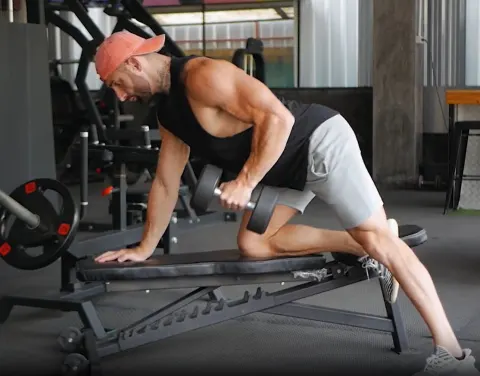
Lats, Upper Back · Dumbbell
- Sets
- 2
- Reps
- 8–12 / side
- Rest
- 75s
- Effort
- RPE 7–8
-
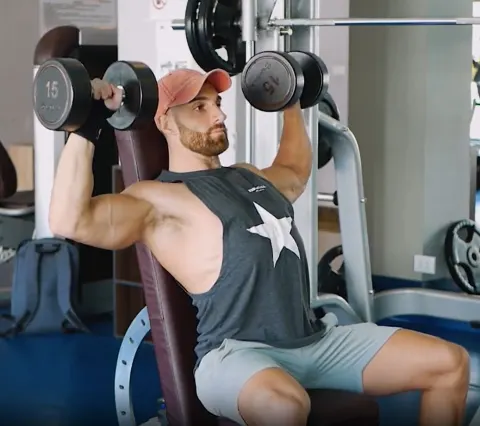
Front Delts, Side Delts · Dumbbell
- Sets
- 2
- Reps
- 8–12
- Rest
- 75s
- Effort
- RPE 7–8
-
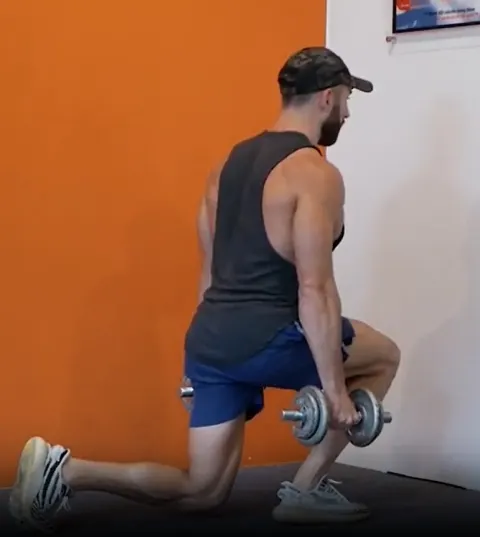
Quads, Glutes · Dumbbell
- Sets
- 2
- Reps
- 10–15 / side
- Rest
- 60s
- Effort
- RPE 7–8
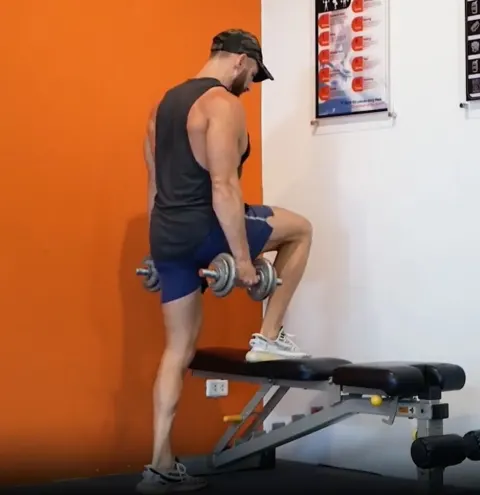
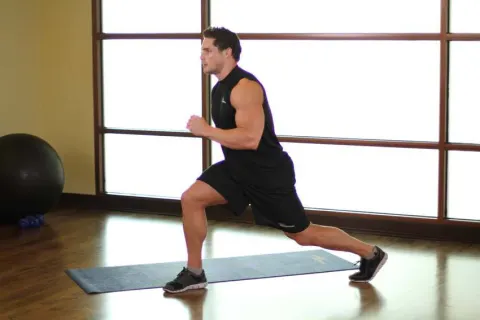
swap: Reverse Lunge, Split Squat, Step-Up
-
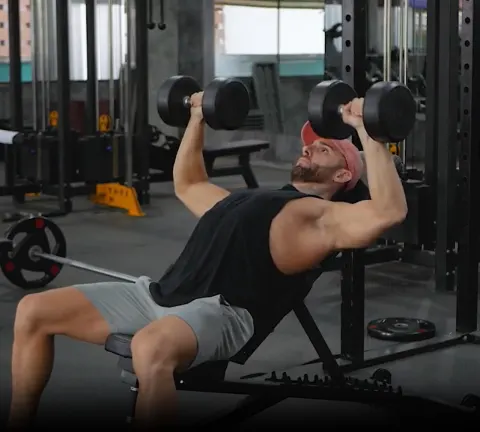
Chest, Front Delts · Dumbbell
- Sets
- 3
- Reps
- 12–15
- Rest
- 45s
- Effort
- RPE 8
-
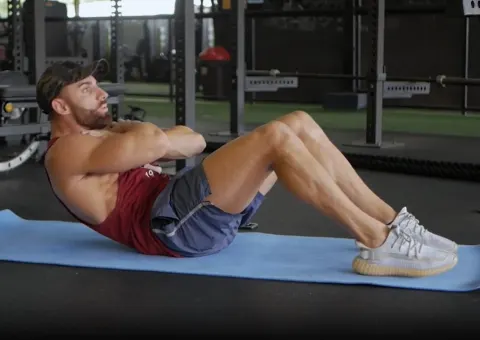
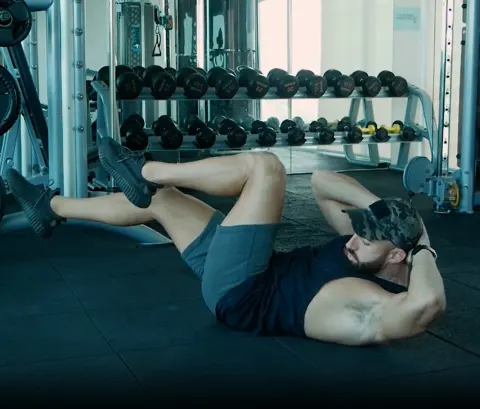
Core · Bodyweight
- Sets
- 3
- Reps
- 15–20
- Rest
- 45s
- Effort
- controlled
swap: Reverse Crunch, Bicycle Crunch, Dead Bug
-
Calves · Bodyweight
- Sets
- 6
- Reps
- 30 sec on / 30 sec off
- Rest
- 30s
- Effort
- hard but steady
Day 3
Full Body C
Single-leg + chest + back
-
Quads, Glutes · Bodyweight
- Sets
- 2
- Reps
- 8–12 / side
- Rest
- 75s
- Effort
- RPE 7–8
swap: Reverse Lunge, Forward Lunge, Split Squat
-
Chest, Triceps · Dumbbell
- Sets
- 2
- Reps
- 8–12
- Rest
- 75s
- Effort
- RPE 7–8
-
Upper Back, Lats · Bodyweight
- Sets
- 2
- Reps
- 8–12
- Rest
- 75s
- Effort
- RPE 7–8
-
Traps · Dumbbell
- Sets
- 3
- Reps
- 12–15
- Rest
- 45s
- Effort
- RPE 8
-
Obliques, Core · Bodyweight
- Sets
- 3
- Reps
- 15–20 / side
- Rest
- 45s
- Effort
- controlled
swap: Crunch, Russian Twist, Dead Bug
-
Full Body · Bodyweight
- Sets
- 6
- Reps
- 30 sec on / 30 sec off
- Rest
- 30s
- Effort
- hard but steady
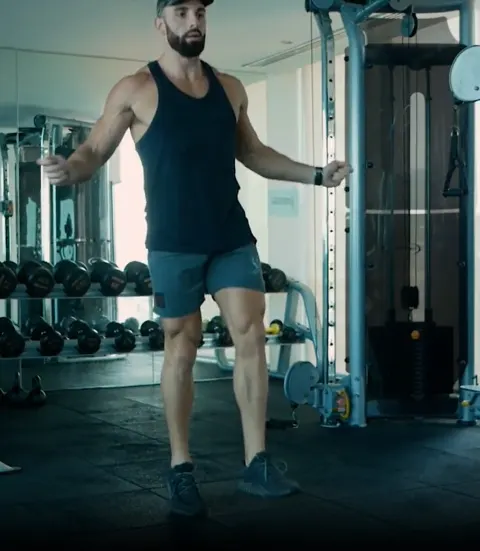
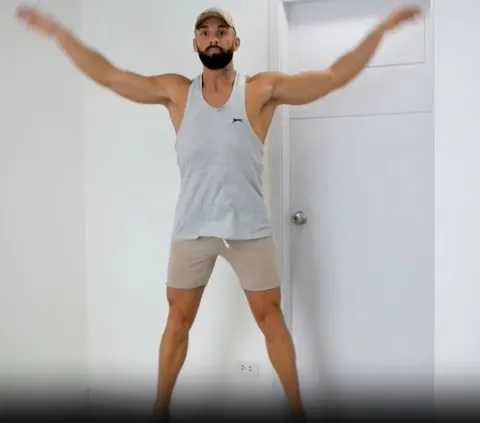
swap: High Knees, Jump Rope, Shadow Boxing
8-week progression: what to change each week
Same exercises for the whole block. Weeks move the reps, then the load; the last week is a deload.
| Week | Load | Reps | Effort | What to watch |
|---|---|---|---|---|
| 1 | Light: learn the movements | bottom of range (8) | RPE 6–7 | Stop every set 3 reps before failure; film one set per exercise to check form. |
| 2 | Same weight | +1 rep per set (10) | RPE 7–8 | Same exercises, same order; only the reps move. |
| 3 | Same weight | top of range (12) | RPE 8 | All sets at the top of the range → add load next week. Missed a set? Repeat the week. |
| 4 | next dumbbell / harder variation | bottom of range (8) | RPE 7–8 | New weight feels hard at low reps; that is the plan working. |
| 5 | Same weight | +1 rep per set (10) | RPE 8 | Shave 10 s off every rest period. |
| 6 | Same weight | top of range (12) | RPE 8 | Second time at the top: take the last set of each main lift to 1 rep in reserve. |
| 7 | next dumbbell / harder variation | bottom of range (8) | RPE 8 | Bodyweight moves: slow the lowering phase to 3 s or move to the harder variation. |
| 8 | Deload: 60 % | bottom of range | RPE 5–6 | Half the sets, then regenerate a variation or change the split for the next block. |
How to progress
- First 2 weeks: focus on form with light weights, stop each set 3 reps before failure.
- Rest less, not lift less: shave 10 seconds off rest periods every two weeks until you hit the targets above.
- When all sets reach the top of the range, add weight or reps, never both at once.
- Daily steps matter more than any finisher: aim for 8 000–10 000 on non-training days.
Notes for this plan
- Glute emphasis: hinge and glute work is prioritised; squat deep and drive through the heels.
- Home setup: if a weight gets too light, slow the lowering phase to 3–4 seconds or add a pause at the hardest point.
- Sessions can move between days; keep at least one rest day between hard sessions for the same muscles.
Two pairs of dumbbells, a sofa and about 40 minutes, three times a week: that is enough to train the whole body in your living room. The example plan is set up for fat loss, but the equipment and glute-training advice below holds for any goal you pick.
Which dumbbells to buy
Your hips and legs are far stronger than your shoulders, so one pair never fits every exercise. A weight that suits lateral raises is useless for hip thrusts.
| Setup | What to get | What it covers |
|---|---|---|
| Minimum | A light pair (4–5 kg) and a medium pair (8–10 kg) | Presses, rows, goblet squats and deadlifts for the first 2–3 months |
| Better | Add a heavy pair (12–16 kg) | Hip thrusts, Romanian deadlifts and rows for most of the first year |
| Long term | An adjustable pair up to 20–24 kg each | Every exercise in the plan for years, stored in a corner |
| Extras | Mini band loops and a mat | Side-glute work, warm-ups, comfort on hard floors |
Choosing in a shop? The pair you can press overhead 8 times with real effort is your light pair. The medium pair should be roughly double that. The dumbbell-only training guide goes further into benches and adjustable sets.
How the home week is laid out
The example week above has three full-body days, Monday, Wednesday and Friday, with a rest day after each. Every session leads with one big lower-body lift, adds a press and a row, then a second lower-body movement for hips and glutes, a lighter upper-body accessory and core.
Because the goal is fat loss, reps are a little higher and rests shorter than in a muscle plan: 2 sets of 8–12 with 75 seconds of rest on main lifts, 2 sets of 10–15 with 60 seconds on the next one, 3 sets with 45 seconds on accessories and core. Each day ends with a finisher of 6 rounds, 30 seconds of work and 30 seconds off. With the warm-up it fits into about 40 minutes. The saved version is the 3-day dumbbell plan for weight loss for women.
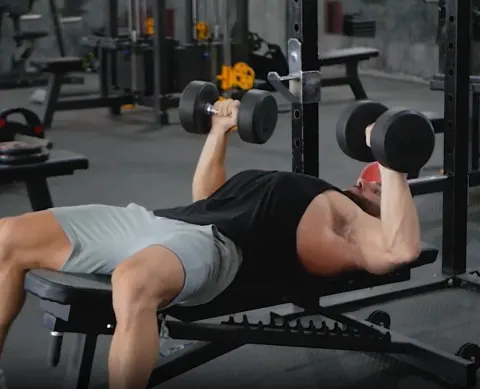
A few picks in the week assume more kit than two pairs of dumbbells: an incline or bench press, a chest-supported or inverted row, a jump rope. Every exercise lists alternatives, and the simple home swaps are a floor press, a one-arm row with a hand on the sofa, and jumping jacks.
The lifting protects muscle and the eating does the losing. How to size that deficit is covered in the weight loss workout plan for women.
Glute training without a gym
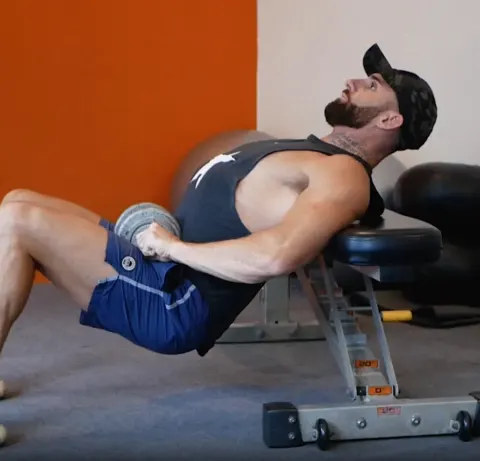
Hip thrust off the sofa. Push the sofa against a wall first. Sit on the floor with the seat edge under your shoulder blades, lay a dumbbell across the hips with a folded towel under it, and plant the feet so the shins are vertical at the top. Lift, hold for two seconds, lower under control. The dumbbell hip thrust page shows the setup on video.
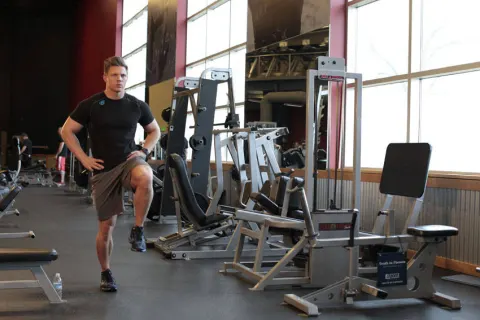
Single-leg Romanian deadlift. This is the step up from the two-leg version in the plan. Hold one dumbbell in the hand opposite the standing leg and rest the fingertips of the free hand on a wall. Hinge until torso and rear leg form one line, hips square to the floor. The single-leg RDL makes a 10 kg dumbbell feel like 20, which is the whole point of unilateral training when weights are limited.
Split squat with the rear foot on the sofa. Use it once lunges feel easy. A long stride and a slight forward lean shift the work from the thigh to the glute of the front leg.
Mini bands. A loop above the knees makes bridges harder for the side of the hip, and the banded lateral walk is a useful warm-up before lower-body lifts: 2 sets of 12–15 steps each way. Bands are a supplement. The dumbbells do the building.
Fitting 30–45 minutes around work and family
A plan that needs a free evening will not survive a normal week. Build it around the gaps you really have.
- Fix the slot. Before the house wakes, a lunch break on home-office days, or right after the children’s bedtime. Use the same three slots every week.
- Leave the kit out. Dumbbells and mat in one corner, about 2 × 2 m of floor. Setup time is where home sessions die.
- Keep a 30-minute version. One ramp-up set, the three main lifts, then the finisher. Skip the accessories and do the full session next time.
- Accept interruptions. A session split into two halves on the same day still counts.
- Keep it quiet when needed. The finishers in the week above are jump rope and jumping jacks. With neighbours below or a sleeping baby, swap in a low-impact move such as step jacks or shadow boxing and keep the 30-second timing.
On the other days, walk. Getting 8,000–10,000 steps does more for fat loss than any finisher, and the school run and the pram both count.
When your dumbbells start to feel light
At home you run out of heavier weights sooner than in a gym, so work through these steps in order. Take a sumo squat with a 10 kg dumbbell at 8–12 reps:
- Add reps until both sets reach 12.
- Slow the lowering phase to 3–4 seconds. This tempo change makes the same weight heavy again.
- Pause for two seconds at the bottom.
- Move to the next dumbbell, or to a single-leg version, and restart at 8.
Change one thing at a time: weight or reps, never both in the same week. In a fat-loss phase you also trim rests by 10 seconds every two weeks until you reach the targets above.
Food and recovery in five lines
- Set food 300–500 kcal under maintenance, which trims roughly 0.3–0.5 kg a week.
- Keep protein at 1.6–2.2 g per kg of body weight daily, spread over three or four meals.
- A 45-minute living-room session burns only 200–350 kcal, so it does not pay for extra snacks.
- Sleep 7–9 hours where family life allows.
- Week 8 of the wave is the deload, with the dumbbells at about 60 % and half the sets.
Mistakes specific to training at home
- Buying only a 2 kg pair. It is too light for squats and hip work from the first session.
- Treating the session as movable. The living room is always open, so the workout slides to tomorrow. Put it in the calendar.
- A new video every day. You cannot add weight to a workout you never repeat.
- Thrusting off furniture that slides. Wall behind the sofa, every time.
- Doing only the finisher on busy days. Cut the finisher and keep the lifts, not the other way round.
Other ways to train at home
No dumbbells yet? Start with the 3-day no-equipment plan for general fitness for women and buy weights once squats and push-ups feel easy. Own a single kettlebell? The 3-day kettlebell plan for weight loss for women uses the same three-day layout. For building muscle on four days, the 4-day dumbbell plan for muscle gain for women is an upper/lower split.
A side-by-side look at every home setup is on the home workout plan page, and programming with dumbbells at any level is covered in the dumbbell workout plan. The plan generator rebuilds any of these for your own days, goal and equipment.
Home Workout Plan for Women: all 56 plans
- 2-Day Bodyweight Workout Plan for General Fitness (Women)
- 2-Day Dumbbell Workout Plan for Weight Loss (Women)
- 2-Day Dumbbell Workout Plan for Muscle Gain (Women)
- 2-Day Dumbbell Workout Plan for Strength (Women)
- 2-Day Dumbbell Workout Plan for General Fitness (Women)
- 2-Day Kettlebell Workout Plan for Weight Loss (Women)
- 2-Day Kettlebell Workout Plan for Muscle Gain (Women)
- 2-Day Kettlebell Workout Plan for General Fitness (Women)
- 2-Day Resistance Band Workout Plan for Weight Loss (Women)
- 2-Day Resistance Band Workout Plan for Muscle Gain (Women)
- 2-Day Resistance Band Workout Plan for General Fitness (Women)
- 3-Day Bodyweight Workout Plan for General Fitness (Women)
- 3-Day Dumbbell Workout Plan for Weight Loss (Women)
- 3-Day Dumbbell Workout Plan for Muscle Gain (Women)
- 3-Day Dumbbell Workout Plan for Strength (Women)
- 3-Day Dumbbell Workout Plan for General Fitness (Women)
- 3-Day Kettlebell Workout Plan for Weight Loss (Women)
- 3-Day Kettlebell Workout Plan for Muscle Gain (Women)
- 3-Day Kettlebell Workout Plan for General Fitness (Women)
- 3-Day Resistance Band Workout Plan for Weight Loss (Women)
- 3-Day Resistance Band Workout Plan for Muscle Gain (Women)
- 3-Day Resistance Band Workout Plan for General Fitness (Women)
- 4-Day Bodyweight Workout Plan for General Fitness (Women)
- 4-Day Dumbbell Workout Plan for Weight Loss (Women)
- 4-Day Dumbbell Workout Plan for Muscle Gain (Women)
- 4-Day Dumbbell Workout Plan for Strength (Women)
- 4-Day Dumbbell Workout Plan for General Fitness (Women)
- 4-Day Kettlebell Workout Plan for Weight Loss (Women)
- 4-Day Kettlebell Workout Plan for Muscle Gain (Women)
- 4-Day Kettlebell Workout Plan for General Fitness (Women)
- 4-Day Resistance Band Workout Plan for Weight Loss (Women)
- 4-Day Resistance Band Workout Plan for Muscle Gain (Women)
- 4-Day Resistance Band Workout Plan for General Fitness (Women)
- 5-Day Bodyweight Workout Plan for General Fitness (Women)
- 5-Day Dumbbell Workout Plan for Weight Loss (Women)
- 5-Day Dumbbell Workout Plan for Muscle Gain (Women)
- 5-Day Dumbbell Workout Plan for Strength (Women)
- 5-Day Dumbbell Workout Plan for General Fitness (Women)
- 5-Day Kettlebell Workout Plan for Weight Loss (Women)
- 5-Day Kettlebell Workout Plan for Muscle Gain (Women)
- 5-Day Kettlebell Workout Plan for General Fitness (Women)
- 6-Day Bodyweight Workout Plan for Muscle Gain (Women)
- 6-Day Bodyweight Workout Plan for General Fitness (Women)
- 6-Day Dumbbell Workout Plan for Weight Loss (Women)
- 6-Day Dumbbell Workout Plan for Muscle Gain (Women)
- 6-Day Dumbbell Workout Plan for Strength (Women)
- 6-Day Dumbbell Workout Plan for General Fitness (Women)
Related programs
Frequently asked questions
What weight dumbbells should a woman buy for home workouts?
Buy at least two pairs: a light pair of 4 to 5 kg for presses and raises and a medium pair of 8 to 10 kg for squats, rows and hip work. Add 12 to 16 kg within a few months, or choose an adjustable pair that goes to 20 kg or more.
Can I build glutes at home without a gym?
Yes. Hip thrusts with your back against a sofa, Romanian deadlifts, split squats and single-leg versions of each load the glutes hard with dumbbells alone. Train them two or three times a week, finish sets 1 to 3 reps short of failure, and add reps or weight whenever you reach the top of the range.
Is 30 minutes of exercise at home enough?
It is enough to progress if the 30 minutes contain hard strength work. Do one light warm-up set, then three compound lifts for 2 to 3 sets each with about 75 seconds of rest. The full 40 minute session is better, but a short one beats a skipped one.
Do I need a bench for home dumbbell workouts?
No. A sofa edge supports hip thrusts and the rear foot in split squats, and the floor works for presses with a slightly shorter range. A bench is worth buying after about three months of regular training, because it adds incline presses and chest-supported rows.
Can I lose weight with home workouts only?
Yes, as long as food supplies the deficit. Eat 300 to 500 kcal below maintenance, lift three times a week to keep muscle, and walk 8,000 to 10,000 steps on the other days. A 45-minute session burns only about 200 to 350 kcal, so training alone rarely does it.