Home Workout Plan for Beginners: Start in Your Living Room
A home workout plan for beginners that needs 2 × 2 m of floor, a chair and a table. Learn the easiest version of each move and how to progress with no kit.
Example week
3-Day Bodyweight Workout Plan for General Fitness (Beginners)
A complete week you can start today: exercises, sets, reps and rest for every session, with swaps for each exercise. Open this plan on its own page (PDF) →
Split
Full Body
Sessions / week
3
Avg. session
29 min
Schedule
Mon · Wed · Fri
Warm-up (every session, ~6 min)
- 3–5 min easy cardio: brisk walk, bike, jump rope or marching in place.
- Dynamic mobility: 10 leg swings each way, 10 hip circles, 10 arm circles, 8 cat-cows.
- Ramp-up sets on the first exercise: 1–2 light sets of 8 before your working sets.
Day 1
Full Body A
Squat + push + pull
-
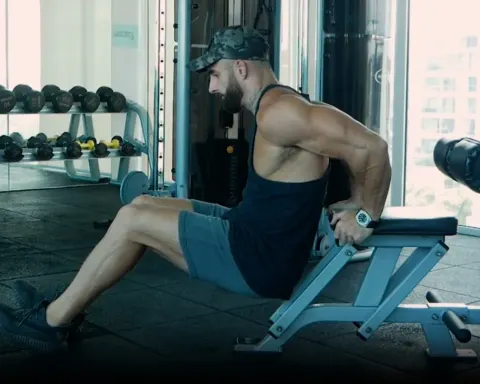
Triceps · Bodyweight
- Sets
- 2
- Reps
- 8–10
- Rest
- 90s
- Effort
- RPE 7
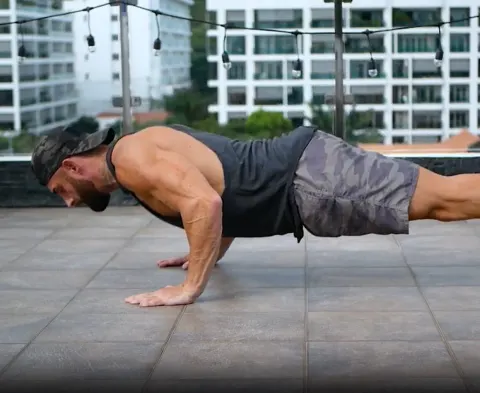
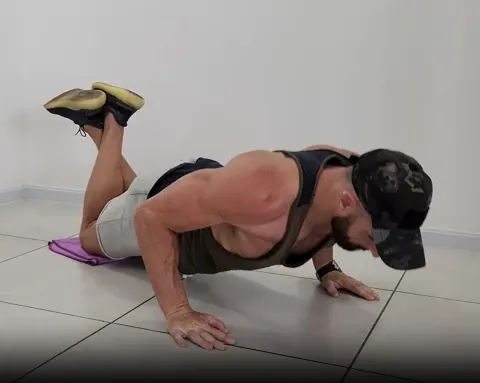
swap: Incline Push-Up, Knee Push-Up, Push-Up
-
Upper Back, Lats · Bodyweight
- Sets
- 2
- Reps
- 8–10
- Rest
- 90s
- Effort
- RPE 7
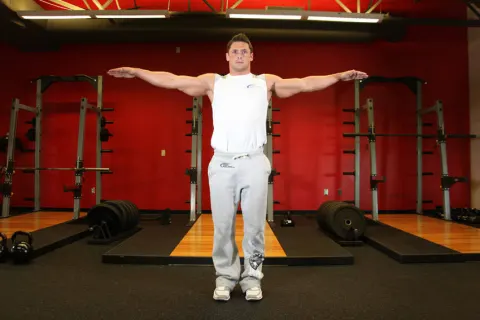
swap: Doorway Row, Reverse Snow Angel
-
Hamstrings, Glutes · Bodyweight
- Sets
- 2
- Reps
- 8–12
- Rest
- 75s
- Effort
- RPE 7
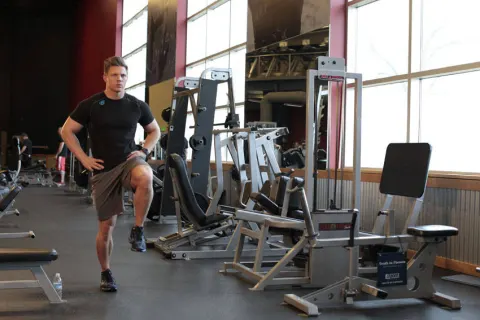
swap: Glute Bridge, Bodyweight Good Morning, Single-Leg Hip Hinge
-
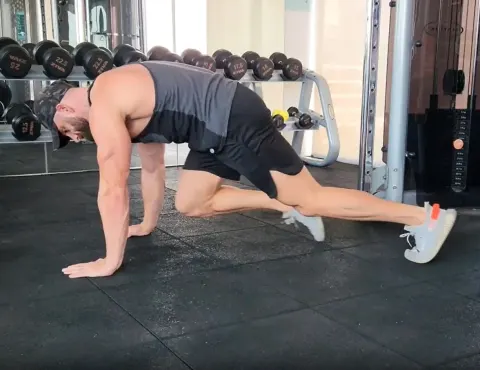
Core, Hip Flexors · Bodyweight
- Sets
- 2
- Reps
- 30–60 sec
- Rest
- 45s
- Effort
- controlled
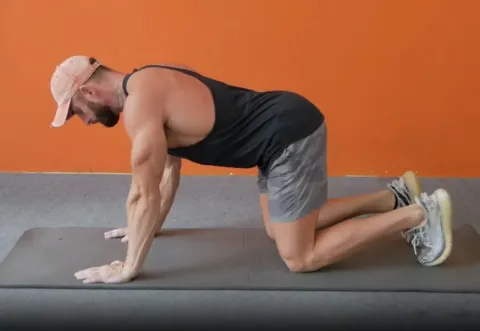
swap: Plank Shoulder Tap, High Knees, Bear Crawl
Day 2
Full Body B
Hinge + vertical push/pull
-
Hamstrings, Glutes · Bodyweight
- Sets
- 2
- Reps
- 8–10
- Rest
- 90s
- Effort
- RPE 7
-
Upper Back, Lats · Bodyweight
- Sets
- 2
- Reps
- 8–10
- Rest
- 90s
- Effort
- RPE 7
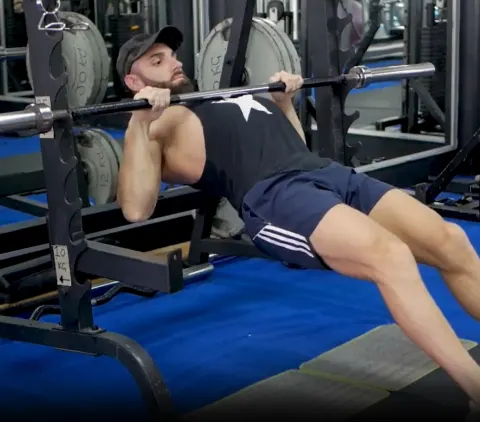
swap: Inverted Row, Reverse Snow Angel
-
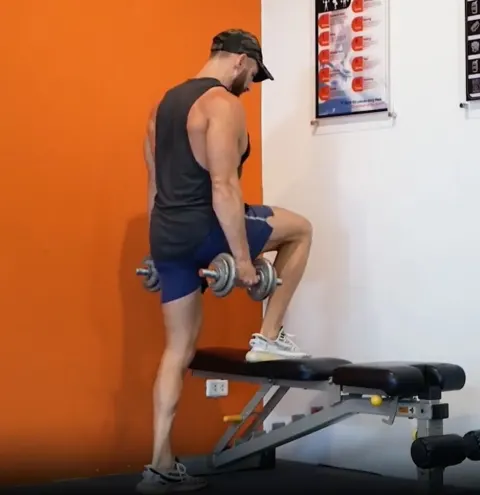
Quads, Glutes · Bodyweight
- Sets
- 2
- Reps
- 8–12 / side
- Rest
- 75s
- Effort
- RPE 7
swap: Reverse Lunge, Split Squat, Walking Lunge
-
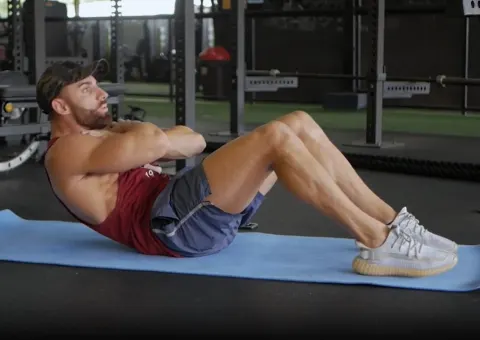
Core · Bodyweight
- Sets
- 2
- Reps
- 12–15
- Rest
- 45s
- Effort
- controlled
swap: Reverse Crunch, Bicycle Crunch, Dead Bug
Day 3
Full Body C
Single-leg + chest + back
-
Quads, Glutes · Bodyweight
- Sets
- 2
- Reps
- 8–10 / side
- Rest
- 90s
- Effort
- RPE 7
swap: Reverse Lunge, Forward Lunge, Split Squat
-
Upper Back, Lats · Bodyweight
- Sets
- 2
- Reps
- 8–10
- Rest
- 90s
- Effort
- RPE 7
swap: Doorway Row, Reverse Snow Angel
-
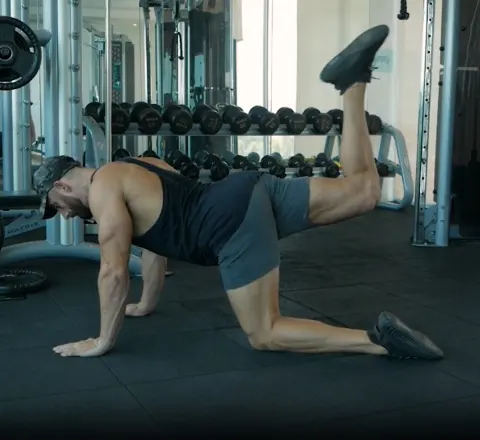
Glutes · Bodyweight
- Sets
- 2
- Reps
- 8–12 / side
- Rest
- 75s
- Effort
- RPE 7
swap: Bird Dog, Glute Bridge, Clamshell
-
Core, Lower Back · Bodyweight
- Sets
- 2
- Reps
- 30–60 sec
- Rest
- 45s
- Effort
- controlled
swap: Dead Bug, Plank, Donkey Kick
8-week progression: what to change each week
Same exercises for the whole block. Weeks move the reps, then the load; the last week is a deload.
| Week | Load | Reps | Effort | What to watch |
|---|---|---|---|---|
| 1 | Light: learn the movements | bottom of range (8) | RPE 6–7 | Stop every set 3 reps before failure; film one set per exercise to check form. |
| 2 | Same weight | +1 rep per set (9) | RPE 8 | Same exercises, same order; only the reps move. |
| 3 | Same weight | top of range (10) | RPE 8 | All sets at the top of the range → add load next week. Missed a set? Repeat the week. |
| 4 | next dumbbell / harder variation | bottom of range (8) | RPE 8 | New weight feels hard at low reps; that is the plan working. |
| 5 | Same weight | +1 rep per set (9) | RPE 8 | Keep rest periods the same. |
| 6 | Same weight | top of range (10) | RPE 8–9 | Second time at the top: take the last set of each main lift to 1 rep in reserve. |
| 7 | next dumbbell / harder variation | bottom of range (8) | RPE 8 | Bodyweight moves: slow the lowering phase to 3 s or move to the harder variation. |
| 8 | Deload: 60 % | bottom of range | RPE 5–6 | Half the sets, then regenerate a variation or change the split for the next block. |
How to progress
- First 2 weeks: focus on form with light weights, stop each set 3 reps before failure.
- Double progression: hit the top of the rep range on every set, then add weight (2.5–5 %) and start from the bottom of the range.
- Bodyweight moves: add reps, then slow the tempo (3 sec down), then move to a harder variation.
- Deload every 6–8 weeks: same exercises, half the sets.
Notes for this plan
- Home setup: if a weight gets too light, slow the lowering phase to 3–4 seconds or add a pause at the hardest point.
- Sessions can move between days; keep at least one rest day between hard sessions for the same muscles.
You can start training today with a patch of floor, a chair, a table and a door frame, three times a week for about 30 minutes. The example week above uses nothing else. What follows is how to set up your space, which version of each movement to begin with, and how to keep improving when there is no weight to add.
What you need: 2 × 2 m and four household items
Clear a space where you can lie flat with arms overhead and take a long step backwards. That is roughly 2 × 2 m. Then collect these:
| Item | What it replaces | Use it for | Check first |
|---|---|---|---|
| Sturdy chair, no wheels | Bench, squat box | Chair squats, step-ups, bench dips, balance support | Push it against a wall so it cannot slide |
| Heavy table or kitchen counter | Adjustable bench, bar | Incline push-ups on the edge, inverted rows underneath | It must not tip or slide when you lean or hang on it |
| Door frame | Cable row | Doorway rows | The frame is solid and your hands are dry |
| Towel | Leg curl machine | Sliding leg curls with heels on the towel, on a smooth floor | Nothing behind your head to hit |
| Backpack with books | Dumbbell | Extra load for squats, hinges and lunges | Wear it high and tight; 1 litre of water weighs 1 kg |
Wear trainers or go barefoot. Socks on laminate are how people end up on the floor.
How the example week is built
Three full-body sessions on non-consecutive days, usually Monday, Wednesday and Friday. Each one has a lower-body movement, a push, a pull, a hip-dominant exercise and core work, in slightly different versions from day to day so you are not repeating one workout three times.
Since the goal is general fitness, the numbers are moderate: 2 sets of everything, 8–10 reps on the first three exercises, 8–15 on the rest, and rests of 45–90 seconds. Effort sits around 7 out of 10, which means finishing each set with about three good reps left. Nothing in the week involves jumping.
A session takes about 30 minutes with the warm-up. The warm-up itself is 3–5 minutes: march on the spot, circle your arms, then do one easy set of the first exercise.
The easiest version of each movement
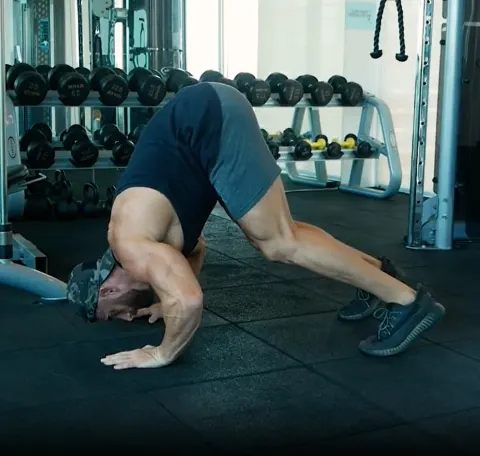
The generated week mixes easy picks, such as chair squats, with some that many true beginners cannot do cleanly yet: pike push-ups, bench dips, full push-ups, inverted rows under a table and walking lunges. Every exercise lists alternatives. Start one step lower than you think you need, because two clean sets of an easy variation beat two ugly sets of a hard one.
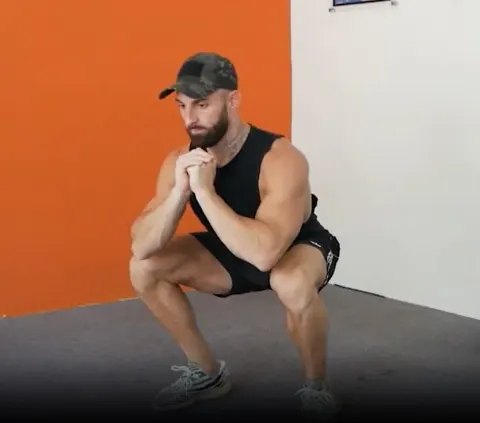
- Squat: sit down to a chair and stand up without using your hands. A higher seat is easier, and a cushion on the chair raises it further.
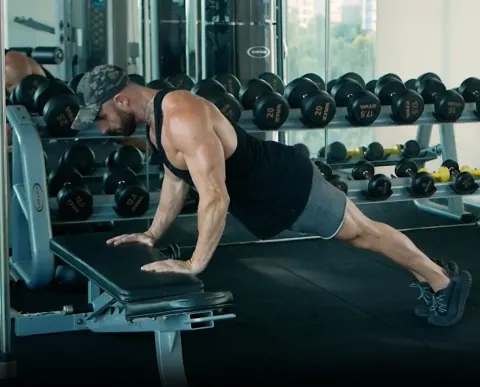
- Push: hands on the kitchen counter, body in a straight line from heels to head. The higher your hands, the lighter the load. Use this in place of any dip or push-up variation you cannot yet do for 8 smooth reps.
- Pull: hold both sides of a door frame, lean back with straight arms and pull your chest forward. Walk your feet closer to the frame to make it harder. Save the row under the table for later.
- Hinge: the standing hip hinge in the plan, or the glute bridge, lying on your back with knees bent and pausing for a second at the top.
- Single leg: a low step-up or a split squat with one hand on the chair back, before lunges that travel.
- Core: bird dogs, dead bugs and short planks from the knees, 15–20 seconds at a time.
The bodyweight exercise library has a video for each.
Progressing without weights
With no plates to add, you raise the difficulty in three steps, always in this order.
- Add reps. Take incline push-ups on the counter from 8 per set up to 12–15.
- Slow down. Lower yourself for 3 seconds on every rep. Controlling the tempo makes the same exercise noticeably harder.
- Change the leverage. Move your hands from the counter to the table, then to the chair seat, then to the floor. Each drop puts more of your body weight on your arms. Go back to 8 reps and build up again.
The same ladder works for legs: chair squat, squat without the chair, squat with a 3-second descent, then a backpack holding 5–10 kg. Expect to move up a step on something every week or two during the first three months. The no-equipment training guide maps out the later rungs.
A fixed time and a fixed spot
At home nobody notices if you skip. The plan only works if the session has a slot of its own.
- Tie it to something that already happens: straight after the morning coffee, or the moment you close the laptop.
- Use one spot. The same corner every time, with the chair already against the wall.
- Change clothes. It takes a minute and marks the switch from home mode to training mode.
- Phone on do-not-disturb, plan open, nothing else.
- Tell the household that you are unavailable for half an hour.
The first thing worth buying
Train for four to six weeks before spending anything. Then buy in this order:
- A long resistance band or loop set. Pulling is the weak point of furniture-based training, and a band anchored in a door gives you rows and pulldowns at any strength level. The 3-day resistance band plan for beginners shows what a full band week looks like.
- A pair of dumbbells, once chair squats and bridges feel too light even with a backpack. Our dumbbell workout plan for beginners explains which weights to choose.
- A mat, only if your floor is hard.
Mistakes people make when starting at home
- A different video every day. Random sessions cannot be progressed. Repeat the same week and beat last week’s reps.
- Rushing. Bodyweight reps done fast run on momentum. Two seconds up, two seconds down at minimum.
- Skipping the pulls because they feel awkward. Your shoulders need them to balance all the push-ups.
- Training “when there is time”. There never is. Put it in the calendar.
- Using wobbly furniture. Test every chair and table with your full weight before the first rep.
When to move on
You have outgrown the beginner version when you can do 3 sets of 15 squats without the chair, 10 push-ups with hands on a chair seat or lower, and a 40-second plank. That usually takes 8–12 weeks.
From there you have three routes. Stay with no kit and follow the progression ladders on the bodyweight workout plan page. Add equipment and pick the 3-day dumbbell plan for general fitness for beginners. Or compare all four home setups on the main home workout plan page. If three sessions is too many right now, the 2-day no-equipment plan for beginners keeps the same movements in two.
Home Workout Plan for Beginners: all 48 plans
- 2-Day Dumbbell Workout Plan for Weight Loss (Beginners)
- 2-Day Dumbbell Workout Plan for Muscle Gain (Beginners)
- 2-Day Dumbbell Workout Plan for Strength (Beginners)
- 2-Day Dumbbell Workout Plan for General Fitness (Beginners)
- 2-Day Kettlebell Workout Plan for Weight Loss (Beginners)
- 2-Day Kettlebell Workout Plan for Muscle Gain (Beginners)
- 2-Day Kettlebell Workout Plan for General Fitness (Beginners)
- 2-Day Resistance Band Workout Plan for Weight Loss (Beginners)
- 2-Day Resistance Band Workout Plan for Muscle Gain (Beginners)
- 2-Day Resistance Band Workout Plan for General Fitness (Beginners)
- 2-Day Calisthenics Workout Plan for Weight Loss (Beginners)
- 2-Day Calisthenics Workout Plan for Muscle Gain (Beginners)
- 2-Day Calisthenics Workout Plan for General Fitness (Beginners)
- 3-Day Dumbbell Workout Plan for Weight Loss (Beginners)
- 3-Day Dumbbell Workout Plan for Muscle Gain (Beginners)
- 3-Day Dumbbell Workout Plan for Strength (Beginners)
- 3-Day Dumbbell Workout Plan for General Fitness (Beginners)
- 3-Day Kettlebell Workout Plan for Weight Loss (Beginners)
- 3-Day Kettlebell Workout Plan for Muscle Gain (Beginners)
- 3-Day Kettlebell Workout Plan for General Fitness (Beginners)
- 3-Day Resistance Band Workout Plan for Weight Loss (Beginners)
- 3-Day Resistance Band Workout Plan for Muscle Gain (Beginners)
- 3-Day Resistance Band Workout Plan for General Fitness (Beginners)
- 3-Day Calisthenics Workout Plan for Weight Loss (Beginners)
- 3-Day Calisthenics Workout Plan for Muscle Gain (Beginners)
- 3-Day Calisthenics Workout Plan for General Fitness (Beginners)
- 4-Day Dumbbell Workout Plan for Weight Loss (Beginners)
- 4-Day Dumbbell Workout Plan for Muscle Gain (Beginners)
- 4-Day Dumbbell Workout Plan for Strength (Beginners)
- 4-Day Dumbbell Workout Plan for General Fitness (Beginners)
- 4-Day Kettlebell Workout Plan for Weight Loss (Beginners)
- 4-Day Kettlebell Workout Plan for Muscle Gain (Beginners)
- 4-Day Kettlebell Workout Plan for General Fitness (Beginners)
- 4-Day Resistance Band Workout Plan for Weight Loss (Beginners)
- 4-Day Resistance Band Workout Plan for Muscle Gain (Beginners)
- 4-Day Resistance Band Workout Plan for General Fitness (Beginners)
- 4-Day Calisthenics Workout Plan for Weight Loss (Beginners)
- 4-Day Calisthenics Workout Plan for Muscle Gain (Beginners)
- 4-Day Calisthenics Workout Plan for General Fitness (Beginners)
Related programs
Frequently asked questions
Can beginners get fit working out at home?
Yes. For the first 6 to 12 months your own body weight is enough resistance for legs, chest, shoulders and core, provided you keep making the exercises harder. Three 30 minute sessions a week plus daily walking covers strength and general fitness without any equipment.
How much space do I need to work out at home?
About 2 by 2 metres of clear floor, enough to lie down with your arms overhead and to step back into a lunge. Add a sturdy chair, a table or kitchen counter and a door frame and you can train every major muscle group.
How long should a beginner home workout be?
About thirty minutes, including three to five minutes of marching on the spot and arm circles to warm up. That is six exercises for two sets each. Shorter sessions done three times a week beat a single long one at the weekend.
What is the first piece of home workout equipment I should buy?
A long resistance band or a set of loop bands. It costs little, fits in a drawer and fixes the one thing bodyweight training does poorly at home, which is pulling work for the back. A pair of dumbbells is the second purchase, once you have trained for two months.
Do I need a yoga mat to work out at home?
No. A mat makes floor exercises such as glute bridges and dead bugs more comfortable and stops your hands slipping on push-ups, but a folded towel on carpet does the same job. Train in trainers or barefoot, never in socks on a smooth floor.