Home Workout Plan for Men: Build Muscle With Dumbbells and a Bench
A home workout plan for men that builds muscle: the kit worth buying, a 4-day dumbbell upper/lower week, and how to keep overloading when the weights run out.
Example week
4-Day Dumbbell Workout Plan for Muscle Gain (Men)
A complete week you can start today: exercises, sets, reps and rest for every session, with swaps for each exercise. Open this plan on its own page (PDF) →
Split
Upper / Lower
Sessions / week
4
Avg. session
40 min
Schedule
Mon · Tue · Thu · Fri
Warm-up (every session, ~6 min)
- 3–5 min easy cardio: brisk walk, bike, jump rope or marching in place.
- Dynamic mobility: 10 leg swings each way, 10 hip circles, 10 arm circles, 8 cat-cows.
- Ramp-up sets on the first exercise: 1–2 light sets of 8 before your working sets.
Day 1
Upper A
Chest + back, strength bias
-
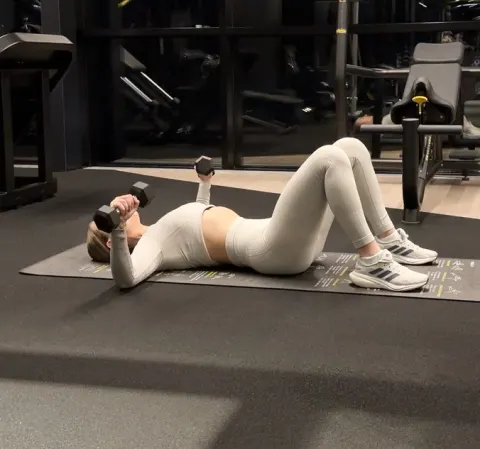
Chest, Triceps · Dumbbell
- Sets
- 3
- Reps
- 6–10
- Rest
- 120s
- Effort
- RPE 8
-
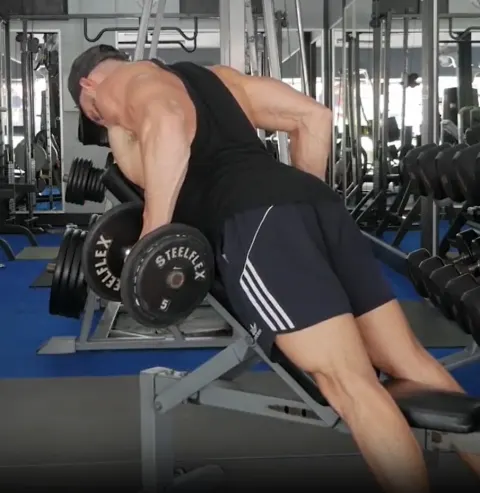
Upper Back, Lats · Dumbbell
- Sets
- 3
- Reps
- 6–10
- Rest
- 120s
- Effort
- RPE 8
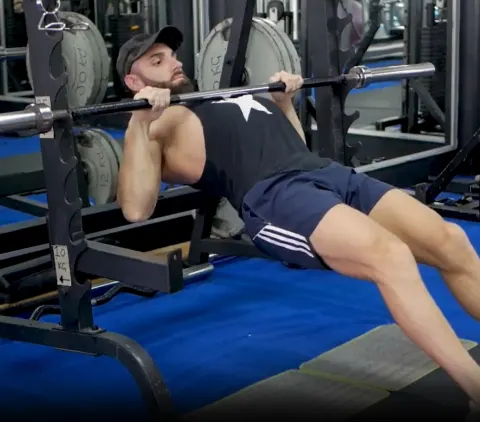
swap: Dumbbell Row, Inverted Row, Rear Delt Fly
-
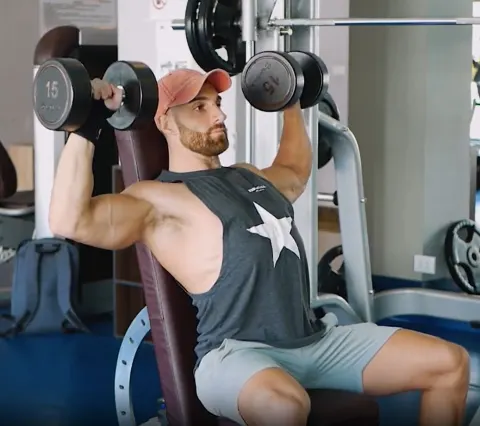
Front Delts, Side Delts · Dumbbell
- Sets
- 2
- Reps
- 8–12
- Rest
- 90s
- Effort
- RPE 8
-
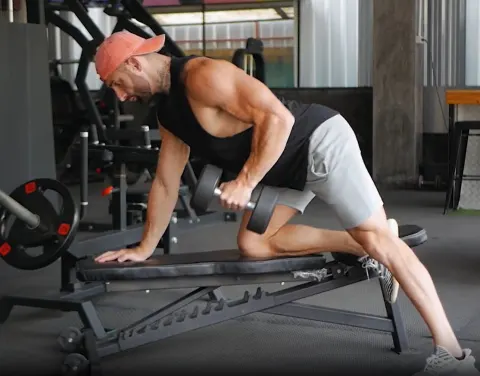
Lats, Upper Back · Dumbbell
- Sets
- 2
- Reps
- 8–12 / side
- Rest
- 90s
- Effort
- RPE 8
-
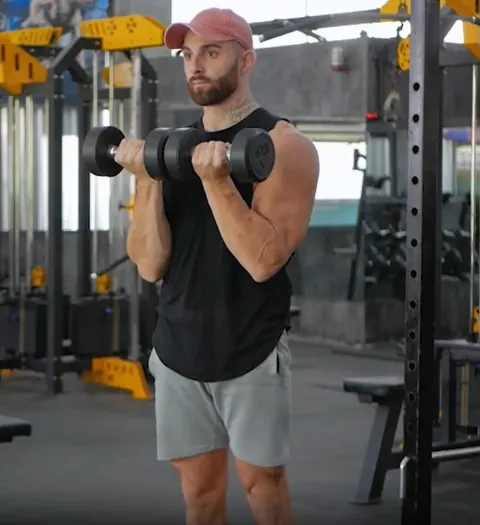
Biceps · Dumbbell
- Sets
- 3
- Reps
- 10–15
- Rest
- 60s
- Effort
- RPE 8–9
-
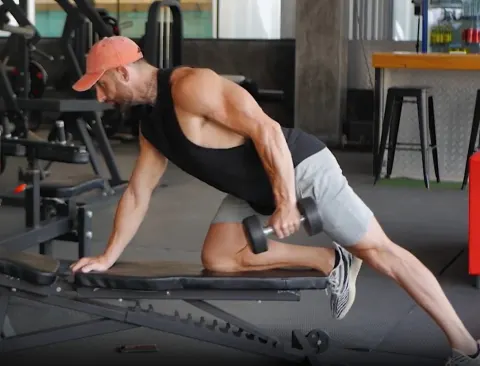
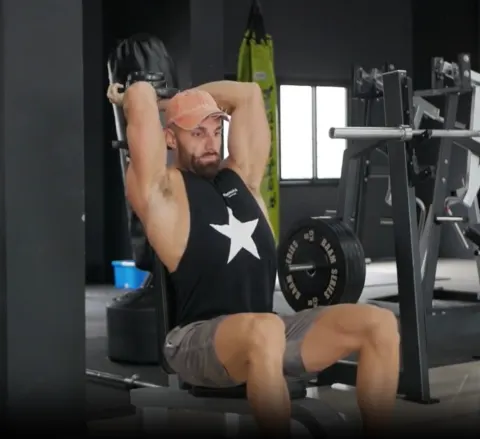
Triceps · Dumbbell
- Sets
- 3
- Reps
- 10–15 / side
- Rest
- 60s
- Effort
- RPE 8–9
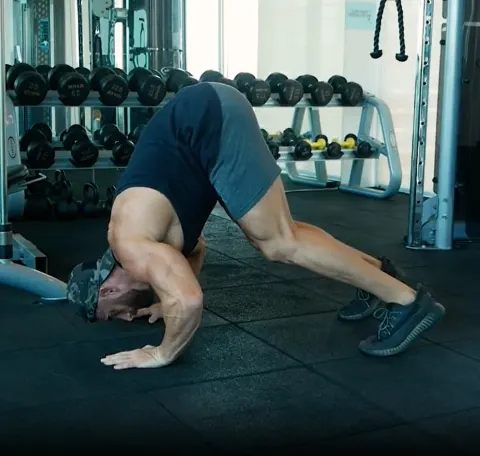
swap: Overhead Triceps Extension, Bench Dip, Bodyweight Triceps Extension
Day 2
Lower A
Squat focus
-
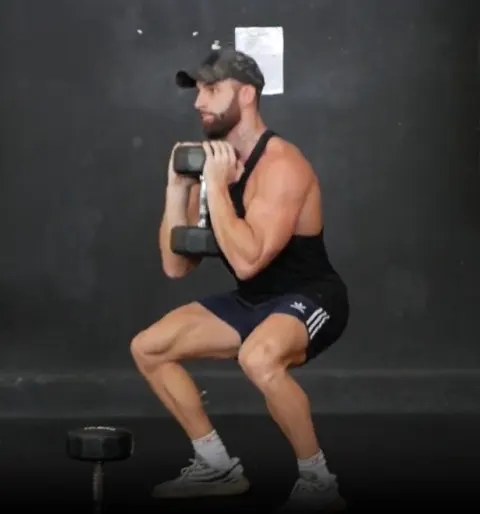
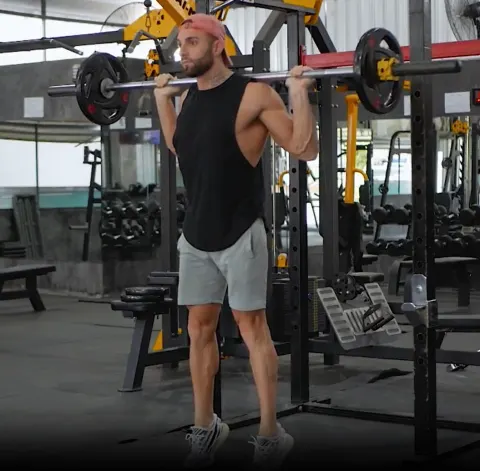
Quads, Glutes · Dumbbell
- Sets
- 3
- Reps
- 6–10
- Rest
- 120s
- Effort
- RPE 8
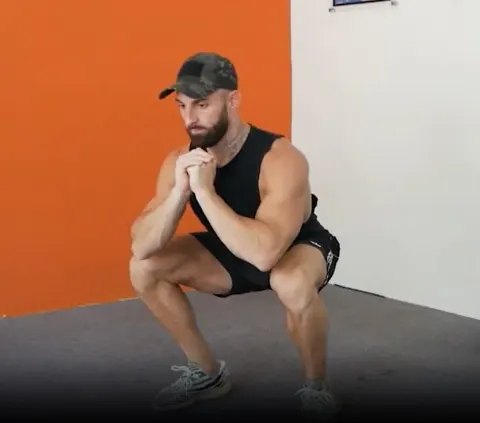
swap: Bodyweight Squat, Dumbbell Squat, Sumo Squat
-
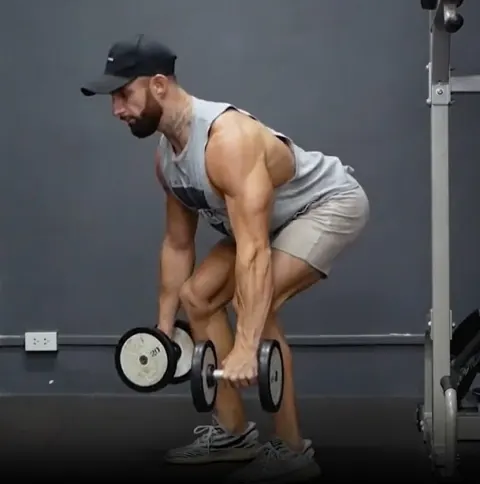
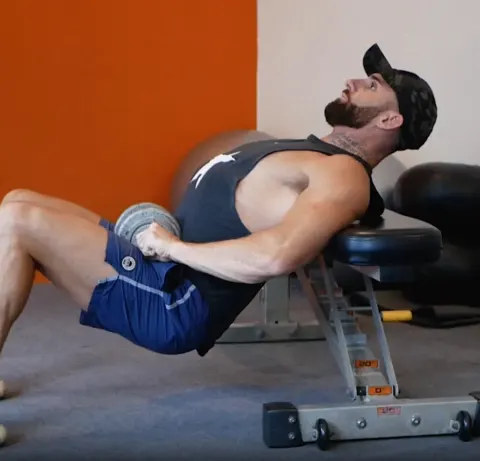
Hamstrings, Glutes · Dumbbell
- Sets
- 2
- Reps
- 8–12
- Rest
- 90s
- Effort
- RPE 8
-
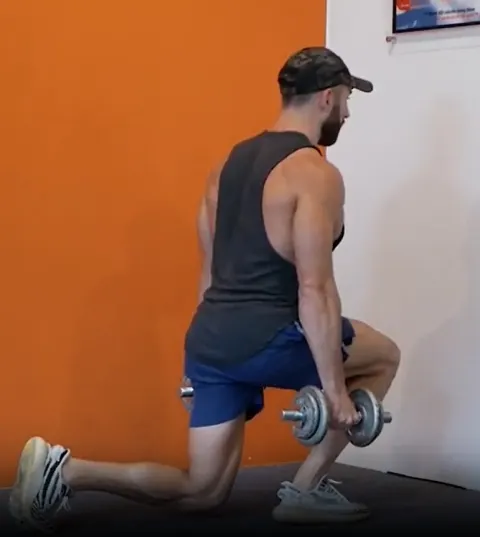
Quads, Glutes · Dumbbell
- Sets
- 2
- Reps
- 8–12 / side
- Rest
- 90s
- Effort
- RPE 8
swap: Reverse Lunge, Split Squat, Step-Up
-
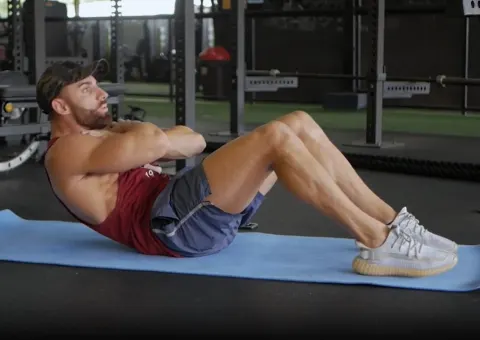
Core · Bodyweight
- Sets
- 3
- Reps
- 12–15
- Rest
- 60s
- Effort
- controlled
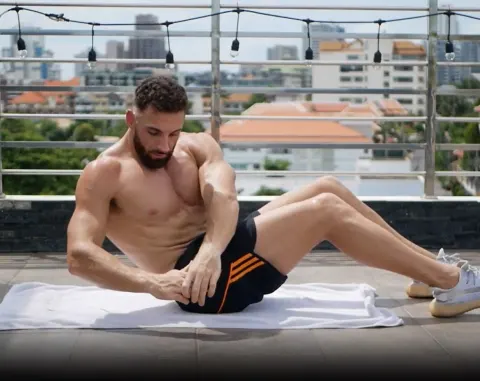
swap: Reverse Crunch, Bicycle Crunch, Dead Bug
Day 3
Upper B
Shoulders + back, volume bias
-
Upper Back, Lats · Bodyweight
- Sets
- 3
- Reps
- 6–10
- Rest
- 120s
- Effort
- RPE 8
-
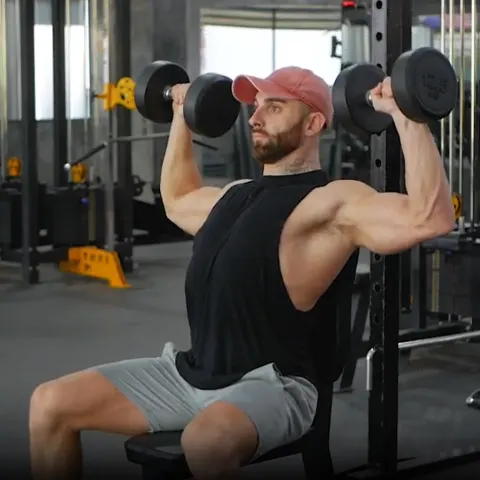
Front Delts, Side Delts · Dumbbell
- Sets
- 3
- Reps
- 6–10
- Rest
- 120s
- Effort
- RPE 8
-
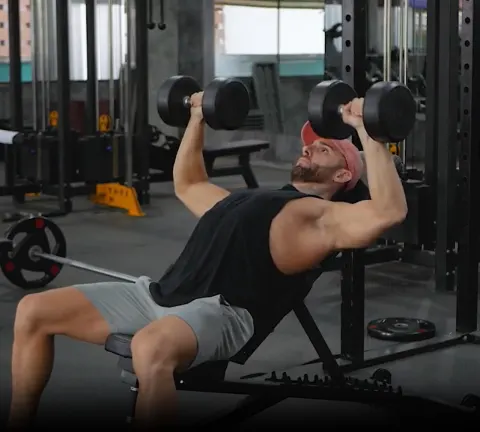
Chest, Front Delts · Dumbbell
- Sets
- 2
- Reps
- 8–12
- Rest
- 90s
- Effort
- RPE 8
-
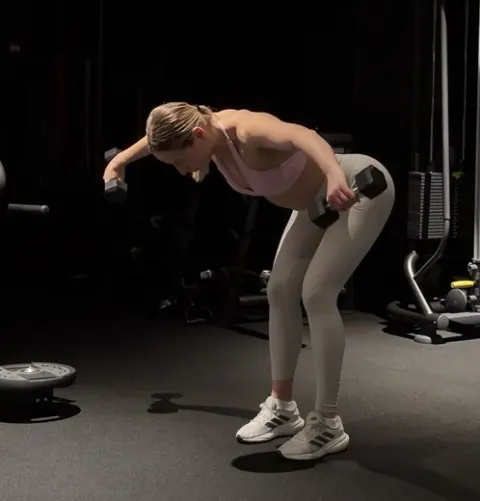
Rear Delts, Upper Back · Dumbbell
- Sets
- 2
- Reps
- 8–12
- Rest
- 90s
- Effort
- RPE 8
-
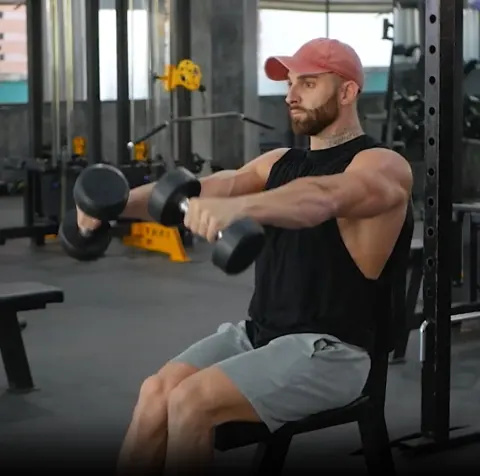
Front Delts · Dumbbell
- Sets
- 3
- Reps
- 10–15
- Rest
- 60s
- Effort
- RPE 8–9
swap: Dumbbell Shoulder Press, Dumbbell Lateral Raise, Dumbbell Shrug
-
Triceps · Dumbbell
- Sets
- 3
- Reps
- 10–15
- Rest
- 60s
- Effort
- RPE 8–9
swap: Bench Dip, Dumbbell Kickback, Bodyweight Triceps Extension
Day 4
Lower B
Hinge focus
-
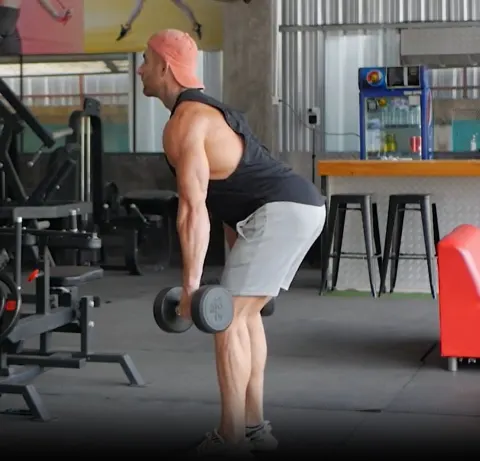
Hamstrings, Glutes · Dumbbell
- Sets
- 3
- Reps
- 6–10
- Rest
- 120s
- Effort
- RPE 8
swap: Bodyweight Hip Hinge, Dumbbell Deadlift, Bodyweight Good Morning
-
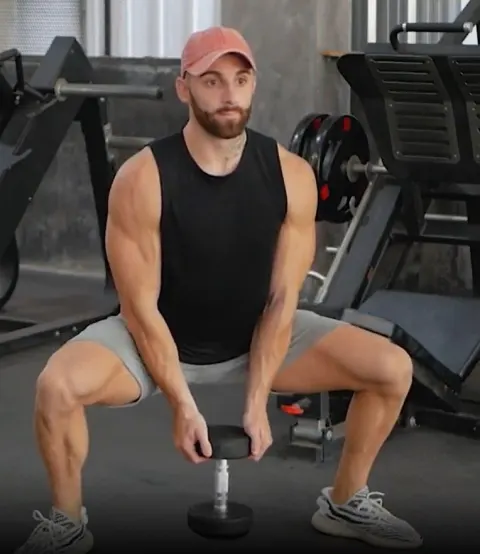
Glutes, Adductors, Quads · Dumbbell
- Sets
- 2
- Reps
- 8–12
- Rest
- 90s
- Effort
- RPE 8
-
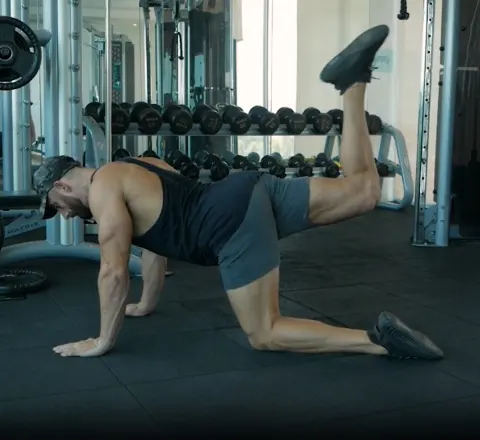
Glutes · Bodyweight
- Sets
- 2
- Reps
- 8–12 / side
- Rest
- 90s
- Effort
- RPE 8
swap: Bird Dog, Glute Bridge, Clamshell
-
Hamstrings, Glutes · Bodyweight
- Sets
- 3
- Reps
- 10–15
- Rest
- 60s
- Effort
- RPE 8–9
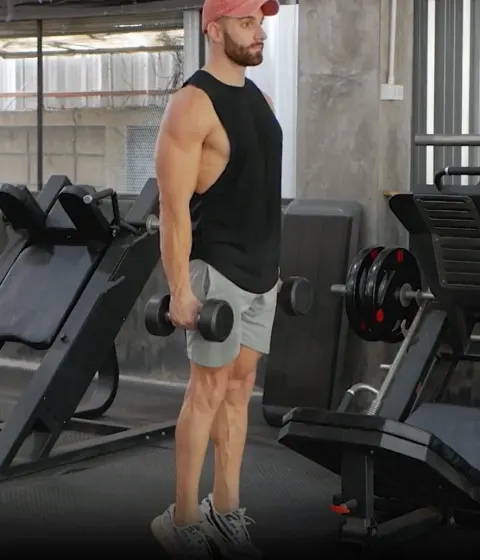
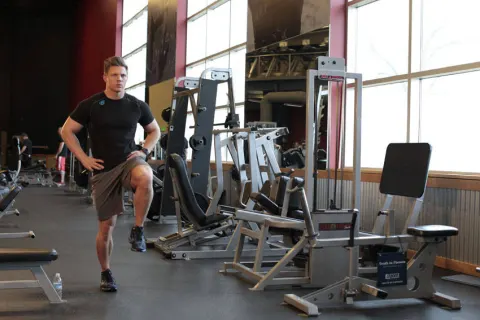
swap: Glute Bridge, Standing Calf Raise
-
Calves · Bodyweight
- Sets
- 3
- Reps
- 10–15
- Rest
- 60s
- Effort
- RPE 8–9
-
Obliques, Core · Bodyweight
- Sets
- 3
- Reps
- 12–15
- Rest
- 60s
- Effort
- controlled
8-week progression: what to change each week
Same exercises for the whole block. Weeks move the reps, then the load; the last week is a deload.
| Week | Load | Reps | Effort | What to watch |
|---|---|---|---|---|
| 1 | Light: learn the movements | bottom of range (6–8) | RPE 6–7 | Stop every set 3 reps before failure; film one set per exercise to check form. |
| 2 | Same weight | +1 rep per set (8–9) | RPE 8 | Same exercises, same order; only the reps move. |
| 3 | Same weight | top of range (9–10) | RPE 8 | All sets at the top of the range → add load next week. Missed a set? Repeat the week. |
| 4 | next dumbbell / harder variation | bottom of range (6–8) | RPE 8 | New weight feels hard at low reps; that is the plan working. |
| 5 | Same weight | +1 rep per set (8–9) | RPE 8 | Keep rest periods the same. |
| 6 | Same weight | top of range (9–10) | RPE 8–9 | Second time at the top: take the last set of each main lift to 1 rep in reserve. |
| 7 | next dumbbell / harder variation | bottom of range (6–8) | RPE 8 | Bodyweight moves: slow the lowering phase to 3 s or move to the harder variation. |
| 8 | Deload: 60 % | bottom of range | RPE 5–6 | Half the sets, then regenerate a variation or change the split for the next block. |
How to progress
- First 2 weeks: focus on form with light weights, stop each set 3 reps before failure.
- Double progression: hit the top of the rep range on every set, then add weight (2.5–5 %) and start from the bottom of the range.
- Bodyweight moves: add reps, then slow the tempo (3 sec down), then move to a harder variation.
- Deload every 6–8 weeks: same exercises, half the sets.
Notes for this plan
- Home setup: if a weight gets too light, slow the lowering phase to 3–4 seconds or add a pause at the hardest point.
- Sessions can move between days; keep at least one rest day between hard sessions for the same muscles.
You can build a serious amount of muscle in a spare corner. The limits at home are practical ones: dumbbells that top out, legs that outgrow them first, and nothing overhead to pull on. Solve those three and a home plan runs on the same rules as a gym plan.
The kit for a spare corner or garage
| Item | What to look for | What it unlocks | Buy |
|---|---|---|---|
| Adjustable dumbbells | 24 kg per hand at least, 32 kg if you can, steps of 2 kg or less | Every press, row, squat and hinge | First |
| Adjustable bench | Flat to steep incline, rated for you plus the dumbbells | Flat and incline presses, supported rows, rear-foot-elevated squats | Second |
| Pull-up bar | Doorway or wall mount, high enough for a straight-arm hang | Vertical pulling, hanging core work | Third |
| Extras | Long loop band, mat, 0.5–1.25 kg add-on plates | Assisted pull-ups, smaller weight jumps | Later |
All of it fits in about 2 × 2 m, and the bench stores upright. With a low ceiling, press seated.
If you are choosing between dumbbell sets, the dumbbell workout plan page compares what to own at each level, and the dumbbell-only training guide lists exercises by muscle. Nothing bought yet? Start on the 4-day no-equipment plan for muscle gain for men and add weights within a few months.
Running upper/lower in a spare room
The example week above is four dumbbell sessions on Monday, Tuesday, Thursday and Friday, split into two upper and two lower days. The layout is the one used in a gym, with every slot filled by a home-friendly move.
The first upper day leads with a floor press and a chest-supported row, the second with an inverted row and a seated press. One lower day leads with a squat, the other with a hinge. The floor press needs no bench, and once you own one the dumbbell bench press can take that slot for a longer range of motion. The supported row and the incline press do need the bench. The inverted row needs a sturdy table or a low bar, and without either you pick one of the alternatives listed with it.
The numbers match a gym plan at beginner level: main lifts for 3 sets of 6–10 reps with 2 minutes of rest, secondary lifts for 2 sets of 8–12 with 90 seconds, accessories for 10–15 with 60 seconds. Plans for men add slightly more chest and lat work.
Two home-specific habits keep sessions near 40 minutes:
- Order by load. Arrange exercises so the dumbbells get lighter as you go, and you only strip plates, never rebuild.
- Change weights inside the rest period. Two minutes is enough to adjust both handles and still breathe.
The full week is the 4-day dumbbell plan for muscle gain for men, with alternatives listed for every exercise.
Keeping legs heavy enough
Legs are where home training runs out first. An 80 kg man can outgrow a pair of 24 kg dumbbells on two-legged squats within months.
The fix is unilateral training. In a goblet squat with 24 kg, two legs share the work. In a Bulgarian split squat holding 2 × 24 kg, the front leg handles most of your body weight plus 48 kg. That is a far bigger demand per leg from the same dumbbells.
Apply the same idea to the back of the leg:
- The single-leg Romanian deadlift makes 20 kg per hand a real hamstring load.
- Hip thrusts off the bench with one dumbbell on the hips suit 10–15 reps.
- Step-ups onto the bench add range when split squats get easy.
Leg sets of 10–15 reps are fine at home. Taken within 1–3 reps of failure, they grow muscle as well as heavier sets of 6.
What to do when the weights run out
Work down this ladder before spending money. Each rung makes the same dumbbell harder.
| Rung | Change | Example with a 24 kg shoulder press |
|---|---|---|
| 1 | Fill the rep range | 3 × 8 becomes 3 × 12 |
| 2 | Slow the lowering phase | 3–4 seconds down, reps drop back to 8 |
| 3 | Pause at the hardest point | 1–2 seconds just above the shoulders |
| 4 | Add a set | 3 sets become 4 for two weeks |
| 5 | Buy load | Add-on plates or a heavier pair |
Rungs 2 and 3 are tempo changes, and they are worth more than they look. Rebuild to the top of the rep range at the slower speed before moving on.
Jumps at home are also bigger than gym jumps. Going from 20 to 22.5 kg on a row is 12.5 %, so expect reps to fall to the bottom of the range and climb again over three or four weeks.
Back width needs something to hang from
Dumbbell rows build a thick upper back. Lats respond best to pulling from overhead, and the week above has none: every pull in it is a row. That is why the bar is third on the shopping list. Once it is up, put pull-ups in the slot that leads the second upper day.
- Cannot do 5 pull-ups yet: do negatives. Jump to the top and lower for 3–5 seconds, 3 sets of 4–6.
- 5–8 clean reps: work towards 3 sets of 8, then add weight in a backpack, 2.5 kg at a time.
- No bar at all: dumbbell pullovers and band pulldowns keep lats working until you get one.
Food and sleep when the kitchen is next door
- A surplus of about 250–300 kcal builds muscle without much fat. Expect roughly 0.25–0.5 kg per month once you are past the beginner stage.
- Protein: 1.6–2.2 g per kg of body weight. The protein intake calculator turns that into grams per meal.
- Sleep 7–9 hours. A home gym makes late sessions tempting, so finish at least an hour before bed.
- Working from home too? Walk on purpose. Training where you live can leave you under 3,000 steps a day.
Mistakes that stall men at home
- Buying a 2 × 10 kg set. It lasts weeks, not years.
- Training what the kit makes easy. Curls and presses every day, split squats and pull-ups never.
- Stopping sets early. Nobody is watching, so reps 9 and 10 quietly disappear. Log every set.
- Sessions without a start time. Fix the four slots in your calendar and leave the phone in another room.
- Skipping the lighter week. Every 6–8 weeks, halve the sets and use about 60 % of the load.
When to move on
With more than a year of training and four days feeling easy, the 5-day dumbbell plan for muscle gain for men adds a push/pull/legs block.
When your heaviest pair goes for 12 reps on presses and on split squats, even at a slow tempo, a barbell is the next tool: see the gym workout plan for men. To compare bands, kettlebells and bodyweight setups, the home workout plan overview covers all four.
Home Workout Plan for Men: all 68 plans
- 2-Day Bodyweight Workout Plan for General Fitness (Men)
- 2-Day Dumbbell Workout Plan for Weight Loss (Men)
- 2-Day Dumbbell Workout Plan for Muscle Gain (Men)
- 2-Day Dumbbell Workout Plan for Strength (Men)
- 2-Day Dumbbell Workout Plan for General Fitness (Men)
- 2-Day Kettlebell Workout Plan for Weight Loss (Men)
- 2-Day Kettlebell Workout Plan for Muscle Gain (Men)
- 2-Day Kettlebell Workout Plan for General Fitness (Men)
- 2-Day Resistance Band Workout Plan for Weight Loss (Men)
- 2-Day Resistance Band Workout Plan for Muscle Gain (Men)
- 2-Day Resistance Band Workout Plan for General Fitness (Men)
- 2-Day Calisthenics Workout Plan for Weight Loss (Men)
- 2-Day Calisthenics Workout Plan for Muscle Gain (Men)
- 2-Day Calisthenics Workout Plan for General Fitness (Men)
- 3-Day Bodyweight Workout Plan for General Fitness (Men)
- 3-Day Dumbbell Workout Plan for Weight Loss (Men)
- 3-Day Dumbbell Workout Plan for Muscle Gain (Men)
- 3-Day Dumbbell Workout Plan for Strength (Men)
- 3-Day Dumbbell Workout Plan for General Fitness (Men)
- 3-Day Kettlebell Workout Plan for Weight Loss (Men)
- 3-Day Kettlebell Workout Plan for Muscle Gain (Men)
- 3-Day Kettlebell Workout Plan for General Fitness (Men)
- 3-Day Resistance Band Workout Plan for Weight Loss (Men)
- 3-Day Resistance Band Workout Plan for Muscle Gain (Men)
- 3-Day Resistance Band Workout Plan for General Fitness (Men)
- 3-Day Calisthenics Workout Plan for Weight Loss (Men)
- 3-Day Calisthenics Workout Plan for Muscle Gain (Men)
- 3-Day Calisthenics Workout Plan for General Fitness (Men)
- 4-Day Bodyweight Workout Plan for General Fitness (Men)
- 4-Day Dumbbell Workout Plan for Weight Loss (Men)
- 4-Day Dumbbell Workout Plan for Muscle Gain (Men)
- 4-Day Dumbbell Workout Plan for Strength (Men)
- 4-Day Dumbbell Workout Plan for General Fitness (Men)
- 4-Day Kettlebell Workout Plan for Weight Loss (Men)
- 4-Day Kettlebell Workout Plan for Muscle Gain (Men)
- 4-Day Kettlebell Workout Plan for General Fitness (Men)
- 4-Day Resistance Band Workout Plan for Weight Loss (Men)
- 4-Day Resistance Band Workout Plan for Muscle Gain (Men)
- 4-Day Resistance Band Workout Plan for General Fitness (Men)
- 4-Day Calisthenics Workout Plan for Weight Loss (Men)
- 4-Day Calisthenics Workout Plan for Muscle Gain (Men)
- 4-Day Calisthenics Workout Plan for General Fitness (Men)
- 5-Day Bodyweight Workout Plan for General Fitness (Men)
- 5-Day Dumbbell Workout Plan for Weight Loss (Men)
- 5-Day Dumbbell Workout Plan for Muscle Gain (Men)
- 5-Day Dumbbell Workout Plan for Strength (Men)
- 5-Day Dumbbell Workout Plan for General Fitness (Men)
- 5-Day Kettlebell Workout Plan for Weight Loss (Men)
- 5-Day Kettlebell Workout Plan for Muscle Gain (Men)
- 5-Day Kettlebell Workout Plan for General Fitness (Men)
- 5-Day Calisthenics Workout Plan for Weight Loss (Men)
- 5-Day Calisthenics Workout Plan for Muscle Gain (Men)
- 5-Day Calisthenics Workout Plan for General Fitness (Men)
- 6-Day Bodyweight Workout Plan for Muscle Gain (Men)
- 6-Day Bodyweight Workout Plan for General Fitness (Men)
- 6-Day Dumbbell Workout Plan for Weight Loss (Men)
- 6-Day Dumbbell Workout Plan for Muscle Gain (Men)
- 6-Day Dumbbell Workout Plan for Strength (Men)
- 6-Day Dumbbell Workout Plan for General Fitness (Men)
Related programs
Frequently asked questions
Can a man build muscle at home without a gym?
Yes. Muscle responds to hard sets, not to the building. Adjustable dumbbells up to 24–32 kg, a bench and a pull-up bar cover every movement pattern, and 10–20 hard sets per muscle a week at 6–12 reps work the same in a garage as on a gym floor.
What equipment does a man need for a home gym?
Three items cover almost everything: a pair of adjustable dumbbells that reach at least 24 kg each, an adjustable bench and a doorway or wall-mounted pull-up bar. Together they need about 2 × 2 m of floor. Bands and small extra plates are useful additions, not essentials.
How heavy should dumbbells be for men at home?
Buy adjustable dumbbells that go to 24 kg per hand as a minimum, and 32 kg if the budget allows. Presses and rows will use the top half of that range within a year. Fixed light sets that stop at 10 kg are outgrown in two or three months.
How do I train legs at home with light dumbbells?
Put the load on one leg at a time. A Bulgarian split squat with two 20 kg dumbbells challenges each leg more than a 40 kg goblet squat does. Add a 3–4 second lowering phase or a pause at the bottom before deciding you need heavier weights.
Is a 4-day home workout better than 3 days?
Only if you will keep all four. Four days as upper/lower gives more weekly sets per muscle and shorter sessions, which suits men past their first six months. Beginners progress just as fast on three full-body days, and a missed session costs them less.