Gym Workout Plan for Women: Own the Weights Area in 3 Days
A gym workout plan for women: three full-body days of squats, deadlifts, pulldowns, presses and rows, with starting loads and a clear way to add weight.
Example week
3-Day Gym Workout Plan for Muscle Gain (Women)
A complete week you can start today: exercises, sets, reps and rest for every session, with swaps for each exercise. Open this plan on its own page (PDF) →
Split
Full Body
Sessions / week
3
Avg. session
45 min
Schedule
Mon · Wed · Fri
Warm-up (every session, ~6 min)
- 3–5 min easy cardio: brisk walk, bike, jump rope or marching in place.
- Dynamic mobility: 10 leg swings each way, 10 hip circles, 10 arm circles, 8 cat-cows.
- Ramp-up sets on the first exercise: 1–2 light sets of 8 before your working sets.
Day 1
Full Body A
Squat + push + pull
-
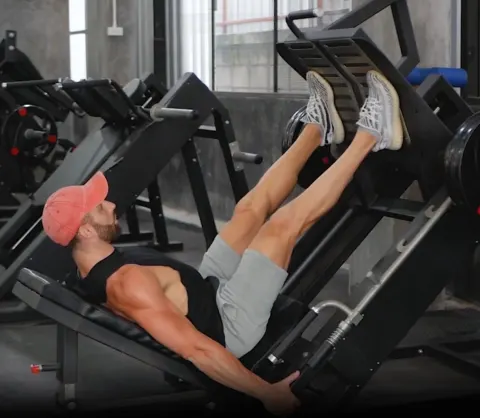
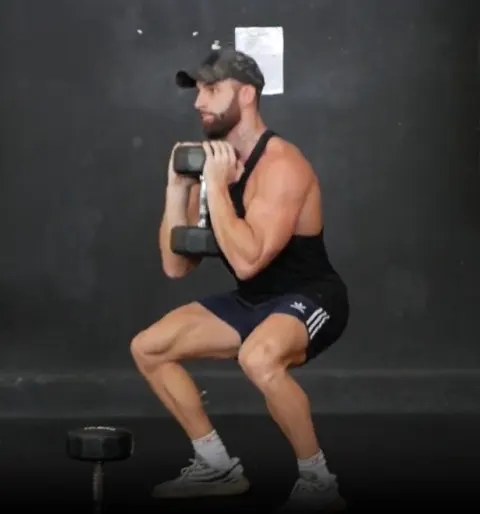
Quads, Glutes · Machine
- Sets
- 3
- Reps
- 6–10
- Rest
- 120s
- Effort
- RPE 8
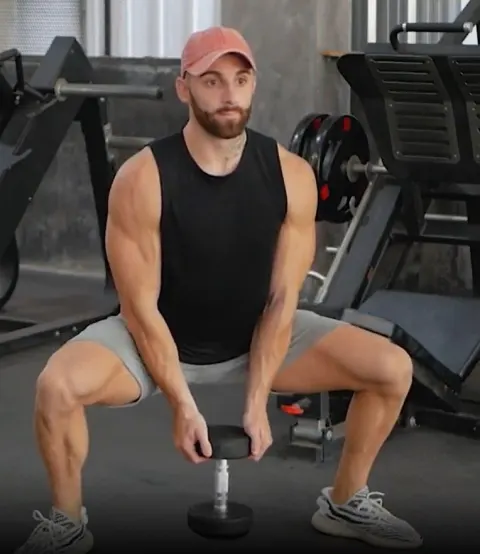
swap: Leg Press, Goblet Squat, Banded Squat
-
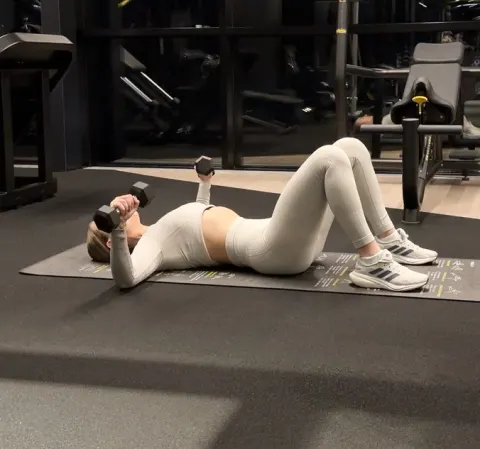
Chest, Front Delts · Dumbbell
- Sets
- 3
- Reps
- 6–10
- Rest
- 120s
- Effort
- RPE 8
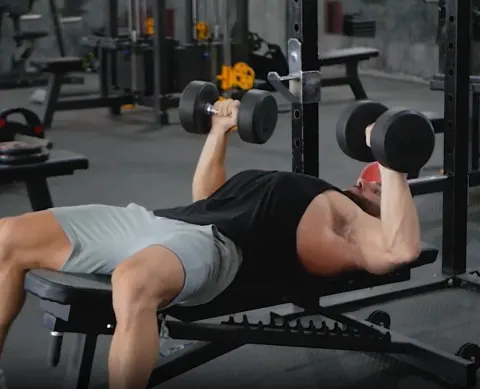
swap: Machine Chest Press, Dumbbell Bench Press, Dumbbell Floor Press
-
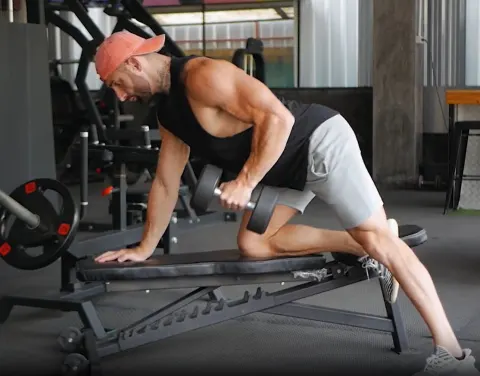
Lats, Upper Back · Dumbbell
- Sets
- 3
- Reps
- 6–10 / side
- Rest
- 120s
- Effort
- RPE 8
-
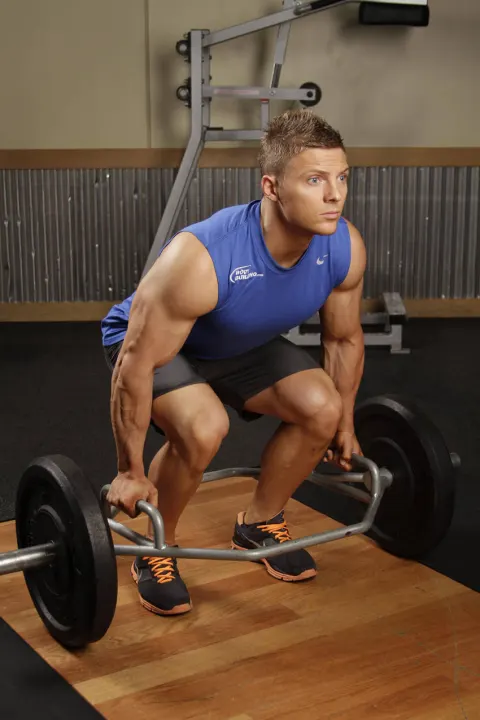
Glutes, Quads, Hamstrings · Barbell
- Sets
- 2
- Reps
- 8–12
- Rest
- 90s
- Effort
- RPE 8
swap: Kettlebell Deadlift, Goblet Squat, Banded Good Morning
-
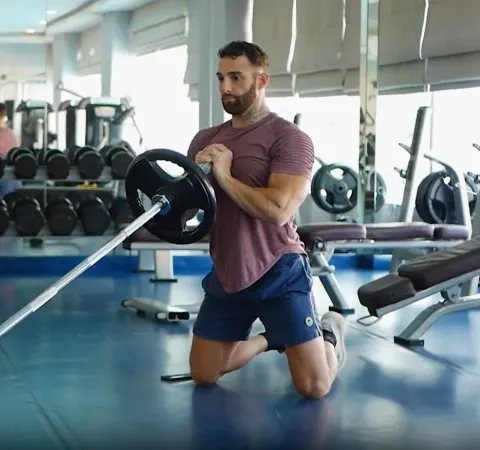
Front Delts, Chest · Barbell
- Sets
- 3
- Reps
- 10–15 / side
- Rest
- 60s
- Effort
- RPE 8–9
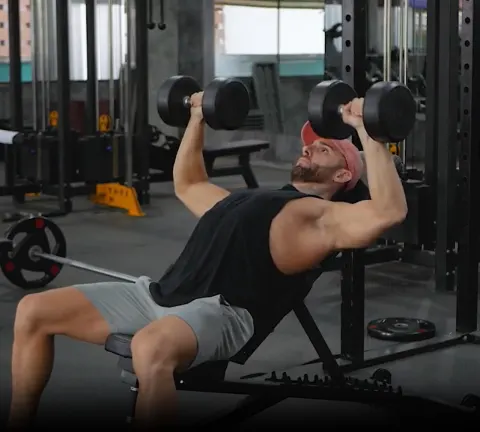
swap: Dumbbell Shoulder Press, Kettlebell Press, Incline Dumbbell Press
-
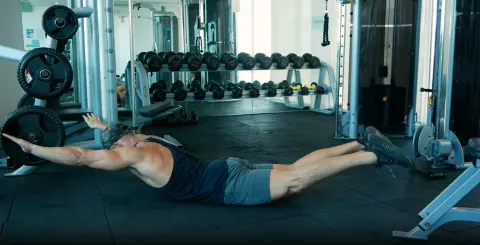
Lower Back, Glutes · Bodyweight
- Sets
- 3
- Reps
- 12–15
- Rest
- 60s
- Effort
- controlled
swap: Bird Dog, Glute Bridge, Plank
Day 2
Full Body B
Hinge + vertical push/pull
-
Hamstrings, Glutes · Dumbbell
- Sets
- 3
- Reps
- 6–10
- Rest
- 120s
- Effort
- RPE 8
swap: Kettlebell Deadlift, Bodyweight Hip Hinge, Dumbbell Deadlift
-
Lats, Upper Back · Cable
- Sets
- 3
- Reps
- 6–10
- Rest
- 120s
- Effort
- RPE 8
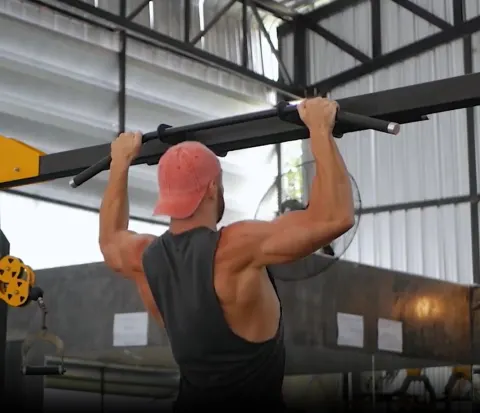
swap: Assisted Pull-Up, Band Lat Pulldown, Straight-Arm Pulldown
-
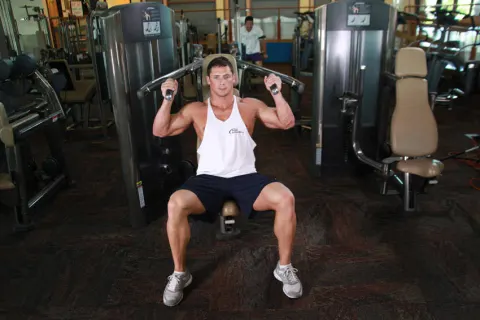
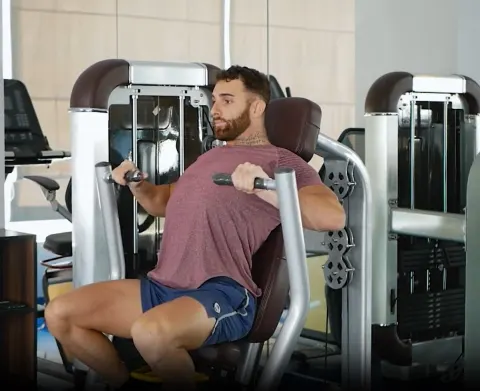
Front Delts, Side Delts · Machine
- Sets
- 3
- Reps
- 6–10
- Rest
- 120s
- Effort
- RPE 8
swap: Seated Dumbbell Press, Dumbbell Shoulder Press, Band Shoulder Press
-
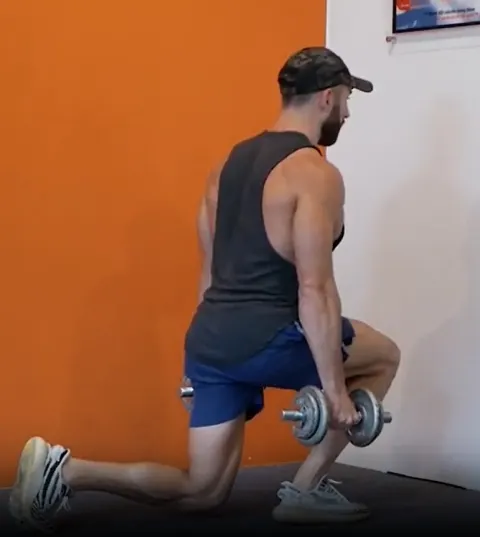
Quads, Glutes · Dumbbell
- Sets
- 2
- Reps
- 8–12 / side
- Rest
- 90s
- Effort
- RPE 8
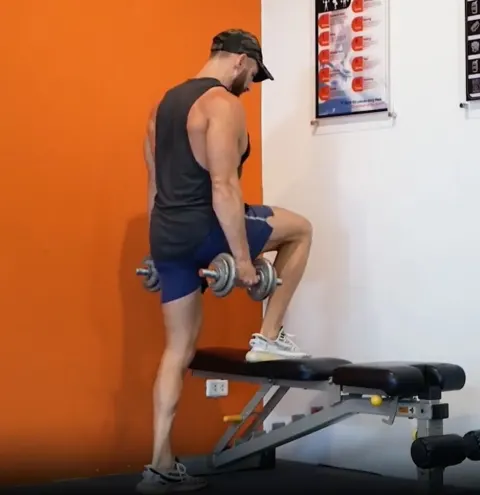
swap: Reverse Lunge, Split Squat, Step-Up
-
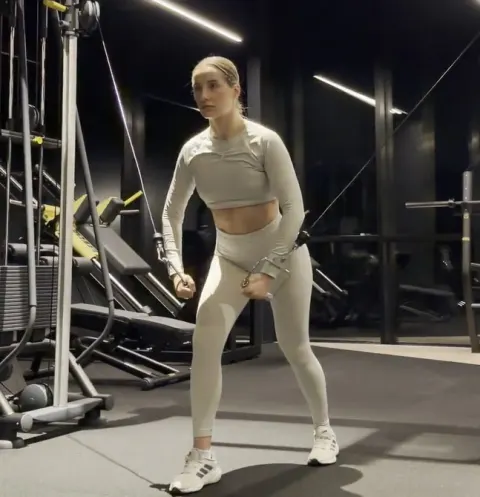
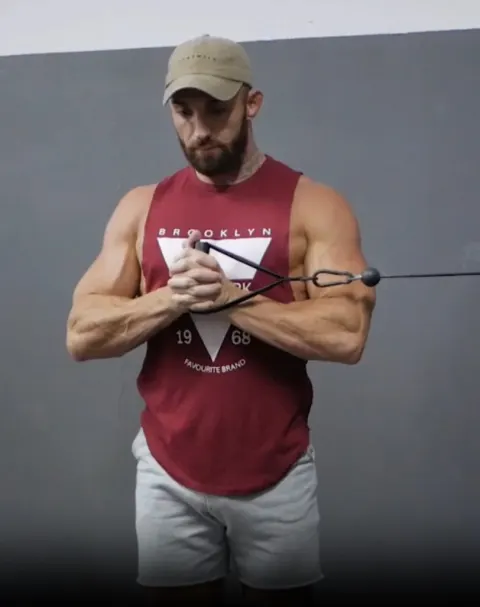
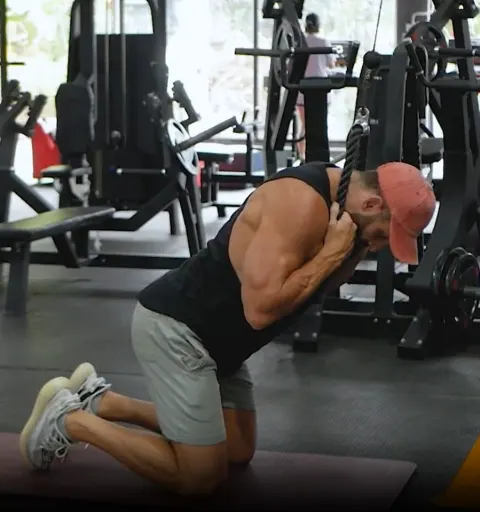
Obliques, Core · Cable
- Sets
- 3
- Reps
- 12–15 / side
- Rest
- 60s
- Effort
- controlled
swap: Side Plank, Suitcase Carry, Russian Twist
Day 3
Full Body C
Single-leg + chest + back
-
Quads, Glutes · Bodyweight
- Sets
- 3
- Reps
- 6–10 / side
- Rest
- 120s
- Effort
- RPE 8
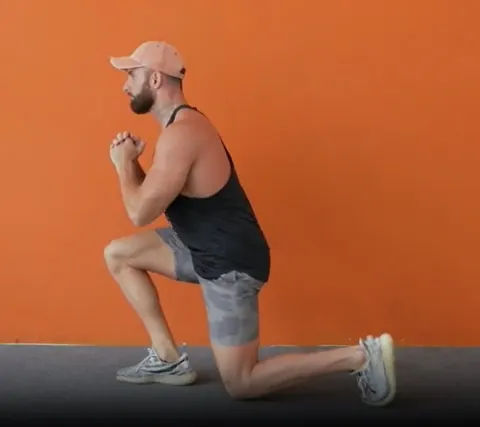
swap: Reverse Lunge, Split Squat, Walking Lunge
-
Chest, Triceps · Machine
- Sets
- 3
- Reps
- 6–10
- Rest
- 120s
- Effort
- RPE 8
-
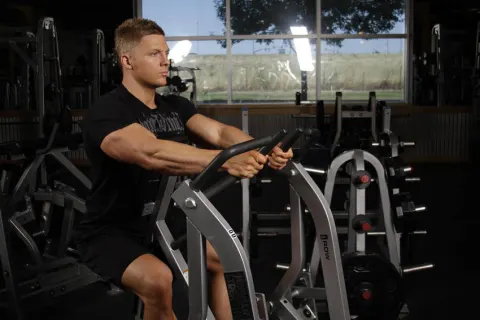
Upper Back, Lats · Machine
- Sets
- 3
- Reps
- 6–10
- Rest
- 120s
- Effort
- RPE 8
-
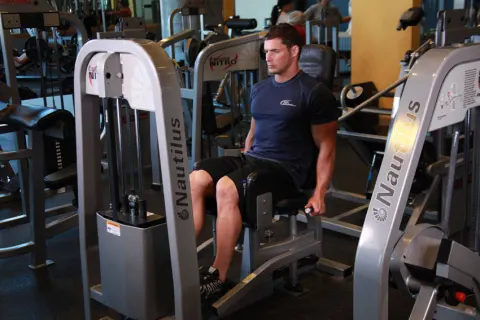
Glutes · Machine
- Sets
- 2
- Reps
- 8–12
- Rest
- 90s
- Effort
- RPE 8
-
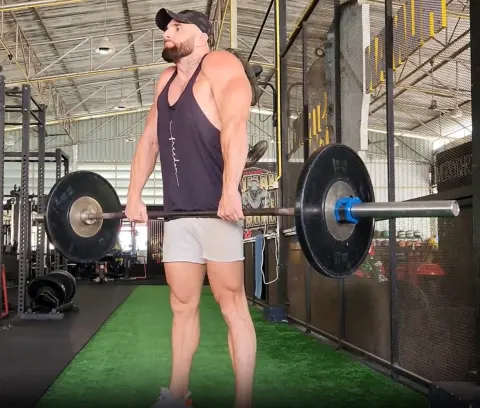
Traps · Barbell
- Sets
- 3
- Reps
- 10–15
- Rest
- 60s
- Effort
- RPE 8–9
swap: Dumbbell Shrug, Face Pull, Band Upright Row
8-week progression: what to change each week
Same exercises for the whole block. Weeks move the reps, then the load; the last week is a deload.
| Week | Load | Reps | Effort | What to watch |
|---|---|---|---|---|
| 1 | Light: learn the movements | bottom of range (6–8) | RPE 6–7 | Stop every set 3 reps before failure; film one set per exercise to check form. |
| 2 | Same weight | +1 rep per set (8–9) | RPE 8 | Same exercises, same order; only the reps move. |
| 3 | Same weight | top of range (9–10) | RPE 8 | All sets at the top of the range → add load next week. Missed a set? Repeat the week. |
| 4 | +2.5 kg (5 lb) | bottom of range (6–8) | RPE 8 | New weight feels hard at low reps; that is the plan working. |
| 5 | Same weight | +1 rep per set (8–9) | RPE 8 | Keep rest periods the same. |
| 6 | Same weight | top of range (9–10) | RPE 8–9 | Second time at the top: take the last set of each main lift to 1 rep in reserve. |
| 7 | +2.5 kg (5 lb) | bottom of range (6–8) | RPE 8 | Bodyweight moves: slow the lowering phase to 3 s or move to the harder variation. |
| 8 | Deload: 60 % | bottom of range | RPE 5–6 | Half the sets, then regenerate a variation or change the split for the next block. |
How to progress
- First 2 weeks: focus on form with light weights, stop each set 3 reps before failure.
- Double progression: hit the top of the rep range on every set, then add weight (2.5–5 %) and start from the bottom of the range.
- Bodyweight moves: add reps, then slow the tempo (3 sec down), then move to a harder variation.
- Deload every 6–8 weeks: same exercises, half the sets.
Notes for this plan
- Glute emphasis: hinge and glute work is prioritised; squat deep and drive through the heels.
- Sessions can move between days; keep at least one rest day between hard sessions for the same muscles.
The quickest way to feel at home in the weights area is to arrive knowing which station, which load and how many reps. This plan gives you three full-body sessions a week for muscle gain. At beginner level it runs on the Smith machine, the trap bar, dumbbells, cables and machines, and it prepares you for the back squat and barbell hip thrust that come next.
What the three gym days train
The example week above runs Monday, Wednesday and Friday, about 45 minutes a session. Every session opens with a lower-body lift while you are fresh, pairs a press with a pull, adds a second lower-body movement for hips and glutes, and finishes with a lighter upper-body accessory and core work. Across the week you squat, hinge and train one leg at a time, so the glutes are worked in all three sessions and the upper body gets a press and a pull every day.
The loading follows the muscle-gain rules used everywhere on the site: 3 sets of 6–10 reps on main lifts with 2 minutes of rest, 2 sets of 8–12 on the second lower-body lift with 90 seconds, 3 sets of 10–15 on accessories with 60 seconds. Nothing is lighter than in the general plans. The only change is that hip and glute movements get the priority slots. The same build is saved as the 3-day gym plan for muscle gain for women, which you can download as a PDF.
A map of the weights area
You will not find a free barbell squat in the week yet. The classic barbell lifts are intermediate-level in the exercise library, so a beginner plan teaches each pattern on a more stable tool first.
| Zone | In the beginner week above | Later, at intermediate level |
|---|---|---|
| Smith machine | Squats on a guided bar | Replaced by the squat rack |
| Trap bar and floor space | Deadlifts with handles at your sides | Barbell deadlift variations |
| Dumbbell rack and benches | Romanian deadlifts, presses, rows, lunges, step-ups | Heavier pairs, barbell hip thrust off a bench |
| Cable stations | Lat pulldown, chest fly, core work | Kickbacks, face pulls |
| Machines | Chest press, shoulder press, row, hip abduction | Leg curl and other isolation work |
| Squat or power rack | Not needed yet | Back squat, overhead press |
Two habits make the area less intimidating. On the Smith machine, set the safety stops just below the lowest point of your squat, so a missed rep ends on steel and not on you. And take your full rest: three sets with 2-minute breaks is under 10 minutes, a normal amount of time to hold a station.
If a station is taken, every exercise in the plan lists alternatives with the same movement pattern. A busy Smith machine means a leg press or goblet squat that day, not a skipped session.
The lifts that carry the plan
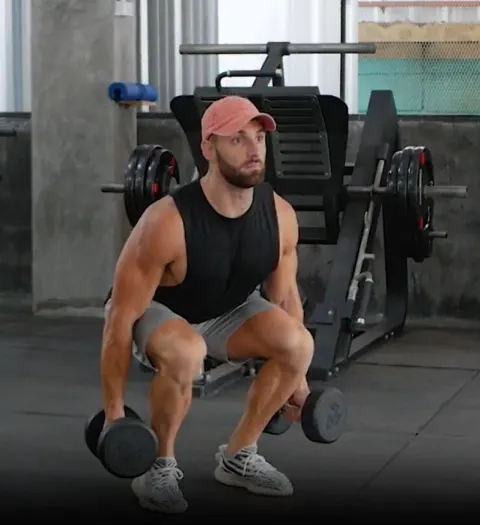
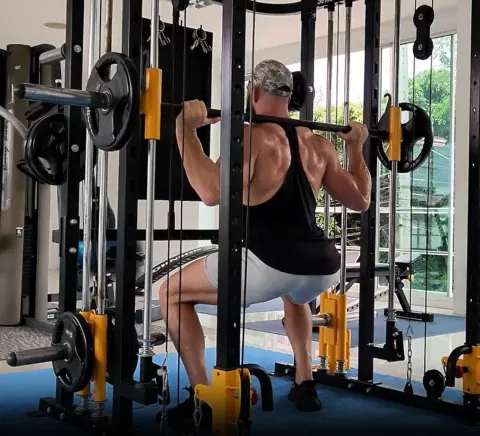
Smith-machine squat. Feet slightly in front of the bar and about shoulder width apart, knees tracking over the toes. Go as deep as you can while the whole foot stays on the floor. The guided path lets you learn depth before balance.
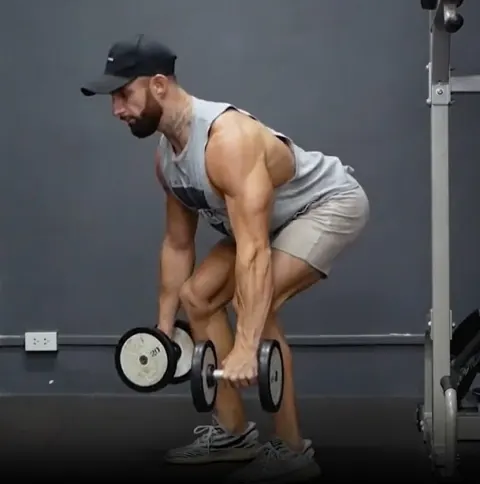
Trap-bar deadlift. Stand inside the frame, hinge down to the handles with a flat back, then push the floor away. Hands at your sides make this the easiest deadlift to learn.
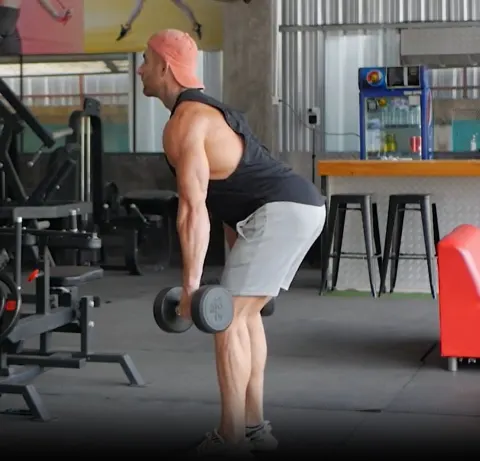
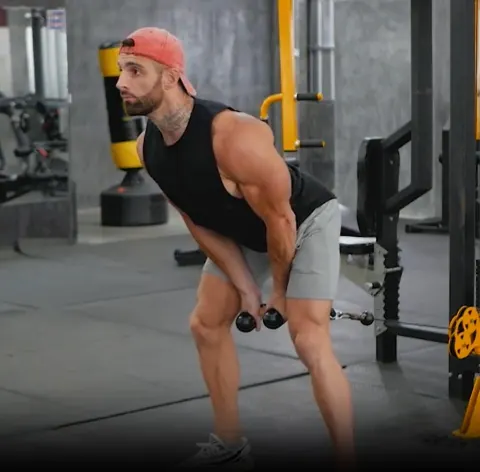
Dumbbell Romanian deadlift. Start standing, soften the knees, then push the hips back and let the dumbbells slide down the thighs. Stop around mid-shin, where the hamstrings run out of length, and stand up by squeezing the glutes.
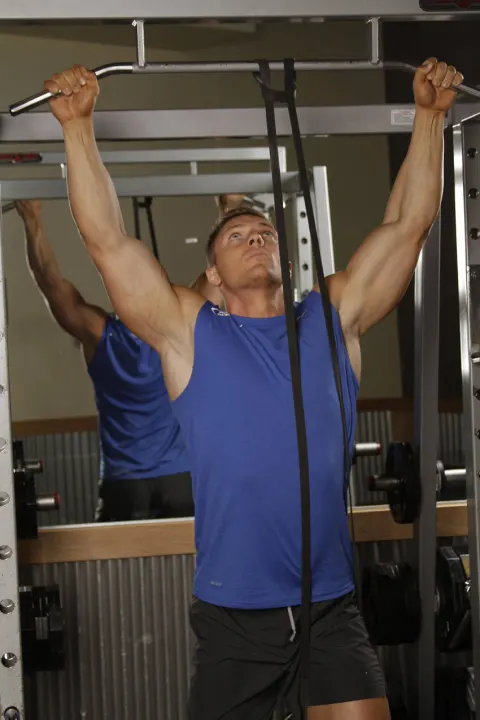
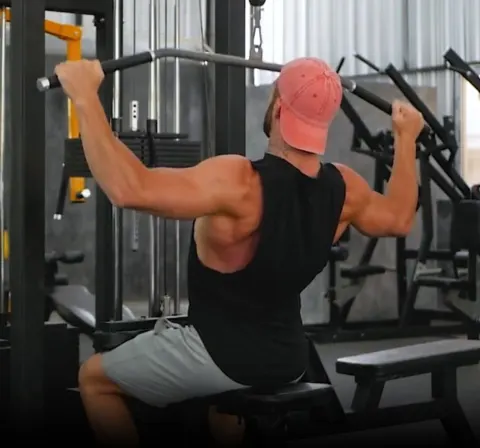
Lat pulldown and rows. Pull the elbows towards the ribs instead of the hands towards the chest, and let the shoulder blades stretch fully at the top of each rep. This is the strength a first pull-up is built from.
Starting loads for the first sessions
For the first two weeks choose loads that leave about 3 reps in reserve, then start pushing.
| Lift | Typical first session | Jump when every set hits the top |
|---|---|---|
| Smith-machine squat | The bar alone, then 5 kg a side | 2.5–5 kg |
| Trap-bar deadlift | Empty trap bar, often 20–25 kg | 5 kg |
| Dumbbell Romanian deadlift | 8–12 kg per hand | Next pair up |
| Lat pulldown, machine row | 20–30 kg on the stack | One plate on the stack |
| Dumbbell and machine presses | 5–8 kg per hand, or a light stack setting | Smallest step available |
Smith bars are counterbalanced differently in every gym, so log the plates you add instead of a total.
Free barbell lifts come next. A standard Olympic bar weighs 20 kg. A first back squat is the empty bar, while a first barbell hip thrust is typically 30–40 kg, because the glutes are among the strongest muscles you have. The barbell plate calculator shows what to slide on each side, and one or two ramp-up sets with a lighter load come before the first working set of any lift.
Cables and machines for glutes
The week above has one machine movement aimed purely at the glutes: hip abduction, in the second lower-body slot of the third day. When you swap an exercise or move up a level, these are the options worth knowing.
- Hip abduction machine. Trains the side of the hip. Control the return instead of letting the stack drop.
- Cable glute kickback. Ankle strap, slight forward lean, kick back and a little outwards. Return slowly.
- Barbell hip thrust. Bench edge under the shoulder blades, padded bar in the hip crease, shins vertical at the top, a one-second hold at lockout. It is the usual glute movement of the intermediate plans.
Keep whichever one your plan lists for the whole cycle. Rotating machines every week hides whether you are progressing.
Adding weight week after week
The method is double progression. Take the lat pulldown at 6–10 reps: 25 kg for 6, 6 and 6 in week 1, one more rep per set each week, and when every set reaches 10 the pin moves down one plate and the reps return to 6. Every eighth week is a deload at about 60 % of the load and half the sets.
Food decides whether the work turns into muscle. Eat 1.6–2.2 g of protein per kg of body weight, add a surplus of about 250–300 kcal if muscle is the priority, and sleep 7–9 hours.
Mistakes in the weights area
- Opening with abductions and kickbacks. Small movements first means tired glutes under the squat bar. Heavy lifts lead.
- Smith squats cut high. Half-depth reps with more plates train less than full-depth reps with fewer.
- Thirty-second rests on main lifts. Short rests cut the reps you can do. Take the full 2 minutes.
- Skipping the trap bar because the free-weight area looks busy. Ask how many sets someone has left. It is the normal question.
- Never writing loads down. Without last week’s numbers you cannot beat them.
Stepping up: four days, then the barbell
After three to six months, when you want more lower-body volume, move to four days. The upper/lower split gives you two lower days, one led by a squat and one by a hinge, each with its own glute movement. The 4-day gym plan for muscle gain for women is the direct continuation at the same level.
The second step is the bar. Set the level to intermediate in the plan generator and the main slots change to back squats and other barbell lifts, with the barbell hip thrust as glute work. The 4-day workout plan page shows a week at that level.
If this is your first month in any gym, the gym workout plan for beginners walks through day one. For other goals and equipment, start from the general workout plan for women.
Gym Workout Plan for Women: all 20 plans
- 2-Day Gym Workout Plan for Strength (Women)
- 2-Day Gym Workout Plan for General Fitness (Women)
- 3-Day Gym Workout Plan for Strength (Women)
- 3-Day Gym Workout Plan for General Fitness (Women)
- 4-Day Gym Workout Plan for Strength (Women)
- 4-Day Gym Workout Plan for General Fitness (Women)
- 5-Day Gym Workout Plan for Strength (Women)
- 5-Day Gym Workout Plan for General Fitness (Women)
- 6-Day Gym Workout Plan for Muscle Gain (Women)
- 6-Day Gym Workout Plan for Strength (Women)
- 6-Day Gym Workout Plan for General Fitness (Women)
Related programs
Frequently asked questions
What should a woman do at the gym as a beginner?
Follow a written plan of three full-body sessions a week. Each one has six exercises: two lower-body lifts, a press, a pull, an upper-body accessory and core work. Start with light dumbbells and machine settings, stop about 3 reps short of failure for two weeks, then add weight once the reps look clean.
How much weight should a woman start with on barbell lifts?
The beginner week uses a Smith machine, a trap bar and dumbbells, so start there with loads that leave about 3 reps in reserve. When you move to free barbell lifts, squat the empty 20 kg bar first. Barbell hip thrusts usually start at 30 to 40 kg.
Are machines or free weights better for women?
Use both. Free weights train balance along with the muscle and load in small steps, while machines give a fixed path that lets a beginner push close to failure safely. The beginner plan mixes them at 6 to 10 reps on main lifts, and barbell lifts take over the main slots at intermediate level.
How long should a gym session take?
About 45 minutes including the warm-up for the three-day beginner plan. Heavy sets need 2 minutes of rest, lighter accessory sets about 60 seconds. If a session regularly runs past 60 minutes, you are adding exercises that are not in the plan or resting far longer than written.
How often should I train glutes at the gym?
Two to three times a week. In the three-day full-body plan every session has two lower-body lifts that load the glutes, a squat, hinge or single-leg movement first and a second one later. That is about 15 sets a week, inside the 10 to 20 set range for growth.