Toning Workout Plan for Women: What Toning Really Takes
A toning workout plan for women, explained honestly: four dumbbell sessions that build muscle, the fat-loss side, rep ranges and what changes in 8–12 weeks.
Example week
4-Day Dumbbell Workout Plan for General Fitness (Women)
A complete week you can start today: exercises, sets, reps and rest for every session, with swaps for each exercise. Open this plan on its own page (PDF) →
Split
Upper / Lower
Sessions / week
4
Avg. session
29 min
Schedule
Mon · Tue · Thu · Fri
Warm-up (every session, ~6 min)
- 3–5 min easy cardio: brisk walk, bike, jump rope or marching in place.
- Dynamic mobility: 10 leg swings each way, 10 hip circles, 10 arm circles, 8 cat-cows.
- Ramp-up sets on the first exercise: 1–2 light sets of 8 before your working sets.
Day 1
Upper A
Chest + back, strength bias
-
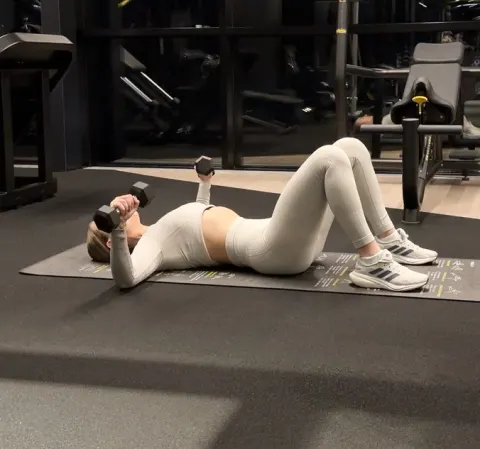
Chest, Triceps · Dumbbell
- Sets
- 2
- Reps
- 8–10
- Rest
- 90s
- Effort
- RPE 7
-
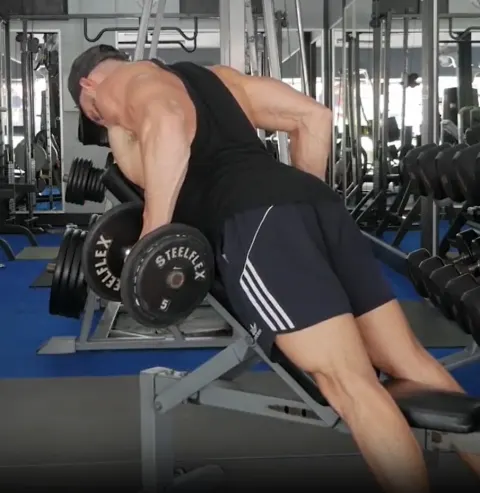
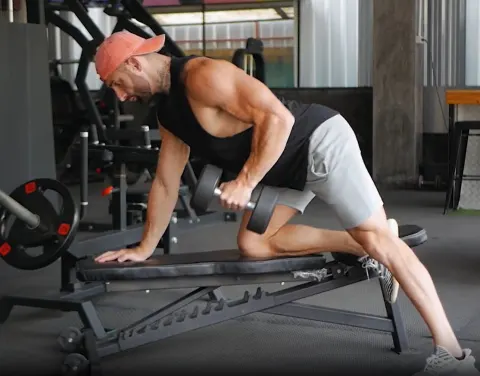
Upper Back, Lats · Dumbbell
- Sets
- 2
- Reps
- 8–10
- Rest
- 90s
- Effort
- RPE 7
swap: Dumbbell Row, Inverted Row, Rear Delt Fly
-
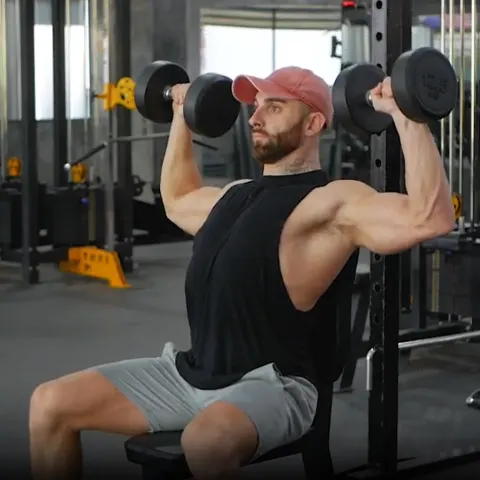
Front Delts, Side Delts · Dumbbell
- Sets
- 2
- Reps
- 8–12
- Rest
- 75s
- Effort
- RPE 7
-
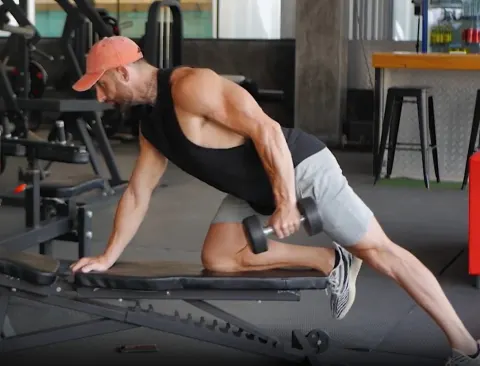
Lats, Upper Back · Dumbbell
- Sets
- 2
- Reps
- 8–12 / side
- Rest
- 75s
- Effort
- RPE 7
-
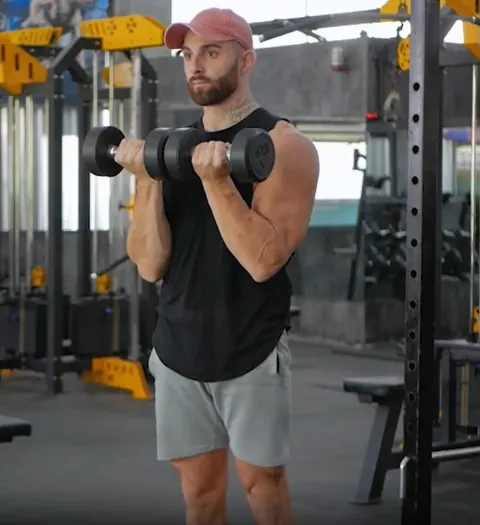
Biceps · Dumbbell
- Sets
- 2
- Reps
- 12–15
- Rest
- 60s
- Effort
- RPE 7
-
Triceps · Dumbbell
- Sets
- 2
- Reps
- 12–15 / side
- Rest
- 60s
- Effort
- RPE 7
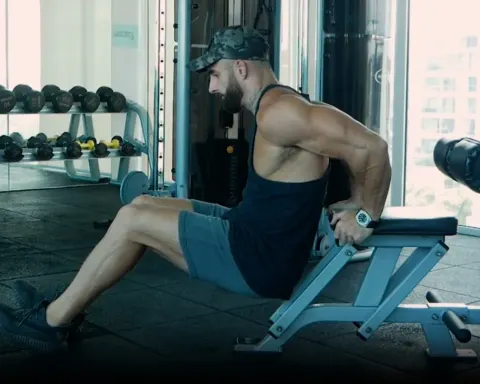
swap: Overhead Triceps Extension, Bench Dip, Bodyweight Triceps Extension
Day 2
Lower A
Squat focus
-
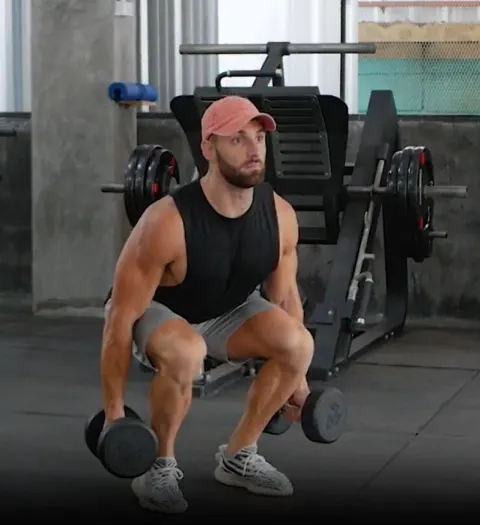
Glutes, Adductors, Quads · Dumbbell
- Sets
- 2
- Reps
- 8–10
- Rest
- 90s
- Effort
- RPE 7
-
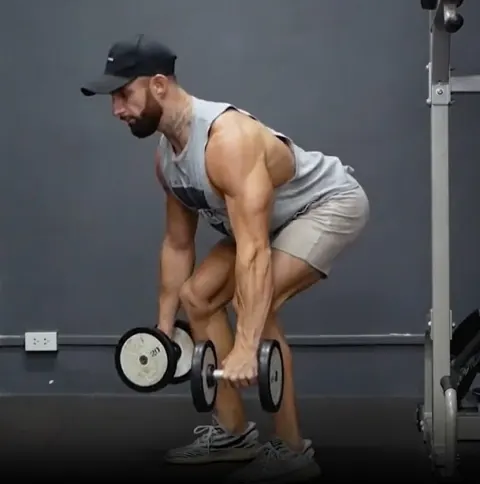
Hamstrings, Glutes · Dumbbell
- Sets
- 2
- Reps
- 8–12
- Rest
- 75s
- Effort
- RPE 7
swap: Bodyweight Hip Hinge, Dumbbell Deadlift, Bodyweight Good Morning
-
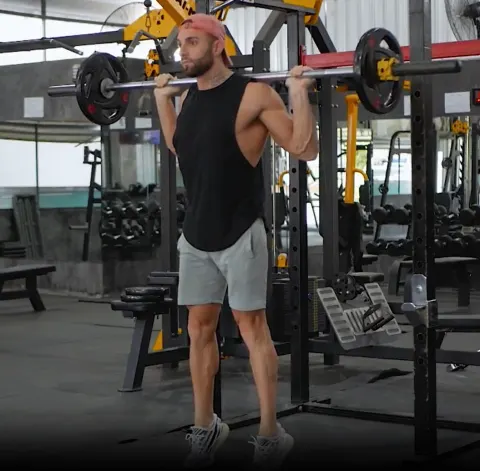
Quads, Glutes · Dumbbell
- Sets
- 2
- Reps
- 8–12 / side
- Rest
- 75s
- Effort
- RPE 7
swap: Reverse Lunge, Split Squat, Step-Up
-
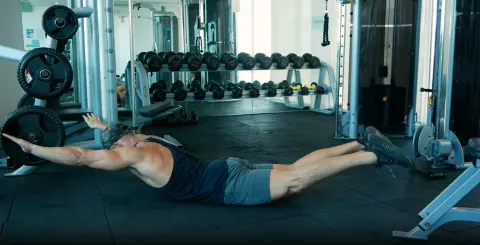
Lower Back, Glutes · Bodyweight
- Sets
- 2
- Reps
- 12–15
- Rest
- 45s
- Effort
- controlled
swap: Bird Dog, Glute Bridge, Plank
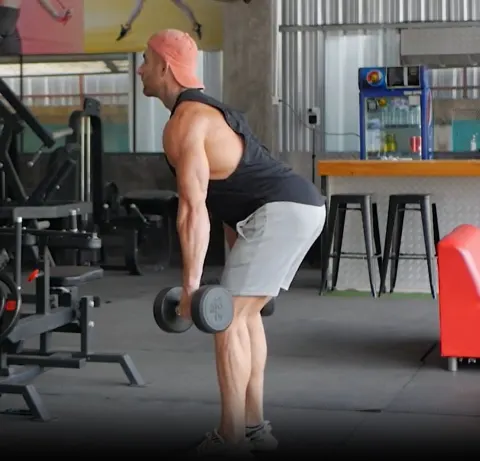
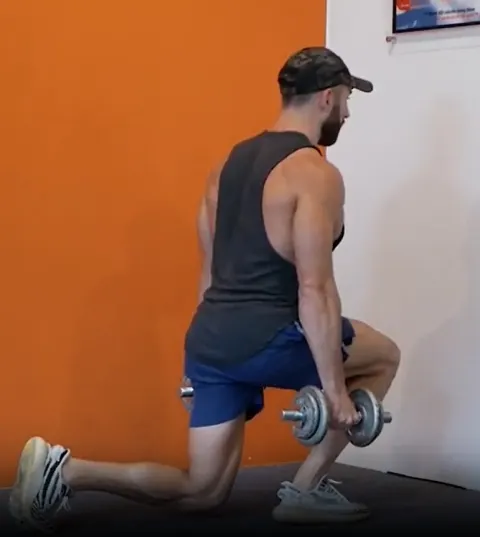
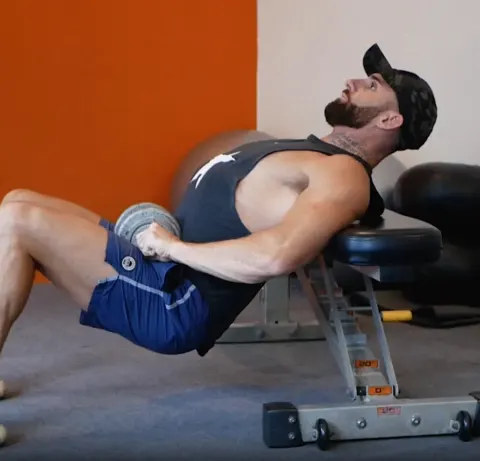
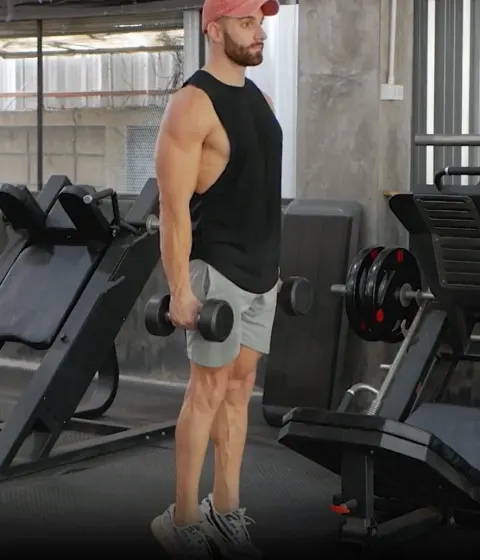
Day 3
Upper B
Shoulders + back, volume bias
-
Upper Back, Lats · Bodyweight
- Sets
- 2
- Reps
- 8–10
- Rest
- 90s
- Effort
- RPE 7
-
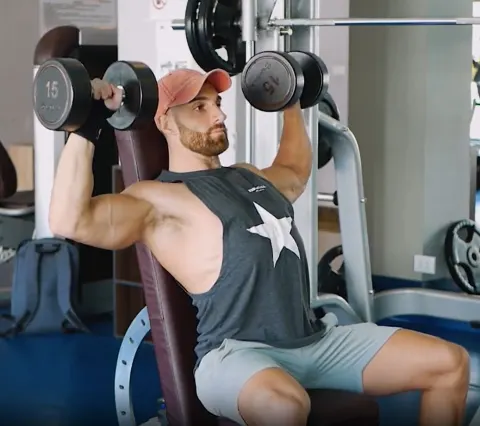
Front Delts, Side Delts · Dumbbell
- Sets
- 2
- Reps
- 8–10
- Rest
- 90s
- Effort
- RPE 7
-
Chest, Front Delts · Dumbbell
- Sets
- 2
- Reps
- 8–12
- Rest
- 75s
- Effort
- RPE 7
-
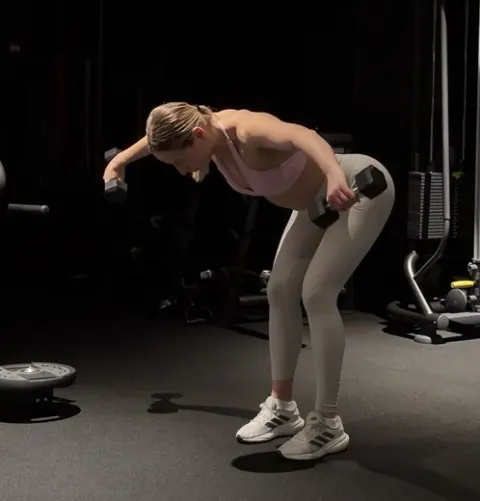
Rear Delts, Upper Back · Dumbbell
- Sets
- 2
- Reps
- 8–12
- Rest
- 75s
- Effort
- RPE 7
-
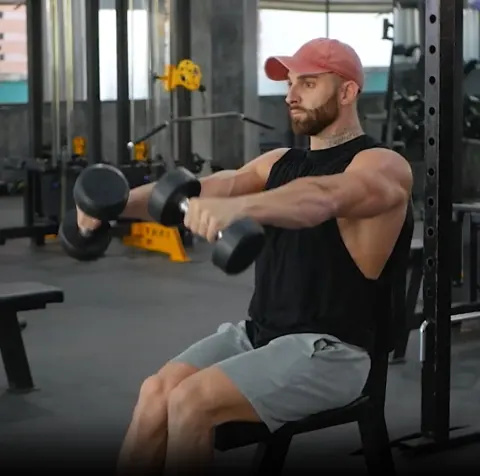
Front Delts · Dumbbell
- Sets
- 2
- Reps
- 12–15
- Rest
- 60s
- Effort
- RPE 7
swap: Dumbbell Shoulder Press, Dumbbell Lateral Raise, Dumbbell Shrug
-
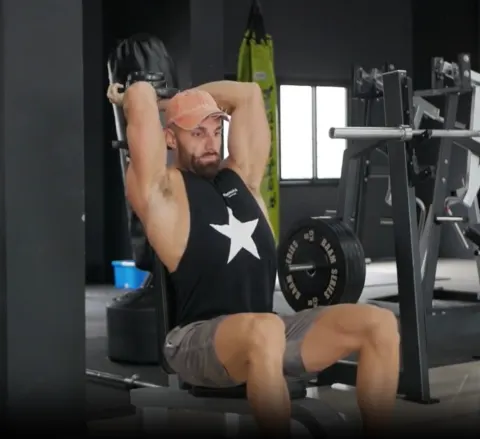
Triceps · Dumbbell
- Sets
- 2
- Reps
- 12–15
- Rest
- 60s
- Effort
- RPE 7
swap: Bench Dip, Dumbbell Kickback, Bodyweight Triceps Extension
Day 4
Lower B
Hinge focus
-
Hamstrings, Glutes · Dumbbell
- Sets
- 2
- Reps
- 8–10
- Rest
- 90s
- Effort
- RPE 7
-
Quads, Glutes · Dumbbell
- Sets
- 2
- Reps
- 8–12
- Rest
- 75s
- Effort
- RPE 7
swap: Goblet Squat, Bodyweight Squat, Sumo Squat
-
Hamstrings, Glutes · Bodyweight
- Sets
- 2
- Reps
- 12–15
- Rest
- 60s
- Effort
- RPE 7
swap: Glute Bridge, Standing Calf Raise
-
Calves · Bodyweight
- Sets
- 2
- Reps
- 12–15
- Rest
- 60s
- Effort
- RPE 7
-
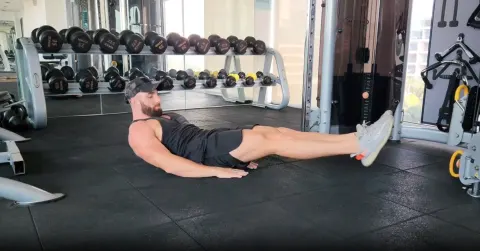
Core, Hip Flexors · Bodyweight
- Sets
- 2
- Reps
- 30–60 sec
- Rest
- 45s
- Effort
- controlled
swap: Lying Leg Raise, Dead Bug, Bicycle Crunch
8-week progression: what to change each week
Same exercises for the whole block. Weeks move the reps, then the load; the last week is a deload.
| Week | Load | Reps | Effort | What to watch |
|---|---|---|---|---|
| 1 | Light: learn the movements | bottom of range (8) | RPE 6–7 | Stop every set 3 reps before failure; film one set per exercise to check form. |
| 2 | Same weight | +1 rep per set (9) | RPE 8 | Same exercises, same order; only the reps move. |
| 3 | Same weight | top of range (10) | RPE 8 | All sets at the top of the range → add load next week. Missed a set? Repeat the week. |
| 4 | next dumbbell / harder variation | bottom of range (8) | RPE 8 | New weight feels hard at low reps; that is the plan working. |
| 5 | Same weight | +1 rep per set (9) | RPE 8 | Keep rest periods the same. |
| 6 | Same weight | top of range (10) | RPE 8–9 | Second time at the top: take the last set of each main lift to 1 rep in reserve. |
| 7 | next dumbbell / harder variation | bottom of range (8) | RPE 8 | Bodyweight moves: slow the lowering phase to 3 s or move to the harder variation. |
| 8 | Deload: 60 % | bottom of range | RPE 5–6 | Half the sets, then regenerate a variation or change the split for the next block. |
How to progress
- First 2 weeks: focus on form with light weights, stop each set 3 reps before failure.
- Double progression: hit the top of the rep range on every set, then add weight (2.5–5 %) and start from the bottom of the range.
- Bodyweight moves: add reps, then slow the tempo (3 sec down), then move to a harder variation.
- Deload every 6–8 weeks: same exercises, half the sets.
Notes for this plan
- Glute emphasis: hinge and glute work is prioritised; squat deep and drive through the heels.
- Home setup: if a weight gets too light, slow the lowering phase to 3–4 seconds or add a pause at the hardest point.
- Sessions can move between days; keep at least one rest day between hard sessions for the same muscles.
“Toning” is not a separate kind of training. The look people mean by it comes from two things: a little more muscle, and a little less fat on top of it. So a toning plan is a strength plan with challenging weights, done consistently, plus eating that matches your starting point. This page explains both halves and shows what the example week does about the first one.
What toning actually is
A muscle cannot become “longer”, “leaner” or “more toned”. It can grow or it can shrink. Fat can increase or decrease. Firm shoulders, a defined back of the arm and a lifted bottom are muscles that have grown a little, seen through a thinner layer of fat.
That leaves three starting points:
| Where you start | What creates the toned look | How to eat |
|---|---|---|
| Comfortable weight, soft shape | More muscle | At maintenance, with enough protein |
| Some fat you want to lose | More muscle and less fat | 300–500 kcal under maintenance |
| Slim with little muscle | More muscle | At maintenance or slightly above |
In all three rows the training is identical. Only the food differs.
If you are in the middle row and fat loss is the main job, head for the weight loss workout plan for women, which deals with the deficit, the scale and the menstrual cycle in detail. If you are still choosing between goals, the general workout plan for women compares them. This page stays with one narrow question: how to look and feel firmer.
Weights will not make you bulky
This worry keeps more women away from useful training than anything else. Three facts answer it:
- Muscle is slow. A woman who trains well might add a quarter to half a kilo of muscle a month in her first year, spread over the whole body. That reads as shape, not bulk.
- Size needs food. Substantial muscle gain requires eating above maintenance for months. It does not happen by accident on a normal diet.
- You stay in control. If one area ever grows more than you like, train it less. Nothing changes overnight.
What some women notice in the first weeks is temporary. Newly trained muscles hold extra water, and if body fat has not moved yet, sleeves or jeans can feel tighter for a short while. It settles.
How the example week is built
The example week above trains with dumbbells on Monday, Tuesday, Thursday and Friday: two upper-body days and two lower-body days, each just under 30 minutes. Every session has six exercises for 2 sets each.
- Upper days: a press and a row for 8–10 reps with 90 seconds of rest, a second press and a second movement for the back or rear shoulders for 8–12, then two lighter arm or shoulder exercises for 12–15.
- Lower days: one squat or deadlift for 8–10 reps, two more leg and glute movements for 8–12, a glute or hamstring exercise and a calf raise for 12–15, and a short core exercise to finish.
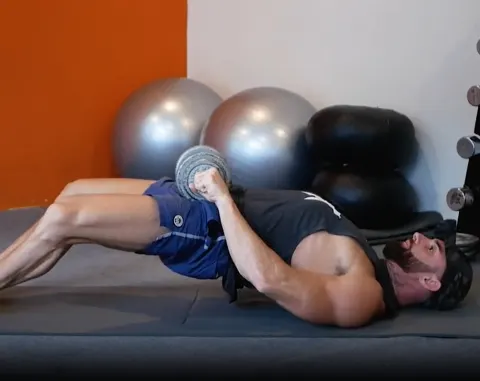
That is 12 sets a session and 48 a week. The lower days lean towards the glutes: each one contains a dedicated glute exercise such as the dumbbell hip thrust. There are no jumping finishers, because this is a general fitness week and not a fat-loss circuit.
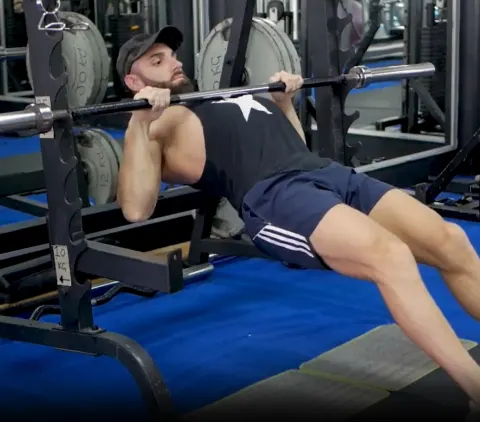
One of the upper days includes an inverted row, pulled with your own body weight under a solid bar or table edge. If you have neither, swap in a one-arm dumbbell row.
Two sets per exercise is a beginner dose. After about eight weeks, add a third set to the first two exercises of each day.
Rep ranges that tone
Any set of roughly 6 to 20 reps builds muscle, provided the last two or three reps are hard. The 8–15 used in the week above sits in the comfortable middle of that span.
The test is the weight, not the rep count. If you finish 15 reps and could have done 25, the dumbbell is too light and the set did very little. Most women outgrow 2–3 kg dumbbells for lower-body lifts within a few weeks. Plan on a clearly heavier pair for squats, deadlifts and hip thrusts than for raises and curls.
Progress is simple: once both sets of an exercise hit the upper end of the range, choose the next weight up and begin again at the lower end.
The fat-loss half
You need this section only if you are in the middle row of the table.
- A modest deficit. Set it with the calorie deficit calculator and lose at most 0.5–1 % of your weight per week. Smaller bodies belong at the slower end.
- Enough protein. Eat 1.6–2.2 g of it per kilo of body weight each day. The protein intake calculator gives your grams.
- Daily walking. 7,000–10,000 steps add to the deficit without adding fatigue.
- No spot reduction. Triceps exercises build the back of the arm but cannot pick the fat that covers it. Our guide on how to lose arm fat explains what works instead.
At a comfortable weight already? Skip the deficit and eat at maintenance. Gaining muscle while fat stays level or drifts down is called recomposition, and the body recomposition workout plan describes it in full.
What to expect in 8–12 weeks
| Weeks | What typically changes |
|---|---|
| 1–3 | Strength and coordination improve quickly; some soreness; the scale may rise slightly from water |
| 4–6 | Weights are clearly heavier; muscles feel firmer to the touch; posture improves |
| 7–9 | Shoulders, arms and glutes look different in photos, more so if fat is also coming down |
| 10–12 | Clothes fit differently; most lifts are well above their starting weights |
These are typical patterns, not promises. Your pace depends on your starting point, sleep, food and how many sessions you actually complete. Take photos in the same light and measure waist and hips every four weeks, because daily mirror checks cannot detect slow change. The guide on how long it takes to see results goes deeper.
Choosing days and equipment
- Four days with dumbbells: the 4-day dumbbell plan for women has the same layout as the example.
- Three days: the 3-day dumbbell plan for women trains the whole body in every session.
- No equipment: the 3-day bodyweight plan for women works for the first months, until push-ups and squats become easy.
- Extra glute focus: the glute workout plan gives hips and legs more of the weekly work.
Mistakes that keep the toned look away
- Staying with the same light weights for months. Without heavier loads there is no reason for muscle to change.
- Replacing lifting with more cardio. Cardio helps the fat half and does nothing for the muscle half.
- Eating too little. Very low intakes cost muscle, which is the opposite of toning.
- Training only “problem areas”. Hundreds of crunches and arm circles miss the big muscles that shape the body.
- Judging by the scale alone. Muscle up and fat down can leave your weight unchanged while your shape clearly improves.
Toning Workout Plan for Women: all 22 plans
- 2-Day Gym Workout Plan for General Fitness (Women)
- 2-Day Kettlebell Workout Plan for General Fitness (Women)
- 2-Day Resistance Band Workout Plan for General Fitness (Women)
- 3-Day Gym Workout Plan for General Fitness (Women)
- 3-Day Kettlebell Workout Plan for General Fitness (Women)
- 3-Day Resistance Band Workout Plan for General Fitness (Women)
- 4-Day Gym Workout Plan for General Fitness (Women)
- 4-Day Kettlebell Workout Plan for General Fitness (Women)
- 4-Day Resistance Band Workout Plan for General Fitness (Women)
- 5-Day Gym Workout Plan for General Fitness (Women)
- 5-Day Kettlebell Workout Plan for General Fitness (Women)
- 6-Day Dumbbell Workout Plan for General Fitness (Women)
- 6-Day Gym Workout Plan for General Fitness (Women)
Related programs
Frequently asked questions
Will lifting weights make me bulky?
No. Building large muscles takes years of hard, heavy lifting plus a calorie surplus, and for most women it is slow even when it is the goal. Women also have much lower testosterone levels than men. What two to four weekly sessions with dumbbells produce is firmer shape in the shoulders, arms, glutes and legs, not size that appears by accident.
Should I use light weights and high reps to tone?
No. A muscle does not know whether an exercise is called toning. It responds to sets that are hard by the last few reps, and that is easiest to achieve with 8 to 15 reps. Very light weights for 25 or 30 reps mostly train endurance, and they do not burn noticeably more fat.
How long does it take to tone up?
Expect to feel stronger within two to three weeks, to notice firmer muscles under your hands by week four to six, and to see a visible change in photos after 8 to 12 weeks of consistent training. How much definition shows by then depends on how much body fat sits over the muscle at the start.
Can I tone my arms or stomach without losing weight overall?
You can build the muscle in one area, but you cannot choose where fat comes off. Arm and ab exercises strengthen what is underneath, while fat is lost from the whole body in an order set by genetics. If you are already at a comfortable weight, building muscle alone often gives the firmer look you want.
How many times a week should I train to tone up?
Three or four strength sessions of about 30 minutes are enough. Four days, as in the example on this page, lets you split upper and lower body so each session stays short. Three full-body days work just as well. Daily walking on top helps with the fat-loss half without tiring you for the next session.