Dumbbell Workout Plan for Beginners: First Weights, First Weeks
A dumbbell workout plan for beginners: which pairs to buy first, what weight to start with on each lift, key form cues and what to do if you have no bench.
Example week
3-Day Dumbbell Workout Plan for Muscle Gain (Beginners)
A complete week you can start today: exercises, sets, reps and rest for every session, with swaps for each exercise. Open this plan on its own page (PDF) →
Split
Full Body
Sessions / week
3
Avg. session
45 min
Schedule
Mon · Wed · Fri
Warm-up (every session, ~6 min)
- 3–5 min easy cardio: brisk walk, bike, jump rope or marching in place.
- Dynamic mobility: 10 leg swings each way, 10 hip circles, 10 arm circles, 8 cat-cows.
- Ramp-up sets on the first exercise: 1–2 light sets of 8 before your working sets.
Day 1
Full Body A
Squat + push + pull
-
Glutes, Adductors, Quads · Dumbbell
- Sets
- 3
- Reps
- 6–10
- Rest
- 120s
- Effort
- RPE 8
-
Chest, Front Delts · Dumbbell
- Sets
- 3
- Reps
- 6–10
- Rest
- 120s
- Effort
- RPE 8
-
Lats, Upper Back · Dumbbell
- Sets
- 3
- Reps
- 6–10 / side
- Rest
- 120s
- Effort
- RPE 8
-
Hamstrings, Glutes · Dumbbell
- Sets
- 2
- Reps
- 8–12
- Rest
- 90s
- Effort
- RPE 8
-
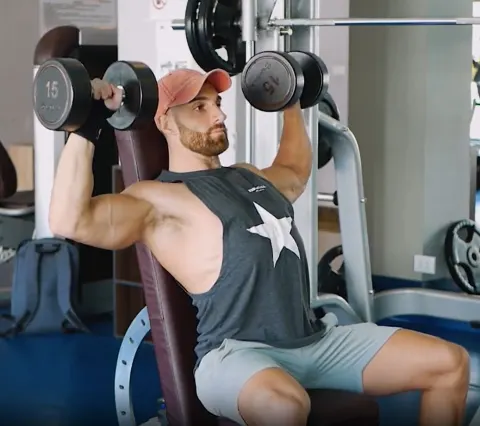
Front Delts, Side Delts · Dumbbell
- Sets
- 3
- Reps
- 10–15
- Rest
- 60s
- Effort
- RPE 8–9
-
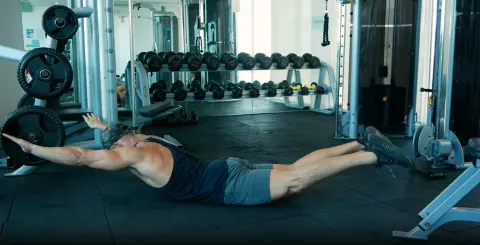
Lower Back, Glutes · Bodyweight
- Sets
- 3
- Reps
- 12–15
- Rest
- 60s
- Effort
- controlled
swap: Bird Dog, Glute Bridge, Plank
Day 2
Full Body B
Hinge + vertical push/pull
-
Hamstrings, Glutes · Dumbbell
- Sets
- 3
- Reps
- 6–10
- Rest
- 120s
- Effort
- RPE 8
swap: Bodyweight Hip Hinge, Dumbbell Deadlift, Bodyweight Good Morning
-
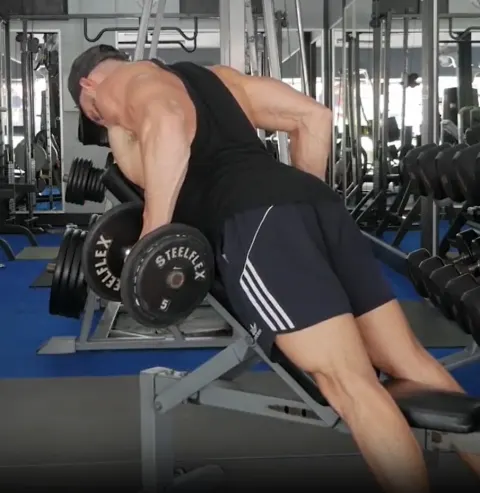
Upper Back, Lats · Dumbbell
- Sets
- 3
- Reps
- 6–10
- Rest
- 120s
- Effort
- RPE 8
swap: Dumbbell Row, Inverted Row, Rear Delt Fly
-
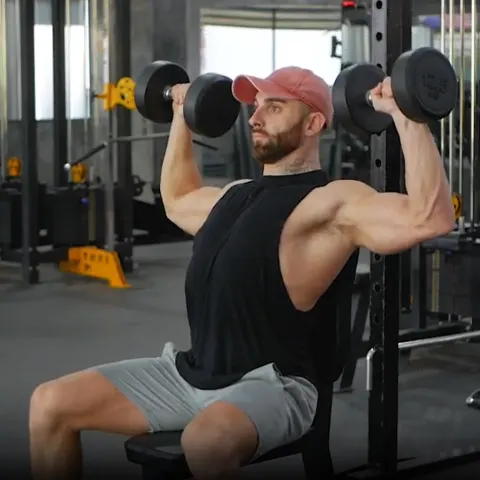
Front Delts, Side Delts · Dumbbell
- Sets
- 3
- Reps
- 6–10
- Rest
- 120s
- Effort
- RPE 8
-
Quads, Glutes · Dumbbell
- Sets
- 2
- Reps
- 8–12 / side
- Rest
- 90s
- Effort
- RPE 8
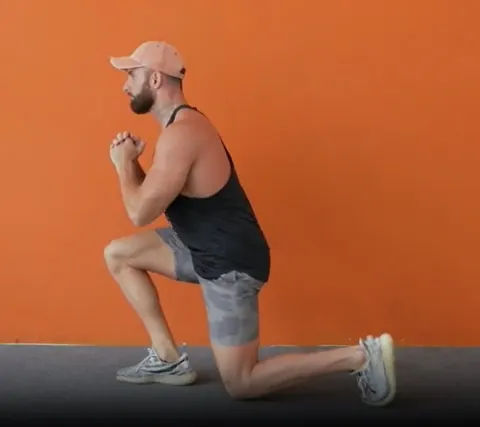
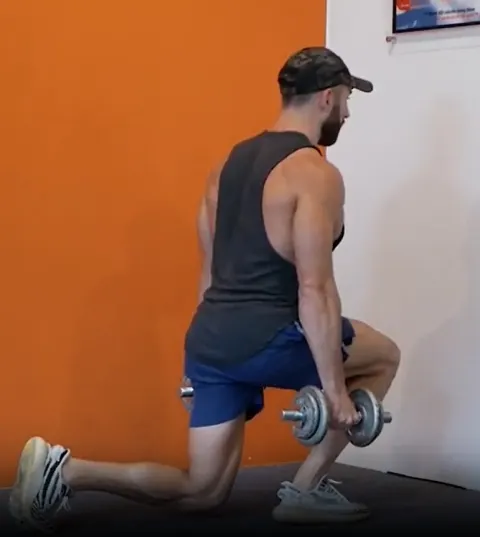
swap: Reverse Lunge, Split Squat, Step-Up
-
Chest, Triceps · Dumbbell
- Sets
- 3
- Reps
- 10–15
- Rest
- 60s
- Effort
- RPE 8–9
-
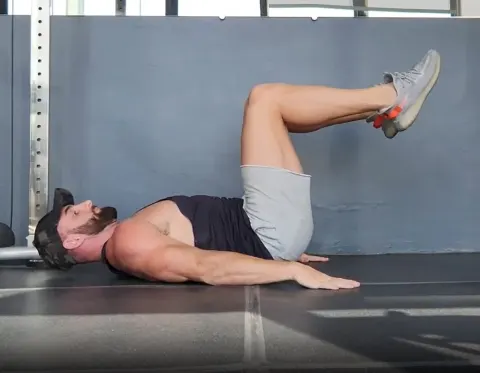
Core · Bodyweight
- Sets
- 3
- Reps
- 30–60 sec
- Rest
- 60s
- Effort
- controlled
swap: Bird Dog, Plank, Lying Leg Raise
Day 3
Full Body C
Single-leg + chest + back
-
Glutes, Adductors, Quads · Bodyweight
- Sets
- 3
- Reps
- 6–10 / side
- Rest
- 120s
- Effort
- RPE 8
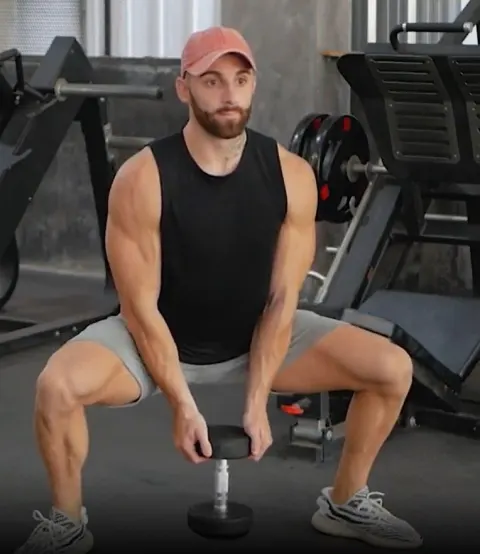
swap: Sumo Squat, Forward Lunge, Reverse Lunge
-
Chest, Triceps · Dumbbell
- Sets
- 3
- Reps
- 6–10
- Rest
- 120s
- Effort
- RPE 8
-
Upper Back, Lats · Bodyweight
- Sets
- 3
- Reps
- 6–10
- Rest
- 120s
- Effort
- RPE 8
-
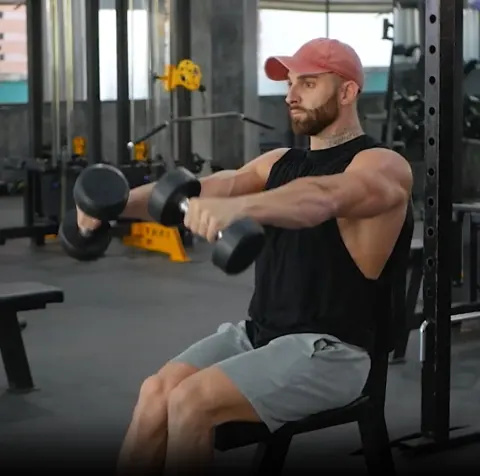
Front Delts · Dumbbell
- Sets
- 3
- Reps
- 10–15
- Rest
- 60s
- Effort
- RPE 8–9
swap: Dumbbell Shoulder Press, Dumbbell Lateral Raise, Dumbbell Shrug
-
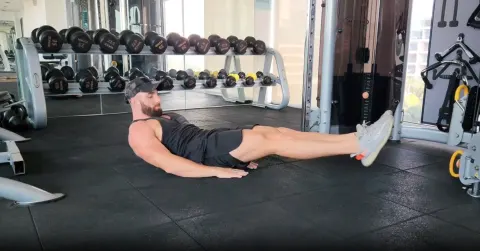
Core, Hip Flexors · Bodyweight
- Sets
- 3
- Reps
- 30–60 sec
- Rest
- 60s
- Effort
- controlled
swap: Lying Leg Raise, Dead Bug, Bicycle Crunch
8-week progression: what to change each week
Same exercises for the whole block. Weeks move the reps, then the load; the last week is a deload.
| Week | Load | Reps | Effort | What to watch |
|---|---|---|---|---|
| 1 | Light: learn the movements | bottom of range (6–8) | RPE 6–7 | Stop every set 3 reps before failure; film one set per exercise to check form. |
| 2 | Same weight | +1 rep per set (8–9) | RPE 8 | Same exercises, same order; only the reps move. |
| 3 | Same weight | top of range (9–10) | RPE 8 | All sets at the top of the range → add load next week. Missed a set? Repeat the week. |
| 4 | next dumbbell / harder variation | bottom of range (6–8) | RPE 8 | New weight feels hard at low reps; that is the plan working. |
| 5 | Same weight | +1 rep per set (8–9) | RPE 8 | Keep rest periods the same. |
| 6 | Same weight | top of range (9–10) | RPE 8–9 | Second time at the top: take the last set of each main lift to 1 rep in reserve. |
| 7 | next dumbbell / harder variation | bottom of range (6–8) | RPE 8 | Bodyweight moves: slow the lowering phase to 3 s or move to the harder variation. |
| 8 | Deload: 60 % | bottom of range | RPE 5–6 | Half the sets, then regenerate a variation or change the split for the next block. |
How to progress
- First 2 weeks: focus on form with light weights, stop each set 3 reps before failure.
- Double progression: hit the top of the rep range on every set, then add weight (2.5–5 %) and start from the bottom of the range.
- Bodyweight moves: add reps, then slow the tempo (3 sec down), then move to a harder variation.
- Deload every 6–8 weeks: same exercises, half the sets.
Notes for this plan
- Home setup: if a weight gets too light, slow the lowering phase to 3–4 seconds or add a pause at the hardest point.
- Sessions can move between days; keep at least one rest day between hard sessions for the same muscles.
Dumbbells are the simplest way into lifting: one piece of kit, every muscle, and no technique that takes months to learn. The example week above shows the training. This page covers what surrounds it: which weights to buy, where to start on each movement, how the five basic lifts should feel, and when your first pair has done its job.
Which dumbbells to buy first
You need more than one weight, because your legs are far stronger than your shoulders. There are two sensible routes.
Fixed pairs. Cheap, quick to grab, nothing to adjust. Buy three:
- Light, 3–5 kg per hand: lateral raises, curls, the first weeks of overhead pressing.
- Medium, 6–10 kg: presses and rows.
- Heavy, 10–16 kg: squats and Romanian deadlifts.
An adjustable pair that goes to 20–24 kg per hand. It costs more up front and takes 20 seconds to change, but it replaces a whole rack and will not be outgrown in three months.
Skip the vinyl sets that top out at 5 kg. They are fine for a week of practice and too light for anything below the waist after that. The dumbbell-only training guide goes deeper on kit for the long term.
Your starting weight for each movement
These are typical first-week loads. Use the left column if you are lighter or have not exercised in years, the right if you are heavier or already active.
| Movement | Lighter start | Heavier start | How it is held |
|---|---|---|---|
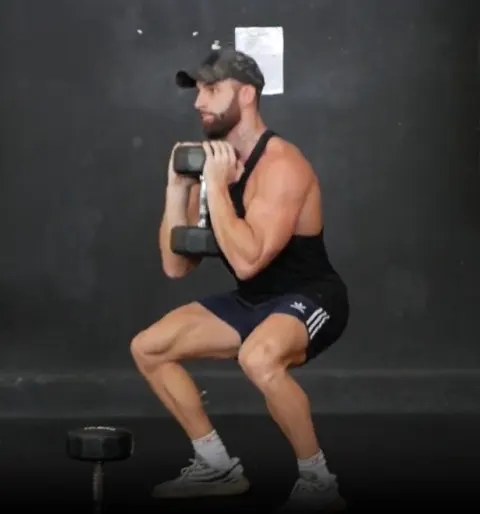
| Goblet squat | 6–8 kg | 12–16 kg | One dumbbell at the chest |
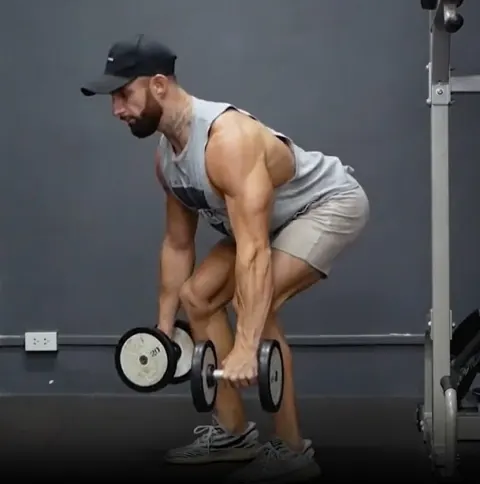
| Romanian deadlift | 6–8 kg per hand | 12–16 kg per hand | One in each hand |
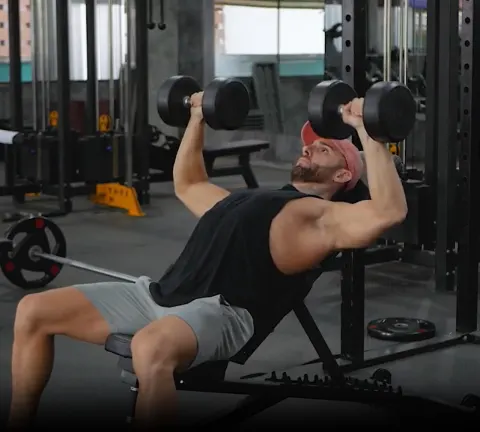
| Bench or floor press | 5–6 kg per hand | 10–12 kg per hand | One in each hand |
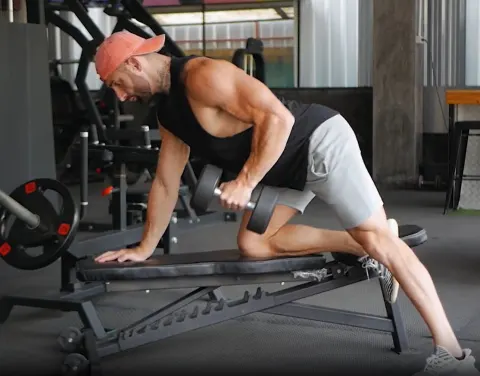
| One-arm row | 6–8 kg | 12–14 kg | One dumbbell, other hand supported |
| Overhead press | 3–4 kg per hand | 7–8 kg per hand | One in each hand |
| Lateral raise | 2 kg per hand | 4 kg per hand | One in each hand |
The check is simple: finish the set and ask how many more clean reps you had. For the first two weeks the answer should be about three. That gap is called reps in reserve. If you had six left, go heavier next session. If the last rep was a fight, go lighter.
Form cues for the five basics
The week above is built from variations of these five patterns, so the cues carry over to whichever version is listed.
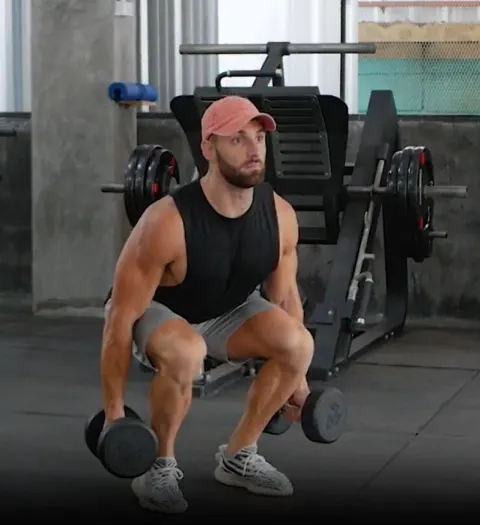
Goblet squat. Hold one end of the dumbbell against your breastbone with elbows pointing down. Sit between your heels, keep your chest tall enough that the weight does not pull you forward, and stand by pushing the floor away.
Dumbbell Romanian deadlift. Soft knees, then push your hips straight back as if closing a car door with them. The weights slide down your thighs to just below the knee. Stop when your hamstrings are tight, not when the dumbbells reach the floor.
Press. On a bench or the floor, start with the dumbbells above your shoulders, lower them with elbows at about 45 degrees to your ribs, and press back up over the shoulders rather than over the face.
Dumbbell row. One hand on a chair or bench, back flat like a table. Pull the dumbbell towards your hip pocket, not your armpit, and lower it until the arm is straight.
Overhead press. Squeeze your glutes, keep your ribs down, and press until your arms are beside your ears. If your lower back arches, the weight is too heavy or you should sit down.
No bench? Use the floor press
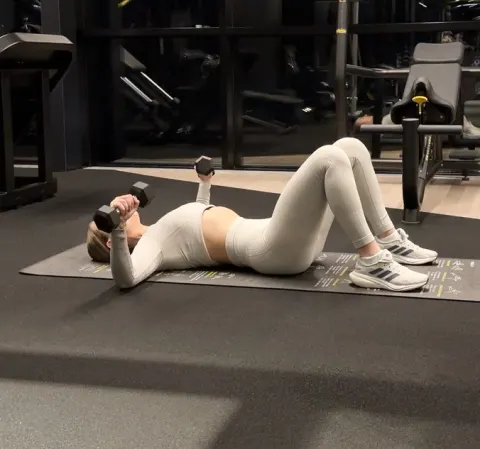
The dumbbell floor press is the bench press done lying on the ground with knees bent. The floor stops your elbows at roughly 90 degrees, which shortens the range a little and is kind to the shoulders. Lower until your upper arms touch down gently, pause for a second, press. Do not bounce your elbows off the floor.
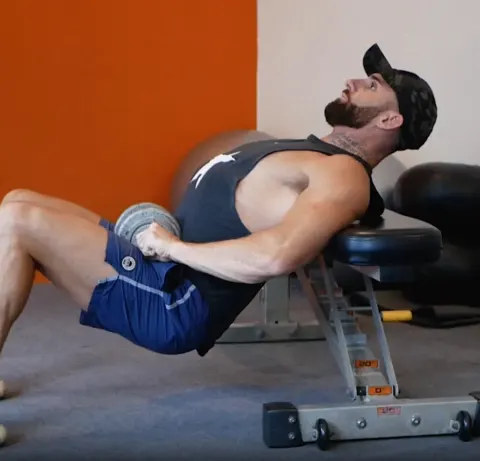
The week above has one floor-press day already, but it also assumes a bench for an incline press, a flat press and a chest-supported row. Without one, open each exercise’s alternatives: floor press for both presses, a one-arm row with a hand on a chair seat for the supported row, hip thrusts with your upper back on the sofa edge. One pull is an inverted row under a sturdy table; if nothing at home is solid enough to hang from, do another dumbbell row.
How the example week uses your weights
It is three full-body days, usually Monday, Wednesday and Friday, with six exercises and about 45 minutes each. The first three movements of each day get 3 sets of 6–10 reps and a full 2 minutes of rest, so that is where your heaviest pair goes. A fourth gets 2 sets of 8–12. The last two use 3 sets of 10–15 reps, or timed holds for the core, with 60 seconds of rest, and suit the light and medium pairs.
Progress by progressive overload in its plainest form. Take your main squat, held goblet-style, at 10 kg for sets of 6. Add a rep per set each week until every set reaches 10, then switch to 12 kg and start again at 6.
Dumbbell jumps can be large: 12 kg to 16 kg is a third more. When the next pair is that far away, build to 12 reps first, or lower each rep for 3 seconds for a fortnight, and then make the jump.
When to buy heavier
Your legs will tell you first. It is time when, with your heaviest pair:
- you reach the top of the rep range on squats and Romanian deadlifts on every set,
- a 3-second lowering phase no longer makes them hard,
- and this has been true for two weeks running.
For most beginners that happens between weeks 8 and 12. Buy one heavier pair for the lower body, 4–6 kg above your current top weight, and keep the old pairs for upper-body work. Every movement you can do with them is on the dumbbell exercise pages.
Beginner dumbbell mistakes
- One weight for everything. If the 5s suit your lateral raises, they are far too light for your squat.
- Swinging. If your torso rocks during curls or raises, drop a size.
- Short reps on rows and presses. Full stretch at the bottom, full squeeze at the top.
- Grabbing a lighter pair mid-set instead of resting. Take the full rest and keep the load.
- Leaving dumbbells where you will trip on them. Park them against a wall between sets.
Where to go next
Start with the 3-day dumbbell plan for muscle gain for beginners, which is the example at the top of this page. If you can only spare two sessions, use the 2-day dumbbell plan for beginners.
After three to six months, the main dumbbell workout plan page covers every schedule and goal, including the 4-day upper/lower version. If you have not bought anything yet, the home workout plan for beginners starts with no equipment at all, and the general workout plan for beginners page helps you decide between home and gym.
Dumbbell Workout Plan for Beginners: all 12 plans
Related programs
Frequently asked questions
What weight dumbbells should a beginner start with?
Most beginners need three loads: 3 to 5 kg per hand for raises and overhead work, 6 to 10 kg for presses and rows, and 10 to 16 kg for squats and deadlifts. Pick the lower end if you are small or new to exercise and the upper end if you are bigger or already active.
Can I build muscle with just dumbbells as a beginner?
Yes. In the first year muscle responds to any load that brings a set of 6 to 15 reps close to its limit, and dumbbells provide that for every major muscle. Three full-body sessions a week with steadily rising reps and weights is enough to see visible changes in 8 to 12 weeks.
Is 5 kg enough for a beginner dumbbell workout?
Only for some exercises. A 5 kg pair suits lateral raises, curls and early overhead presses, but it is too light for squats, deadlifts and rows within two or three weeks. Plan on owning at least one heavier pair of 10 kg or more for the lower body.
Do I need a bench for dumbbell workouts?
Not to start. Floor presses replace bench presses, a sofa edge supports hip thrusts, and one hand on a chair works for rows. A bench becomes worth buying after two or three months because it adds incline presses and a longer range of motion for the chest.
How often should a beginner do dumbbell workouts?
Three times a week on non-consecutive days, with each session training the whole body in about 45 minutes. Two days is a workable minimum. A fourth day only makes sense after a few months, when you can split the work into upper-body and lower-body sessions.